


Ranucci e il Times sentono l’incappucciato di Abu Ghraib, ma non era lui.
Sigfrido Ranucci è quel giornalista
al servizio della più bolscevica televisione
del mondo occidentale, diretta
del postcomunista Roberto Morrione.
Rainews24 purtroppo è vista da
pochi italiani, viceversa il Cav. non
avrebbe bisogno di fantomatici sondaggi
americani per godersi il sorpasso
su Prodi. Nei mesi scorsi, il tosto Ranucci
aveva fatto uno scoop mondiale
sull’uso illegale del fosforo bianco a
Fallujah da parte degli americani, finito
poi in barzelletta ancor più del Nigergate
di Bonini&D’Avanzo.
Ieri la rivista americana molto di sinistra
che si chiama Salon ha svelato
un altro clamoroso falso della tv italiana
al servizio dei repubblichini di Tikrit:
il famoso prigioniero incappucciato
di Abu Ghraib, nei giorni scorsi intervistato
dal New York Times e in precedenza,
in anteprima mondiale, da
Raibufale24, non è affatto l’uomo ritratto
in quelle terribili fotografie che
un bravo soldato dell’esercito americano,
nel dicembre 2003, aveva consegnato
ai suoi superiori, denunciando
così lo scandalo di Abu Ghraib. Quell’uomo
spacciato per l’incappucciato
dal giornalista italiano prima e dal
New York Times poi, era un altro. Ovviamente
non si può escludere che anche
il gerarca baathista Ali Shalal
Qaissi sia stato a sua volta incappucciato,
ma è difficile e certamente non è
l’uomo delle fotografie. Salon lo ha svelato,
il Pentagono lo ha confermato, infine
lo ha ammesso anche il New York
Times. Il giornale newyorchese ha subito
riconosciuto l’errore, pubblicando
due articoli, e ha immediatamente
aperto un’inchiesta interna come nel
caso del falsario Jayson Blair. Il sito di
Raibufale24 fino a ieri sera non riportava
la notizia. Il falso incappucciato,
tra le altre cose, aveva detto a Ranucci
che tra i suoi torturatori c’erano anche
agenti italiani o che parlavano italiano,
quando è notorio che il Pentagono
vieta categoricamente alle società di
contractors di assumere cittadini non
americani. Eppure Prodi e la sinistra
intorno a quell’intervista di Ranucci
hanno fatto un gran baccano, anche
parlamentare. Esattamente come fecero
Fassino & co. ai tempi della “strage
nascosta” di Fallujah, anch’essa opera
dell’ingegno congiunto di Ranucci,
Raibufale24 e di qualche nostalgico
del dittatore nazionalsocialista. Ranucci,
a differenza di oltre 200 giornalisti
internazionali, non era presente
alla battaglia di Fallujah, eppure secondo
il suo reportage gli americani
hanno usato gli elicotteri per sganciare
gas proibiti sui civili, come e peggio
del Vietnam col napalm. Gli analisti
militari hanno smontato punto per
punto la ricostruzione di Ranucci e finanche
il marine “pentito” è stato costretto
a smentire e ad accusare Raibufale24
di essere stato citato fuori dal
contesto. Il presidente della Rai, Claudio
Petruccioli, e i più seri esponenti
del centrosinistra non hanno niente da
dire su Raibufale24?
senza parole (vasco)
Cordiali Saluti
Risultati da 1 a 10 di 29
Discussione: Raibufale24 international
-
15-03-06, 15:14 #1I amar prestar aen


- Data Registrazione
- 09 Sep 2002
- Località
- Brescia
- Messaggi
- 8,891
-

- 0
-

- 0
- Mentioned
- 0 Post(s)
- Tagged
- 0 Thread(s)
 Raibufale24 international
E voi tutti, o Celesti, ah! concedete,
Raibufale24 international
E voi tutti, o Celesti, ah! concedete,
Che di me degno un dì questo mio figlio
Sia spendor della patria, e de Troiani
Forte e possente regnator. Deh! fate
Che il veggendo tornar dalla battaglia
Dell'armi onusto de' nemici uccisi,
Dica talun: NON FU SI' FORTE IL PADRE:
E il cor materno nell'udirlo esulti.
-
15-03-06, 16:43 #2bluedanubeOspite

The Abu Ghraib Files
By Joan Walsh279 photographs and 19 videos from the Army's internal investigation record a harrowing three months of detainee abuse inside the notorious prison -- and make clear that many of those responsible have yet to be held accountable.
... Some of the noteworthy revelations include:
# The prisoner in perhaps the most iconic photo from Abu Ghraib, the hooded man standing on a box with electrical wires attached to his hands, was being interrogated by the CID itself for his alleged role in the kidnapping and murder of two American soldiers in Iraq. As noted in Chapter 4, "Electrical Wires," a CID spokesman confirmed to Salon that a CID agent was suspended in fall 2004 pending an investigation and later found "derelict in his duties" for his role in prisoner abuse. Salon could not confirm whether the agent was punished for his role in the abuse of the hooded man connected to electrical wires, known to military personnel as "Gilligan."
# The CID documentation, as well as other reporting, confirmed that a March 11 New York Times article identifying the prisoner in the iconic photo as Ali Shalal Qaissi, a local Baath Party member under Saddam Hussein and now a prisoners' rights advocate in Jordan, was incorrect. The CID photo archive confirms that a prisoner matching Qaissi's description -- he has a deformed left hand -- and known by the nickname "The Claw" was held at the prison and photographed by military police on the same night as the mock electrocution, but he was not the one standing on the box and attached to wires. The CID materials say all five photos of the hooded man were the prisoner known as "Gilligan." It remains possible that Qaissi received similar treatment, but there is no record of that abuse.salon
N.Y. Times' Iraq Detainee Story Challenged
By THE ASSOCIATED PRESS
Published: March 14, 2006
NYTimes
Web Magazine Raises Doubts Over a Symbol of Abu Ghraib
Published: March 14, 2006Joan Walsh, the editor of Salon, said: "It is possible that two different people are pictured. We are not saying that nothing like this happened to Mr. Qaissi. But the C.I.D. believes there is only one person in the photographs."
-
15-03-06, 16:47 #3I amar prestar aen
- Data Registrazione
- 09 Sep 2002
- Località
- Brescia
- Messaggi
- 8,891
-
- 0
-
- 0
- Mentioned
- 0 Post(s)
- Tagged
- 0 Thread(s)
Era lui ? BN24 cosa dice? nessuna segnalazione? Originariamente Scritto da bluedanube
Cordiali SalutiE voi tutti, o Celesti, ah! concedete,
Che di me degno un dì questo mio figlio
Sia spendor della patria, e de Troiani
Forte e possente regnator. Deh! fate
Che il veggendo tornar dalla battaglia
Dell'armi onusto de' nemici uccisi,
Dica talun: NON FU SI' FORTE IL PADRE:
E il cor materno nell'udirlo esulti.
-
15-03-06, 16:48 #4bluedanubeOspite
Sigfrido Ranucci a me non piace, questione di pelle, ... Ma sul NYTimes non c’è traccia del suo nome
 ?!
?!
Ma le panzane/”ritorsione” di Ferrara & CO sono roba per boccaloni … sarà che li brucia l’inchiesta su Fallujah, Nigergate, …?! Ferrara è capace di raccontarci, ancora e ancora, del legame fra Bin Laden e Sadam, oppure che possedeva WMD, …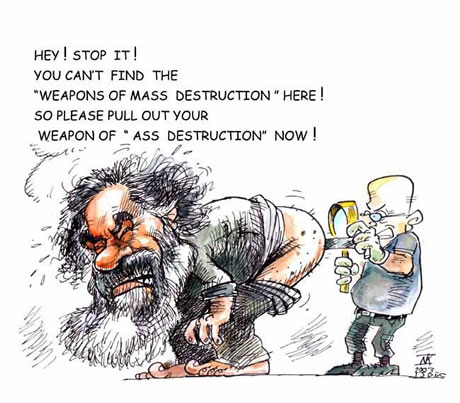
-
15-03-06, 16:52 #5I amar prestar aen
- Data Registrazione
- 09 Sep 2002
- Località
- Brescia
- Messaggi
- 8,891
-
- 0
-
- 0
- Mentioned
- 0 Post(s)
- Tagged
- 0 Thread(s)
Allora Falluja e Nigergate sono strabufale una di RN24 e l'altra di repubblica. I legami li hanno trovati e pubblicati se tu leggi solo le cose dei nazisti non è colpa mia. La ADM non c'erano. Ssaddam non c'è più.
Cordiali SalutiE voi tutti, o Celesti, ah! concedete,
Che di me degno un dì questo mio figlio
Sia spendor della patria, e de Troiani
Forte e possente regnator. Deh! fate
Che il veggendo tornar dalla battaglia
Dell'armi onusto de' nemici uccisi,
Dica talun: NON FU SI' FORTE IL PADRE:
E il cor materno nell'udirlo esulti.
-
15-03-06, 17:09 #6bluedanubeOspite
Originariamente Scritto da locke

Elamadonna: NYTimes è nazista (Un amerikano avrebbe detto comunista)?!Sul giornale newyorchese l’editore di Salon chiama il prigioniero incappucciato di Abu Ghraib Mr. Qaissi, mentre sul Foglio l’espressione è “il gerarca baathista Ali Shalal Qaissi”
"Stando con gli zoppi si impara a zoppicare". Ma da qui a scrivere con certezza una cosa che al 90% è un'emerita ca**ata... beh... ci passa il cielo!!!
-
15-03-06, 17:16 #7I amar prestar aen
- Data Registrazione
- 09 Sep 2002
- Località
- Brescia
- Messaggi
- 8,891
-
- 0
-
- 0
- Mentioned
- 0 Post(s)
- Tagged
- 0 Thread(s)
Nazisti e comunisti la stessa cosa sono. Parenti neanche troppo alla lontana. Originariamente Scritto da bluedanube
Cordiali SalutiE voi tutti, o Celesti, ah! concedete,
Che di me degno un dì questo mio figlio
Sia spendor della patria, e de Troiani
Forte e possente regnator. Deh! fate
Che il veggendo tornar dalla battaglia
Dell'armi onusto de' nemici uccisi,
Dica talun: NON FU SI' FORTE IL PADRE:
E il cor materno nell'udirlo esulti.
-
15-03-06, 17:21 #8bluedanubeOspite
Originariamente Scritto da locke
 "Nazisti e comunisti la stessa cosa sono", specie certi trotskisti, concordo
-
15-03-06, 17:24 #9I amar prestar aen
- Data Registrazione
- 09 Sep 2002
- Località
- Brescia
- Messaggi
- 8,891
-
- 0
-
- 0
- Mentioned
- 0 Post(s)
- Tagged
- 0 Thread(s)
Iil torzkismo dei neoconservatori si ferma al verbo esportare, il soggetto è drasticamente opposto. Originariamente Scritto da bluedanube
Cordiali SalutiE voi tutti, o Celesti, ah! concedete,
Che di me degno un dì questo mio figlio
Sia spendor della patria, e de Troiani
Forte e possente regnator. Deh! fate
Che il veggendo tornar dalla battaglia
Dell'armi onusto de' nemici uccisi,
Dica talun: NON FU SI' FORTE IL PADRE:
E il cor materno nell'udirlo esulti.
-
15-03-06, 17:24 #10EUROSIBBERIANO CONVINTO

- Data Registrazione
- 15 Nov 2005
- Messaggi
- 7,771
-
- 0
-
- 1
- Mentioned
- 0 Post(s)
- Tagged
- 0 Thread(s)
Ma questo articolo deficente cosa dovrebbe dimostrare? che, poichè l'incappucciato non era quello intervistato, le torture non sono avvenute o vanno ridimensionate??? ma non c'è limite al ridicolo degli asini servi degli ebrei-americani??? e falluja cosa c'entra??? si può davvero negare che, come hanno detto in tantissimi e non certo solo rainews24, siano state usate armi chimiche???
Io davvero stento a comprendere.
Poi questa chicca di locke:
"Nazisti e comunisti la stessa cosa sono. Parenti neanche troppo alla lontana.
Cordiali Saluti"
Comunismo e ultraliberismo capitalista semmai, sono figli della stessa rivoluzione sovversiva massonica e anticristiana: basterebbe rileggere la storia senza i paraocchi ideologici bolscevichi per comprenderlo. Peccato che ormai certe banali verità siano considerate materia per "complottisti". Il miglior colpo messo a segno dal diavolo è aver fatto credere a tutti che non esiste.

 Rispondi Citando
Discussioni Simili
-
OT: Amnesty International.
Di Gioann Bagoss nel forum Padania!Risposte: 3Ultimo Messaggio: 20-02-11, 10:20 -
pol international
Di itloox nel forum FondoscalaRisposte: 12Ultimo Messaggio: 23-11-05, 10:52 -
International
Di Timur nel forum POLSchedinaRisposte: 6Ultimo Messaggio: 27-09-05, 13:23 -
RAI International.
Di Dario nel forum Centrodestra ItalianoRisposte: 7Ultimo Messaggio: 28-02-03, 02:15
Tag per Questa Discussione

 Permessi di Scrittura
Powered by vBulletin® Version 4.2.5
Copyright © 2026 vBulletin Solutions Inc. All rights reserved.
Change privacy settings
Copyright © 2026 vBulletin Solutions Inc. All rights reserved.
Change privacy settings
Tutti gli orari sono GMT +2. Adesso sono le 06:53.
