


Mentre i rapporti con la Georgia sono sempre più tesi e con gli l'Ucraina non sono tutte rose e fiori (dove tra l'altro il signor Aleksandr Dugin vi è stato espulso per 5 anni a causa delle sue manifesazioni anti orangiste), la Russia rischia di perdere i buoni rapporti che aveva con il Tajikistan, reduce ultimamente da un esercitazione congiunta con i cinesi e, cosa importante, gran fornitore di forza lavoro in Russia:
DOES DUSHANBE WANT TO DISTANCE ITSELF FROM RUSSIA?
9/07/07
Print this article
Email this article
Tajikistan’s decision to cancel a contract with a Russian conglomerate to develop a dam and an aluminum plant may be a signal of Dushanbe’s disenchantment with its close working relationship with Moscow. At the very least, the contract cancellation marks a diplomatic setback for Russia, which has aggressively reasserted its economic and political influence across Central Asia over the past two years.
Tajik officials announced August 29 that they were cancelling a 2004 deal with the aluminum giant RusAl, under which the Russian company was to spend roughly $2 billion on finishing the Rogun dam, along with modernizing the Tajik Aluminum Plant -- formerly TadAZ and now known as Talco -- and the construction of another aluminum smelter nearby. In a statement, President Imomali Rahmon attributed his government’s action to "the Russian company’s failure to honor its commitments." Both RusAl representatives and Russian government officials have been reluctant to comment on Dushanbe’s action.
Work on Rogun, roughly 110 kilometers east of Dushanbe, began in 1976 and was suspended in the early 1990s, amid the economic chaos associated with the Soviet collapse. Much of the work already done was destroyed in a 1993 mudslide. Construction plans were revived in 2004, during a visit by Russian President Vladimir Putin to Tajikistan. The dam and aluminum projects were seen as interconnected, with Rogun envisioned as supplying the electricity needed to operate the plants.
Almost three years after the signing of the deal, virtually no work had been performed by RusAl. A dispute over the height of the Rogun dam kept construction on that project stalled. RusAl wanted the dam to be about 285 meters high, with an annual power-generating capacity of 2,400 megawatts (MW). The Tajik government, meanwhile, called for the original blueprint to remain in place, envisioning a 355-meter-high dam that could generate 3,600 MW per year. Completion of the dam according to the original specifications would enable Tajikistan to become an exporter of electricity.
Wrangling over the aluminum plants may have been an even larger factor in spurring the deal’s collapse. RusAl had reportedly sought a significant stake in Talco -- something that the Tajik government steadfastly refused to grant. Talco, which has about 12,000 employees, accounts for nearly half of Tajikistani export revenues, and Tajik authorities did not want to cede any control over the country’s primary income generator. When RusAl executives realized that their attempts to gain a share of Talco were futile, they reportedly lost interest in the deal, according to a report published by the Kommersant daily August 30.
Other observers say regional politics likely played a major role in upsetting the deal. Uzbekistan has expressed vocal opposition to Talco’s modernization, citing ecological concerns. However, political analysts believe Uzbekistan’s opposition was, and remains, rooted in Tashkent’s desire to remain Central Asia’s political powerhouse. Uzbek officials reportedly worry that realization of economic development projects in Tajikistan would greatly increase Dushanbe’s political clout vis-a-vis Tashkent. In addition, construction of the Rogun dam could potentially deprive Uzbekistan of water needed for irrigation. [For background see the Eurasia Insight archive].
Russia, in gaining the upper hand in the Central Asia’s geopolitical chess game, has faced a difficult task in balancing divergent Uzbek and Tajik interests. Some analysts believe that RusAl executives may have been taking a cue from the Kremlin, which perhaps saw "stall tactics" concerning Rogun/Talco as the best option for finessing Uzbek-Tajik tension over the development projects. The Kremlin in recent years has faced criticism in the West for using the country’s energy companies as instruments of diplomatic policy. [For background see the Eurasia Insight archive].
The Tajik decision to cancel the contract appeared to catch the Kremlin off guard. In the weeks before the announcement, there had been few signs of problems in bilateral relations. Following the recent Shanghai Cooperation Organization military exercises, for example, Putin and Rahmon met August 17 in the Chelyabinsk Region. During that meeting, Putin lauded Tajik-Russian political, economic and military cooperation, and Rahmon noted that bilateral trade had jumped 70 percent during the first half of 2007.
Some analysts suggest Tajikistan’s action concerning RusAl might be an extension of Rahmon’s evident desire to reduce Russia’s cultural influence in Tajikistan. Since March, the president has promoted a campaign to promote economic austerity, while taking concurrent action to promote a distinctly Tajik national identity. To punctuate the campaign, Rahmon dropped the Slavic "ov" ending to his surname. [For background see the Eurasia Insight archive].
Other experts believe any turbulence in Tajik-Russian relations will prove temporary. Underlying this belief is the fact that Tajikistan’s economy remains dependent of remittances sent home by Tajik migrant workers in Russia.
Russian and Tajik officials continue to work on ways to regulate conditions for the migrant laborers. [For background see the Eurasia Insight archive]. On August 21, Russian Interior Minister Rashid Nurgaliyev and his Tajik counterpart Mahmadnazar Salihov held talks in St. Petersburg on labor migration-related issues, including crime. In 2006, Tajikistani migrants committed 8,200 crimes in Russia, and 1,200 crimes were recorded against them, Nurgaliyev said. On September 17-20, Russia is due to host a Russian-Tajik inter-parliamentary forum in Moscow and in Orenburg. Those meetings are also expected to focus on labor migration.
Posted September 7, 2007 © Eurasianet
http://www.eurasianet.org/department...090707aa.shtml
Risultati da 1 a 10 di 60
Discussione: E intanto si deteriorano i rapporti con i tajiki..
-
15-09-07, 10:47 #1Forumista senior


- Data Registrazione
- 14 Nov 2006
- Messaggi
- 4,763
-

- 0
-

- 0
- Mentioned
- 0 Post(s)
- Tagged
- 0 Thread(s)
 E intanto si deteriorano i rapporti con i tajiki..
-
15-09-07, 11:25 #2Moderatore

- Data Registrazione
- 30 Mar 2009
- Messaggi
- 6,178
-
- 15
-
- 96
- Mentioned
- 5 Post(s)
- Tagged
- 1 Thread(s)
secondo te questo basta per parlare di rapporti deteriorati?
-
15-09-07, 11:46 #3Forumista senior
- Data Registrazione
- 14 Nov 2006
- Messaggi
- 4,763
-
- 0
-
- 0
- Mentioned
- 0 Post(s)
- Tagged
- 0 Thread(s)
Hai letto bene l'articolo?Quando entra in gioco il culto della personalità di un Leader ("Rahmon dropped the Slavic "ov" ending to his surname" per farti intendere anche il valore nazionalistico di una certa sfida) e quando un paese si trova in un'area "molto delicata", in bilico tra Cina ed Afghanistan, pur di sopravvivere ci si vende al miglior offerente.Cosa credi che tanti paesi si uniscono allo Sco per portare avanti un ideale eurasiatico? Originariamente Scritto da Combat1982

E poi in Russia vi è un forte disprezzo nei riguardi del popolo tajiko....Ricordo bene uno show alla tv russa che tanto satirico non era, ove praticamente i tajiki venivano insultati continuamente.Sarebbe ora per Putin di rivedere bene le proprie strategie e non solo sul piano di cooperazione economica, con i propri ex satelliti....
-
15-09-07, 16:47 #4Moderatore
- Data Registrazione
- 30 Mar 2009
- Messaggi
- 6,178
-
- 15
-
- 96
- Mentioned
- 5 Post(s)
- Tagged
- 1 Thread(s)
Intanto non era una critica ma una domanda...
Per il resto rimango dubbioso...
-
15-09-07, 19:14 #5Forumista senior
- Data Registrazione
- 14 Nov 2006
- Messaggi
- 4,763
-
- 0
-
- 0
- Mentioned
- 0 Post(s)
- Tagged
- 0 Thread(s)
Dubbioso per cosa?La sovranità russa non è una priorità se non da alcun vantaggio...E cè sempre il vicino cinese.Se pensi che il Turkmenistan, paese che già ai tempi dell'ex unione sovietica (quando era un repubblica) vantava (in maniera eccedentaria) un tasso di autonomia energetica di circa il 650%, cioè una produzione di energia primaria sei volte superiore ai consumi interni e ancora oggi riesce a mantenere tale autonomia anche in campo decisionale, che sintentizzato in poche parole vuol dire che: "l'energia mia la vendo a chi voglio io e decido io in quale condotta dovrà viaggiare", sta a significare che la Russia non può violare continuamente le autonomie economiche degli ex stati satelliti....Per cui se il contratto per l'alluminio al presidente tajiko non risulta esser vantaggioso, si cambia partner.....Tra l'altro la questione dei generatori energetici nella piccola repubblica centro-asiatica, non è affatto un problema irrilevante, se pensi che i black out a lungo termine sono all'ordine del giorno e in alcune aree del paese non arriva affatto l'energia elettrica. Originariamente Scritto da Combat1982
-
17-09-07, 01:04 #6email non funzionante

- Data Registrazione
- 01 Aug 2002
- Località
- Chieti
- Messaggi
- 6,461
-
- 13
-
- 36
- Mentioned
- 1 Post(s)
- Tagged
- 0 Thread(s)
Scelta davvero sbagliata per il Tajikistan, uno dei paesi più poveri della CSI, sganciarsi dalla Russia sarebbe una rovina, avvicinarsi alla Cina potrebbe essere una buona politica per un paese che produce qualcosa, non certo per il Tajikistan. E' poi i milioni di immigrati tajiki dove andranno? In Cina dove il reddito pro capite è più basso del 60%!!!
Miles Insulae
-
17-09-07, 07:45 #7Forumista senior
- Data Registrazione
- 14 Nov 2006
- Messaggi
- 4,763
-
- 0
-
- 0
- Mentioned
- 0 Post(s)
- Tagged
- 0 Thread(s)
Originariamente Scritto da Lorenzo
E vero, del resto la piccola repubblica è sempre sopravissuta grazie all'assistenzialismo russo in passato e se non fosse stato per questi ultimi, di certo l'esito della guerra civile che l'ha travagliata per anni sarebbe stato totalmente differente, con il rischio di ritrovarsi travolta nel ciclone "enduring freedom".Ma i cinesi come sempre si rivelano essere più pragmatici, investendo e creando posti di lavoro, modernizzando come sta avvenendo in Africa.Del resto non vi sono più confini che legano il Tajikistan alla Russia e la piccola repubblica rappresenterebbe pur sempre uno stato cuscinetto utile.Se poi si pensa che ultimamente gli iraniani (per evidenti affinità culturali) stanno contribuendo non poco alla ripresa di tale paese, specialmente nella costruzione di infrastrutture (Ahmadinejad inaugurò un tunnel ultimamente in un'area montuosa del Pamir se ricordo bene), gli aiuti seppur non determinanti ancora, non mancano.E in tanti anni di Csi e legami con la Russia durante la guerra civile, ben poco hanno fatto per loro (dovevan ristrutturare le centrali idroelettriche e invece vi han solo speculato).La manodopera tajika costituirà sempre un tesoro per i russi, in quanto facilmente assimilabili rispetto ad un cinese per ovvie ragioni culturali, da quelle linguistiche e soprattutto perchè realmente costituiscono una forza lavoro a costi irrisori, non credo che i russi siano così stupidi, ne questa corrisponde al livello di gravità della situazione georgiana...
-
17-09-07, 11:07 #8email non funzionante
- Data Registrazione
- 01 Aug 2002
- Località
- Chieti
- Messaggi
- 6,461
-
- 13
-
- 36
- Mentioned
- 1 Post(s)
- Tagged
- 0 Thread(s)
Tutto giusto Ulver, ma resta il fatto che il Tajikistan di fatto rimane un paese senza risorse, con il redditto più basso del CSI(dopo la georgia) a soli 1.631 $/anno, con una disoccupazione mostruosa(che sfiora il 40%). Direi che la strada per un risollevamento vero è davvero lunga, soprattutto se non trainato dalla locomotiva russa, alla fine gli altri paesi dell'Asia Centrale si trovano tutti in situazioni grandemente migliori a partire dal visini Kirghizistan(che sta sempre più diventando metà di immigrazione cinese).
Miles Insulae
-
17-09-07, 11:19 #9email non funzionante
- Data Registrazione
- 01 Aug 2002
- Località
- Chieti
- Messaggi
- 6,461
-
- 13
-
- 36
- Mentioned
- 1 Post(s)
- Tagged
- 0 Thread(s)
La vera questione è che i russi in Tajikistan mantengono questa
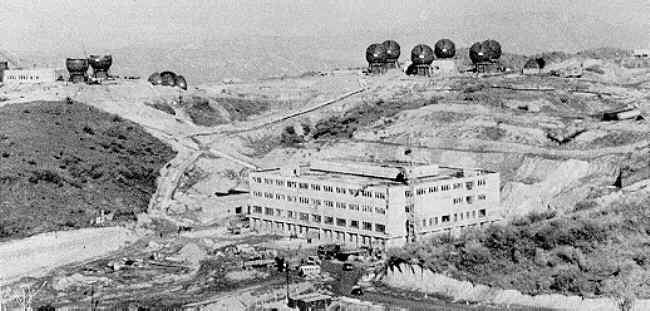
e non credo siano interessati a mollare....
Miles Insulae
-
17-09-07, 11:46 #10Forumista senior
- Data Registrazione
- 14 Nov 2006
- Messaggi
- 4,763
-
- 0
-
- 0
- Mentioned
- 0 Post(s)
- Tagged
- 0 Thread(s)
Verissimo.....Ma un contingente internazionale è ancora presente sul suolo Tajiko (compresi, se ricordo bene, divisioni della Legione Straniera francese).
Il mio ragionamento sarà anche cinico ma preferisco che i cinesi si concentrino in quell'area, più affine a loro per una questione di confini "mai ben delineati", che in Europa.
La disoccupazione è si a livelli altissimi, ma cè anche da dire che all'infuori di Dushanbe e Khojand, le varie entità tribali che vivono dall'area del Pamir fino ai confini con le altre repubbliche, conducono ancora un'esistenza immutata nel corso dei secoli e segnata dal nomadismo....Neanche i sovietici sono riusciti a modernizzarli del tutto....Chi tende ad emigrare sono i cittadini delle aree urbanizzate.

 Rispondi Citando
Discussioni Simili
-
Intanto non sono a casa, intanto li ho riportati al lavoro, poi gli faccio un c. così
Di Alex il Rosso nel forum Politica NazionaleRisposte: 14Ultimo Messaggio: 29-10-08, 16:47 -
e intanto la bce............
Di L.Ferdinand nel forum Politica EsteraRisposte: 7Ultimo Messaggio: 11-03-07, 13:06 -
E intanto...
Di tolomeo nel forum FC InterRisposte: 1Ultimo Messaggio: 15-06-06, 11:08 -
E intanto...
Di O'Rei nel forum Termometro sportivoRisposte: 20Ultimo Messaggio: 31-10-05, 11:23 -
E Intanto...
Di Silvioleo nel forum Politica NazionaleRisposte: 29Ultimo Messaggio: 08-07-04, 09:30
 Permessi di Scrittura
Powered by vBulletin® Version 4.2.5
Copyright © 2026 vBulletin Solutions Inc. All rights reserved.
Change privacy settings
Copyright © 2026 vBulletin Solutions Inc. All rights reserved.
Change privacy settings
Tutti gli orari sono GMT +2. Adesso sono le 00:35.
