


La rovina di Lutero cominciò dal breviario trascurato
Il primo nemico dell'apostolo è dunque il naturalismo, che è poi l'essenza del pelagianesimo: dar troppo peso alle facoltà e doti naturali, alle risorse puramente umane.
Ma il naturalismo - in pratica, e nell'apostolato, - coincide con l'attivismo, che è il pericolo dell'azione a scapito dell'attività interiore, lo squillare del cembalo che accarezza l'udito o commuove un istante il cuore, ma non trasforma la vita altrui.
Dunque: eliminerò ogni attività esteriore che pregiudichi quelle sgorganti dal fervore interno soprannaturale.
In pratica le cose avvengono così: dapprima il lavoro urgente fa sì che le pratiche spirituali, le preghiere vengano messe in seconda linea, pur dando loro il tempo richiesto; poi, il lavoro sempre immane le fa accorciare, rinunciando a quelle che non sono di stretto obbligo, e dando sempre minor tranquillità di tempo alle altre; esse diventano quasi nulla confortevoli perché fatte male; aridità, noia, disgusto vengono a rincarar la dose di avversione contro di esse. Il lavoro incomincia ad apparire come santificatore quasi in forza di se stesso soltanto, e l'attività, che ci santificherebbe davvero, se fosse l'espressione di vita interna, rimane lo scheletro senza vita interiore; la parvenza senza realtà. Non ci si ferma qui, purtroppo, perché i pericoli sono sempre in agguato e le forze spirituali, indebolite paurosamente ma credute ancora valide, non sono più capaci a farceli fuggire, a farci resistere.
E chi ne è persuaso parla tremando, perché è verità che vale per tutti: se si continua così, dalla pigrizia spirituale si finisce per passare alla colpa. Sarebbe tradirci a vicenda se lo tacessimo.
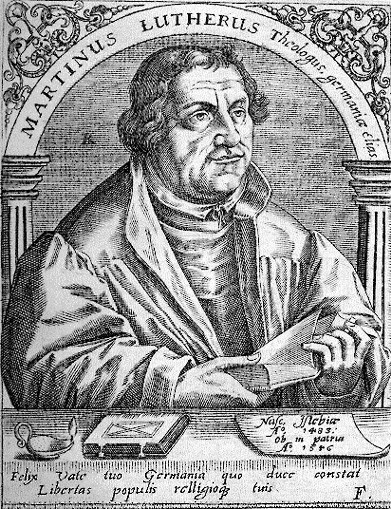
Ci si perdoni se ricorriamo ad una prova dolorosamente clamorosa: al caso di Lutero. Illuso o no nel credersi chiamato alla vita religiosa e sacerdotale, da principio quest'uomo pregava. Ma quando il groviglio dei tempi e le bufere impetuose della sua coscienza gli accesero la fantasia e le fecero balenare un nuovo tipo di salvezza, non più basato su quella che egli chiamava «virtù papista», egli non pregò più come il mendico che implora, ma come il fariseo che si vanta delle proprie virtù. «Io ho usato tutta la diligenza possibile, martoriando il mio corpo con la privazione del cibo e del sonno, con preghiere ed altri pii esercizi». «Se un monaco è andato in paradiso per mezzo della vita monacale, anch'io vi ho voluto arrivare». «Io mi sono martoriato con preghiere, digiuni, veglie, e soffrendo il freddo...» [1].
Ma quali erano le sue preghiere? Sentiamone l'eco, quando egli ne parlerà, nel 1535: «Io ero nel convento non come gli altri uomini, ladri, disonesti...; ma mi mantenevo casto, ubbidiente e povero» [2]. Sembra di sentire il fariseo del tempio, ricordato da Gesù (Lc. 18, 10).
Poi l'attività diventò sempre più febbrile. Egli finì per rinunciare a quasi tutte le pratiche di pietà, proprio per la furia dell'attivismo. Scriveva all'amico Lang, il 26 ottobre 1516: «Io avrei bisogno di due scrivani o di due segretari. lo non faccio quasi altro tutto il giorno che scrivere... Inoltre sono il predicatore del convento: devo predicare in refettorio, e sono invitato giornalmente a parlare nella chiesa parrocchiale. Sono direttore degli studi, sono vicario dei nostri conventi, ossia undici vollte priore... Io spiego S. Paolo, raccolgo le esegesi sopra i Salmi... Raramente ho la possibilità di fare il mio dovere riguardo alla recita del Breviario, e non ho il tempo di celebrare la Messa» [3].
Tutti sappiamo la catastrofe nella fede e nei costumi che seguì a questa dimenticanza della preghiera, per fare dell'attivismo. Il parossismo diventò talmente furioso, che la preghiera divenne bestemmia. Dinanzi al terribile problema della predestinazione, invece di raccogliersi in umile fiducia implorante [4] divenne un ribelle. «Io dimentico tutto ciò che è Gesù Cristo e ciò che è Dio, quando entro in quel pensiero, e vengo anzi nel pensiero che Dio sia un malvagio... Al pensiero della predestinazione noi ci dimentichiamo di Dio; il Laudate ci muore sulle labbra e si trasforma in un Blasphemate» [5].
Le rovine accatastate dall'attivismo privo di vita interiore non sono sempre catastrofi cosi immani; ma gli insegnamenti divini, i santi, l'esperienza ci assicurano che esso rovine ne produce sempre [6].
NOTE
[1] H. Grisar S. I., Lutero. Friburgo di Br. 1925, vol. 3, p. 679 s.; dello stesso H. Grisar, Lutero. La sua vita e le sue opere, Torino 1944, pp. 59-60.
[2] H. Grisar, Lutero, vol. 3, p. 1004 s.; Lutero. La sua vita e le sue opere, p. 60.
[3] H. Grisar, Lutero, vol. I, p. 222; Lutero. La sua vita e le sue opere, p. 58.
[4] Vedendo vani tutti i tentativi di darsi la pace con la propria nuova mistica, Lutero fini per entrare in una specie d'agitazione febbrile, irritato anche per le tentazioni che lo assalivano, come dimostra il P. Grisar, con i documenti che arreca nelle opere classiche sull'argomento.
[5] LUTERO, Conversazioni conviviali, ed. Weimar, vol. 2, n. 2654; H. Grisar, Lutero. La sua vita e le sue opere, p. 65.
[6] Abbiamo la parola più autorevole della terra: il S. Padre Pio XI nell'enciclica Ad Catholici Sacerdotii (Ediz. Pol. Vat. 1941, p. 23) ammonisce: «Sarebbe un errore gravissimo e pericolosissimo se il sacerdote, trasportato da falso zelo, trascurasse la propria santificazione per tutto immergersi nelle opere esteriori, per quanto buone, del ministero sacerdotale. Con ciò, metterebbe in pericolo la propria eterna salute, come il grande Apostolo delle genti temeva di se stesso: "Castigo il mio corpo e lo rendo schiavo, perché non avvenga che dopo aver predicato agli altri, io diventi riprovato", e si esporrebbe anche a perdere, se non la grazia divina, certamente quell'unzione dello Spirito Santo che dà una mirabile forza ed efficacia all'apostolato esterno».
Quando il Redentorista S. Clemente Maria Hofbauer, morto nel 1820, viveva nel convento di Bluk, vide un religioso che aveva la mania di saper tutto. E gli disse francamente: «Bisogna che preghiate di più, altrimenti le vostre cose finiranno male». Ma il religioso non ascoltò l'ammonizione del santo ed errò talmente che, nonostante tutto il suo sapere, la S. Sede fu costretta ad impedirne le opere, infette di eresia. Ed il servo di Dio P. Roothaan S. I. scriveva il 21 agosto 1836: «Un vescovo, che era un sant'uomo e già amico del Lamennais, mi disse di credere che l'orribile caduta di quell'uorno (cadde invero nel più profondo) abbia avuto origine, almeno in gran parte, dal fatto che da più anni non recitava il Breviario, e ne aveva ricevuto la dispensa, per aver tempo di scrivere le sue opere». Egli fu evidentemente vittima del suo attivismo che lo condusse alla superbia. Quando passò a Torino, lo zelante servo di Dio, Pio Brunone Lanteri, prevedendo la rovina che il Lamennais si preparava, l'invitò in tutti i modi a fermarsi in quella città, avrebbero lavorato insieme, vi era tanto da fare! e insieme avrebbero pregato... Il Lamennais gli rispose: «Non posso! La Francia ha bisogno di me!». E finì col perdere la fede, ostinandosi nell'errore.
Ogni secolo, purtroppo, ci potrebbe ripetere simili dolorose eloquenti lezioni. Perciò il dottore della Chiesa S. Giovanni della Croce scrive: «Coloro che sono molto attivi e che pensano di abbracciare tutto il mondo con le loro predicazioni ed opere esteriori, riflettano bene che apporterebbero molto più utile alla chiesa e riuscirebbero assai più graditi a Dio (anche a prescindere dal buon esempio che darebbero), se spendessero almeno la metà del loro tempo nello starsene con Dio in orazione. Allora certamente otterrebbero di più e con minor fatica, più con un'opera che con mille, e ciò per il merito della loro orazione e per le forze spirituali in essa acquistate; altrimenti tutto si ridurrà ad un martellare invano e a fare poco più di niente, e alle volte proprio niente, anzi non di rado anche danno» (Opere, vol. 2, Cantico Spirituale, strofa 28, nn. 10-11).
È quanto ci ha insegnato con la parola e con l'esempio il S. Padre Pio XII, fin dalle prime settimane del suo pontificato. Tutto il suo programma e metodo d'azione l'ha rivelato non solo con l'insegnamento, ma con l'esempio; Pio XI, elevandolo alla dignità di Cardinale Segretario di Stato, lo disse «Cardinale pentecostale» per il dono delle lingue e per la preghiera; da Sommo Pontefice si rivelò non un uomo che prega, ma, possiamo dire, un uomo trasformato in preghiera vivente.
E S. Santità Giovanni XXIII, come padre che ai figli ama manifestare i suoi pensieri più intimi, sovente parla del conforto che il Signore gli dona nella vita di preghiera.
Fonte: M. Corti S.I. - D. Battaglieri S.I., Vivere in Cristo. Principio e fine dell'apostolato cattolico, Roma, 1960
Risultati da 1 a 5 di 5
-
02-09-07, 23:35 #1**********


- Data Registrazione
- 04 Jun 2003
- Messaggi
- 23,775
-

- 18
-

- 35
- Mentioned
- 2 Post(s)
- Tagged
- 0 Thread(s)
 Contributo all'ecumenismo: Dal breviario strapazzato all'eresia: la rovina di Lutero
-
06-09-07, 21:35 #2**********
- Data Registrazione
- 04 Jun 2003
- Messaggi
- 23,775
-
- 18
-
- 35
- Mentioned
- 2 Post(s)
- Tagged
- 0 Thread(s)
-
31-10-08, 22:29 #3**********
- Data Registrazione
- 04 Jun 2003
- Messaggi
- 23,775
-
- 18
-
- 35
- Mentioned
- 2 Post(s)
- Tagged
- 0 Thread(s)
 Che delusione per il povero Benedetto XVI .....
Misteri Un gruppo di archeologi ha scavato nelle case e nei luoghi della sua gioventù
Grasso e gaudente: ecco l'altro Lutero
DAL NOSTRO CORRISPONDENTE BRUXELLES - Certi archeologi tedeschi hanno scavato nel sottosuolo dei luoghi in cui visse Martin Lutero: la casa in cui trascorse la prima giovinezza, il monastero dove pregò, studiò e scrisse, altri posti ancora. E dai rifiuti, dagli oggetti anche minuscoli, dai medicinali, dalle carte, dai mobili e vestiti triturati e inabissati 5 secoli fa nello spazio e nel tempo, dicono ora di aver ricostruito un nuovo Lutero, in parte diverso da quello che una certa tradizione ha sempre descritto. Per esempio: non un asceta che stentava a mettere insieme il pranzo con la cena, ma un uomo che sapeva godersi la vita, che banchettava a maialini, pesci pregiati e oche arrostite. O che si rimpinzava di certi pettirossi che (a quanto pare) in famiglia si cacciavano per passatempo, con l' uso di fischietti-trappola. Una specie di crapulone - con rispetto parlando - che quando morì a 63 anni pesava 150 chili. E non uno che abbracciò l' abito monacale di Sant' Agostino per un colpo di fulmine o per vocazione folgorante, nel vero senso della parola: cioè per essere sfuggito a una folgore; ma più prosaicamente per sfuggire a un matrimonio indesiderato e combinato, secondo quanto racconta il settimanale «Der Spiegel» che per primo ha dato notizia di queste ricerche. E l' infanzia, pure vissuta in una famiglia povera? Anche quella una distorsione o una gran bugia di Lutero, dicono ora gli archeologi: il padre avrebbe prestato soldi ad usura, e la madre non avrebbe mai «portato legna sulla schiena» perché discendeva da gente agiata e sarebbe stata abituata a vestire e mangiar bene. I ritrovamenti sottoterra sono stati così abbondanti che è stato compilato un catalogo, con la collaborazione di architetti e storici: cocci di scodelle e boccali di birra, avanzi di cibo, frammenti di materiale da scrittura, suppellettili di ogni genere, perfino quelle dei gabinetti, una collezione di 250 monete, medicine contro i guai dell' intestino e del cuore, la fede d' oro della signora Lutero (l' ex suora Caterina von Bora), pezzi di giocattoli dei 6 figli (come certe biglie) e molto altro. Fra cui, enigma inspiegato poiché la famiglia aveva fama di grande mitezza, i resti di vari gatti gettati tra i rifiuti di casa: anche questo ritrovamento è stato annunciato, e la datazione dei «reperti» sarebbe stata confermata da successivi esami. Il tutto sarà presentato al pubblico domani, nel Museo nazionale della preistoria di Halle.
Offeddu Luigi
Fonte: Corriere della sera, 30.10.2008
-
31-10-08, 22:30 #4**********
- Data Registrazione
- 04 Jun 2003
- Messaggi
- 23,775
-
- 18
-
- 35
- Mentioned
- 2 Post(s)
- Tagged
- 0 Thread(s)
-
31-10-08, 22:43 #5**********
- Data Registrazione
- 04 Jun 2003
- Messaggi
- 23,775
-
- 18
-
- 35
- Mentioned
- 2 Post(s)
- Tagged
- 0 Thread(s)
THE REFORMER'S RUBBISH
Archaeologists Unveil Secrets of Luther's Life
By Matthias Schulz
Archeologists have uncovered Martin Luther's household waste, including beer mugs, toy marbles and a child's crossbow. The find is being shown in a new exhibition that casts the religious reformer's private life in a new light.
Brother Martin, a stout man, was sitting on the toilet in the Wittenberg Monastery, wearing the black robe of the Augustinian Order, when he was suddenly struck with the fundamental concept of his reformist body of thought.
Martin Luther himself noted, in two after-dinner speeches (Nos. 1681 and 3232b), that Protestantism was born in the sewer: "The spiritus sanctus imparted this creation to me on dis cloaca."
 Archaeologists have spent the past five years uncovering the secrets of Martin Luther, the German theologian who first broke with Rome and founded a protestant church.
 They have carried out digs at Luther's childhood homes and the estate in Wittenberg that was originally the Augustinian monastry where he lived. After the Reformation it became his home.
 The dig behind the Wittenberg house that Luther shared with his wife and six children. The German State Museum of Prehistory is opening an exhibition that presents the results of the digs to coincide with Reformation Day.
 A gold ring that was found in the garden of the house in Wittenberg. The catalogue describes the content of the exhibition as "sensational," noting that it enables us to reexamine "entire chapters in human life."
 A writing set from his Wittenberg home. Architectural historians, ceramics specialists and zoologists discovered the kitchen waste of the man whose theories changed the world.
 A comb from the same house. The digs exposed toys and food remains, broken dishes and grain (dated to the year 1500, using the C-14 method). The archeologists also found a hoard of 250 silver coins.
 Marbles found at Luther's parents house in Mansfeld.
Nevertheless, historians have warmed to Luther's own admission, arguing that while the word "cloaca" could be interpreted as "lavatory," perhaps it was a more general term for "this world."
But the truth is truly as distasteful as the master once stated. Excavations in the Wittenberg Monastery have uncovered not only the remains of Luther's old study, but "a small pit latrine with a lid" in the cellar below, as archeologist Mirko Gutjahr reports.
This latest finding is the result of a major archeological dig that began in 2003 and ended a few weeks ago with a final analysis of the site. Architectural historians, ceramics specialists and zoologists have discovered the kitchen waste of the man whose theories changed the world, and who proudly referred to himself as the "doctor above all doctors in the entire papacy."
Luther, a German national hero, has been the subject of dozens of biographies. His translation of the Bible into German was as influential as his curses were memorable. Now archeologists have uncovered surprising new information about the religious reformer at three different excavation sites:
- The floor of the building where Luther was born, in the town of Eisleben
- His parents' house in the town of Mansfeld
- The estate in Wittenberg where the former monk lived with his wife and their six children
The digs exposed toys and food remains, broken dishes and grain (dated to the year 1500, using the C-14 method). The archeologists also found his wife's wedding ring and a hoard of 250 silver coins.
The German State Museum of Prehistory will unveil the exhibition of Luther's personal effects this Friday, to coincide with Reformation Day. The catalogue describes the content of the exhibition as "sensational," noting that it enables us to reexamine "entire chapters in human life."
All of this snooping around in the refuse of the founder of their church has not exactly been met with enthusiasm within Germany's protestant congregations. In their view, the notion that the Luther family tossed dead cats into the household garbage is just as irrelevant, from a religious standpoint, as the suspicion that Luther, as a monk, attached his theses to the castle church with tacks instead of nails.
But the debris from Luther's household should not be downplayed. Some of it, analyzed using the methods of criminology, relates to the reformer's intellectual works, and it even reveals that he was not always entirely truthful.
For instance, the scholar fudged his parents' social circumstances. He claimed that he was the son of a "poor miner" who toiled away in the mines with his hatchet, and that "my mother carried all her wood home on her back."
But this is far from the truth. Luther's father already owned a copper mill as a young man, while his mother came from a bourgeois family in Eisenach and had good connections to the royal mine administration.
In 1484, when Martin Luther was still an infant, the family moved to Mansfeld, where the father quickly became a successful foreman. He operated three copper smelters, owned 80 hectares (198 acres) of land and lent his money for interest.
The size and grandeur of his house, as the excavation revealed, were in keeping with his economic standing. "The front of the house on the street side was 25 meters (82 feet) wide," says archeologist Björn Schlenker. The excavation exposed massive basement vaults and a rear courtyard surrounded by large outbuildings.
It was on this farm that young Martin and his siblings played, surrounded by flocks of geese and chickens. The fragments at the site reveal that they played with crossbows, clay marbles and bowling pins made of beef bones -- toys not every family could afford at the time.
The remains of kitchen scraps discovered on the property reveal that the family frequently ate roast goose and the tender meat of young pigs. During Lent, the Luther family ate expensive ocean fish, like herring, codfish and plaice.
Lightning Strike or Fleeing Marriage?
Their diet even included figs and grapes, as well as partridges and songbirds, especially robins. The family hunted with clay decoys.
The birds were cooked in gray three-legged pots in a spacious kitchen. The hearth was heated with hot copper cinders from the smelting works, cooled to 1,000 degrees Celsius (1,832 degrees Fahrenheit) and brought to the house in wooden carts.
The theologian later recalled that his mother had once given him a severe beating for stealing a nut. In the local Latin school, the miscreant once received 15 blows with a stick in a single morning.
It is well known that Luther's parents firmly believed in witches and the devil, but now further details have emerged. The remains of a pilgrim's horn, a noisemaker pilgrims could buy in the western city of Aachen, were found in the rubble. The father had apparently traveled to Aachen, the German version of Lourdes, to marvel at the swaddling clothes and loincloth of Jesus.
The young Luther did not yet find such relics repulsive when he studied law in Erfurt, a city in eastern Germany. But then suddenly he discontinued his university studies and fled into a monastery. Why?
The reformer later explained that his decision was prompted by a severe storm he had been caught in on July 2, 1505. After a lightning strike, he spontaneously vowed to become a monk.
Modern historians have added their dramatic embellishments to the story. "The lightning struck the ground so close to Luther that he was hurled a few meters away by the pressure," writes the theologian Hanns Lilje. Others have conjectured that Luther was overcome by "mortal fear."
But the tale of a sign from above coming to Luther in the form of a lightning strike is greatly exaggerated. In truth Luther, who was 21 at the time, was fleeing from an impending forced marriage.
"Newly discovered archive records show that the father had already married off three of his daughters and one son to the children of wealthy foremen," explains expert Schlenker. Apparently it was now Martin's turn.
Instead of submitting to his father's will, the young man went to the monastery of the Augustinian hermits near Erfurt. The 50 monks living there wore black robes and the circular tonsure. They rose at two in the morning for the first Divine Office of the day.
The newest resident at the monastery was undaunted and even eager to chasten himself. He was constantly in the confessional where, according to one monk, he even confessed to the most minor of offences.
The reason was that the demon of relentless self-analysis was raging in Brother Martin. He was constantly examining his inner self. But the deeper he looked, the more he realized that evil lust and hidden desires were staring back at him.
The agony of the young novice began to grow, especially since Luther, still completely immersed in the Middle Ages, saw Christ primarily as an avenger who would soon descend from heaven for the Last Judgment, to push all sinners into the eternal fires of hell.
Matters did not improve when Luther moved to Wittenberg. While reading a biblical verse about the possessed, he fell to the floor, screaming: "It is not I."
It was this almost psychoanalytical navel-gazing that led the monk to lose his old belief in the certainty of faith. His heretical thoughts soon expanded to include the letters of indulgence Christians used to buy themselves freedom from their sins. In doing so, Luther was attacking the Vatican's lifeblood. The church earned millions with the letters.
His final break with the church came during his "tower experience" of 1516. Luther was convinced that man could only receive redemption through the "grace" of God, not through payments and good deeds. From his perspective, man remained an undeserving servant, forever tainted with evil. The creed that suddenly dawned on the Wittenberg monk as he was sitting on the toilet was that Jesus brought salvation to mankind despite his sins.
The resulting 95 theses quickly led to a conflagration in the Europe of the early 16th century. The emperor threatened to put the insurgent to death, but Luther went into hiding at Wartburg Castle, where he continued to write. He declared as invalid all but two of the seven sacraments (baptism and the lord's supper), and he criticized the cult of relics as a "dead thing."
The pull of outrage began to draw in more and more people, breaking apart the unity of Christianity.
The Wittenberg Monastery closed its doors in 1522. Luther was given the building for his personal use and, after marrying the former Catholic nun Catherine von Bora, whom he eccentrically referred to as "Mr. Käthe," he set up home.
He was no longer interested in celibacy, which he argued was against nature. The Curia, he argued, could "just as easily have banned shitting."
The archeologists have already been hard at work in the old abbey in Wittenberg. They scored a direct hit in the rear courtyard, where they found a waste pit filled with a collection of the family's refuse.
The find reveals that the doctor worked in a heated room with a view of the Elbe River. He spent his evenings writing in the light of lamps filled with animal fat. The dig contained the bindings of parchment books, several "quill knives" to sharpen goose quills, as well as four writing sets containing sand, ink and styluses.
The educated thinker was tremendously prolific, writing an average of 1,800 pages a year.
His tone became increasingly brusque over the years. He denounced Turks as "devils," Jews as "liars" and gay priests as "garden brothers who do it with each other." Rome, he wrote, was surrounded by "pig-theologians."
After penning such sharp words, the powerfully eloquent reformer ate from faience bowls and drank from magnificent Turkish pitchers. The archeologists found intricate oven tiles decorated with motifs from the Old Testament, as well as more than 1,600 shards from glasses Luther, an avid eater, used to quench his considerable thirst for beer. Luther needed it to numb his emotions. The reformer's attacks on the apostolic seat had come at the price of depression. He was constantly tempted by sadness.
In moments of remorse, the suffering Luther was convinced that the devil was trying to convince him to revoke his thoughts. His prompt response was to throw inkpots at the devil or resort to the power of his bowels: "But I resist the devil, and often it is with a fart that I chase him away."
Given his many conflicts with the pope, it is no surprise that the stress took a toll on Luther's health. He was plagued by rheumatism and urinary stones. He was so weak that he had himself taken to his lectures in a handcart. He also suffered from angina pectoris, which made him anxious. As gout set in, writing became increasingly difficult.
And then there was his obesity. At first, the doctor weighed 100, then 120 and, finally, an estimated 150 kilograms (the estimate is based on an ink drawing made of Luther shortly after his death).
The archeologists also found dozens of small containers, which Luther used to hold the many ointments and medications he bought for himself.
Gradually he wasted away, Luther, the Lord's wrestler, the man who, eternally convinced of the incompleteness of all activity, noted humbly on his deathbed: "We are beggars."
Translated from the German by Christopher Sultan
Fonte: Spiegel On line International, 28.10.2008

 Rispondi Citando
Discussioni Simili
-
Un breviario di piccole rivoluzioni possibili
Di libertando nel forum Centrodestra ItalianoRisposte: 0Ultimo Messaggio: 15-10-09, 14:04 -
Un deprimente breviario per l’estate
Di Muntzer nel forum Comunismo e ComunitàRisposte: 2Ultimo Messaggio: 23-07-09, 17:01 -
Da Martin Lutero all'inquietante sig. "Martini Lutero"
Di Augustinus nel forum TradizionalismoRisposte: 1Ultimo Messaggio: 18-12-08, 13:40 -
Domanda sulla liturgia delle ore (breviario)
Di Dreyer nel forum TradizionalismoRisposte: 6Ultimo Messaggio: 05-02-07, 19:26
 Permessi di Scrittura
Powered by vBulletin® Version 4.2.5
Copyright © 2026 vBulletin Solutions Inc. All rights reserved.
Change privacy settings
Copyright © 2026 vBulletin Solutions Inc. All rights reserved.
Change privacy settings
Tutti gli orari sono GMT +2. Adesso sono le 13:56.
