


Libro I, Cap. 15, §§ 208-223
CAPITOLO 15
La concezione immacolata di Maria, madre di Dio, in virtù del potere divino.
208. La divina Sapienza aveva preparato tutte le cose perché la Madre della grazia fosse senza macchia. Erano già venuti tutti i Patriarchi e i Profeti ed erano già stati innalzati i monti sui quali doveva sorgere questa mistica Città di Dio. Le aveva assegnato, con la forza della sua destra, incomparabili tesori per ornarla ed arricchirla. Aveva costituito mille angeli per presidiarla e custodirla, i quali dovevano servirla da fedeli vassalli come loro regina e signora. La fece discendere da una stirpe regale e nobile e le scelse, per nascere, dei genitori santi e perfetti come non ve ne furono altri in quel secolo. Se ce ne fossero stati altri più idonei per generare una tale figlia che eleggeva per Madre, l'Onnipotente li avrebbe sicuramente prediletti.
209. Venne donata loro abbondante grazia e benedizione dalla sua destra; li arricchì con ogni genere di virtù, con il lume della scienza divina e con i doni dello Spirito Santo. Dopo che i due santi, Gioacchino ed Anna, ebbero conosciuto che sarebbe stata loro donata una figlia ammirabile e benedetta fra le donne, si iniziò l'opera della prima concezione, quella cioè del corpo purissimo di Maria. Quando si sposarono Anna aveva ventiquattro anni e Gioacchino quarantasei. Dopo il matrimonio trascorsero venti anni senza prole e, quando la figlia venne concepita, la madre aveva quarantaquattro anni e il padre sessantasei. Anche se ciò avvenne secondo l'ordine naturale comune, tuttavia la virtù dell'Altissimo le tolse ogni imperfezione lasciandole il necessario e l'indispensabile della natura, perché potesse generare il più eccellente corpo che vi fu e sarà in una semplice creatura.
210. La grazia operò affinché non ci fosse né colpa né imperfezione, solamente virtù e merito. Il concepimento, quantunque naturale e comune, fu però diretto, corretto e perfezionato dalla forza della grazia divina, affinché questa avesse il suo effetto senza impedimento della natura. Fu in sant'Anna che risultò più evidente l'intervento divino, perché era sterile. Senza miracolo non avrebbe potuto concepire dal momento che il concepimento, per via naturale, non ha legami né dipendenza con il soprannaturale, bensì con la sola partecipazione dei genitori i quali, come concorrono naturalmente all'effetto della propagazione, così offrono la materia e intervengono in modo imperfetto e senza misura.
211. In questa concezione il padre, pur non essendo naturalmente infecondo, a causa dell'età era incapace di procreazione. Venne però reso fecondo per virtù divina così che poté partecipare attivamente. Così la natura e la grazia concorsero insieme: la prima in misura necessaria e indispensabile, la seconda sovrabbondante, vigorosa ed efficace, per assorbire la stessa natura, senza confonderla, ma elevandola e migliorandola miracolosamente, affinché si conoscesse che questa concezione avvenne per grazia, con l'apporto della natura solo per quanto era necessario perché questa figliola avesse genitori naturali.
212. Per riparare alla sterilità della santissima madre Anna non le fu restituita la fertilità, ma fu il Signore che operò miracolosamente il concepimento e offrì la condizione per la formazione del corpo. Cessato poi il miracolo di questa straordinaria concezione, la madre rimase nella sua sterilità. Questo intervento divino mi sembra si possa intendere con quello che fece Cristo, Signore nostro, quando san Pietro passeggiò sulle acque. Allora, per sostenerlo, non fu necessario che le acque si indurissero, né che venissero convertite in cristallo o ghiaccio su cui egli potesse passeggiare, come avrebbero potuto fare altri. Senza che venissero convertite in ghiaccio, il Signore permise che sorreggessero il corpo dell'Apostolo per effetto della sua virtù miracolosa. Così, cessato il miracolo, poiché dunque le acque erano rimaste liquide, san Pietro, che vi camminava sopra, cominciò a vacillare e ad affondare.
213. Molto simile a questo, sebbene molto più ammirabile, fu il miracolo del concepimento di Maria santissima. I suoi genitori, protetti dalla grazia, furono ben lontani dalla concupiscenza e dal piacere, per cui, da parte umana in questa concezione non ci fu peccato, perché la divina Provvidenza aveva già prestabilito che essa fosse immacolata. Questo fu un miracolo che l'Altissimo riservò soltanto a colei che degnamente doveva essere sua Madre, perché, se era conveniente che nella sostanza della sua concezione fosse generata secondo l'ordine degli altri figli di Adamo, era anche più conveniente e dovuto che, serbata intatta la natura, concorresse con questa la grazia in tutta la sua virtù e potenza, segnalandosi ed operando in lei più che in tutti i figli di Adamo e in Adamo ed Eva stessi, i quali diedero inizio alla corruzione e alla concupiscenza sregolata.
214. Nella formazione del corpo purissimo di Maria, secondo il nostro modo di intendere, la sapienza e la potenza dell'Altissimo operarono con tanta cura sia nella quantità che nella qualità dei quattro umori naturali - sanguigno, melanconico, flemmatico e collerico - e nella mescolanza perfettissima di questa composizione, in modo che esso agevolasse senza impedimento gli atti interiori di un'anima così santa, quale sarebbe stata quella che avrebbe dovuto dare vita ad esso. Questo miracoloso temperamento fu l'inizio e la causa della serenità e della pace che conservarono le facoltà della Regina del cielo durante la sua vita, senza che alcuno di questi elementi le facesse guerra, la contraddicesse o predominasse sugli altri. Anzi si aiutavano e si servivano reciprocamente per mantenersi in quell'anima senza corruzione. A questa, il corpo di Maria santissima non andò mai soggetto e nulla le venne meno o le sopravanzò. In esso tutto fu sempre, secondo la quantità e la qualità, in equilibrio perfetto.
215. Certamente questo corpo, pur essendo in tutto d'ammirabile composizione, sentiva il disagio delle inclemenze del caldo e del freddo e quello delle altre influenze degli astri. Anzi, quanto più era su misura e perfetto, tanto più lo offendeva qualunque estremo, in quanto aveva meno dell'estremo contrario per difendersi. Tuttavia in una costituzione così ben proporzionata, i contrari trovavano meno da alterare e tanto meno da operare: per la delicatezza il poco era più sensibile che in altri corpi il molto. Quel miracoloso corpo, che si formava nel grembo di sant'Anna, non era capace di doni spirituali prima di avere un'anima, ma lo era dei doni naturali. Questi furono concessi a Maria per ordine e virtù soprannaturali con quelle qualità che erano convenienti alla singolare grazia che le era destinata. Per questo motivo le fu data una struttura così perfetta che la natura da sola non poteva arrivare a formare creature simili.
216. La mano del Signore creò i nostri progenitori Adamo ed Eva con qualità convenienti alla giustizia originale e allo stato di innocenza. Anzi, in tale grado uscirono dalle sue mani migliori di come sarebbero stati i loro discendenti se li avessero avuti in quello stato, perché solo le opere del Signore sono perfette. Allo stesso modo, sebbene in maniera più eccellente, manifestò la sua onnipotenza nella formazione del corpo di Maria santissima. Egli operò con maggiore provvidenza e abbondanza di grazia, perché questa creatura superava non solo i progenitori che avrebbero subito il peccato, ma tutte le altre creature corporali e spirituali. A nostro modo di intendere, Dio ebbe maggior cura nella sola formazione del corpo della sua Madre santissima che non in quella di tutto il mondo celeste e di quanto è racchiuso in esso. Con tale regola si devono cominciare a misurare i doni e i privilegi di questa Città di Dio, dalle prime fondamenta su cui si elevò la sua grandezza, fino ad essere la più immediata e la più vicina all'infinità dell'Altissimo.
217. Quanto fu distante, dunque, il peccato e il fomite da cui risulta, da questa miracolosa concezione! Ciò non fu solo nell'Autrice della grazia, sempre distinta e trattata secondo questa dignità, ma anche nei suoi genitori; nel suo concepimento il peccato fu tenuto a freno e legato affinché non perturbasse la natura, che in quell'opera era inferiore alla grazia e serviva come strumento al supremo Artefice. Egli è superiore alle leggi sia della natura che della grazia. Da qui cominciava già a distruggere il peccato, minando e abbattendo il castello del forte armato per rovesciarlo e spogliarlo di quanto tirannicamente possedeva.
218. Il giorno in cui avvenne la prima concezione, cioè quella del corpo di Maria santissima, era domenica, corrispondente a quella della creazione degli angeli, dei quali ella doveva essere Regina e signora. Per la formazione e la crescita degli altri corpi sono necessari, secondo l'ordine naturale e comune, molti giorni perché si organizzino e abbiano la disposizione richiesta per infondere in essi l'anima razionale. Dicono che per gli uomini ne occorrono quaranta, mentre per le donne ottanta, poco più o poco meno secondo il calore naturale e la disposizione della madre. Invece, nella formazione del corpo di Maria santissima, la virtù divina abbreviò il tempo naturale e ciò che si sarebbe dovuto operare in ottanta giorni, o quanti naturalmente sarebbero stati necessari, si fece in modo perfetto in sette. In questi giorni nel grembo di sant'Anna quel corpo miracoloso fu plasmato e preparato, con la debita crescita, per ricevere la santissima anima della nostra Signora e regina.
219. Il sabato dopo questa prima concezione, si fece la seconda, nella quale l'Altissimo creò l'anima di sua Madre e la infuse nel corpo. Così entrò nel mondo la creatura più santa, perfetta e gradita ai suoi occhi più di quante ne ha create e creerà sino alla fine del mondo o per l'eternità. Fu misteriosa l'attenzione che Dio pose nel far corrispondere quest'opera con quella della creazione di tutto il resto del mondo in sette giorni, come è riferito nella Genesi. Senza dubbio fu qui che egli si riposò, avendo dato compimento a quella immagine nel realizzare l'opera pensata mediante la creazione dell'essere a tutti superiore, con cui dava inizio all'opera dell'incarnazione del Verbo divino e alla redenzione del genere umano. Per Dio e per tutte le creature fu un giorno di grande festa.
220. Per il mistero della concezione di Maria santissima lo Spirito Santo ordinò che, nella Chiesa, il sabato fosse consacrato alla Vergine, come giorno in cui le fu fatto il più grande beneficio: creare la sua santissima anima e unirla al suo corpo, senza peccato originale né effetto alcuno di questo. Il giorno che oggi la Chiesa celebra non è quello della concezione del corpo, ma quello dell'infusione dell'anima dopo la quale stette nove mesi precisi nel grembo di sant'Anna, tempo trascorso dalla concezione fino alla natività di questa Regina. Nei sette giorni che precedettero l'infusione dell'anima, solo il corpo si dispose e organizzò per virtù divina, affinché questa creazione corrispondesse a quella che avvenne al principio del mondo. Fu nell'istante della creazione ed infusione dell'anima di Maria santissima che la beatissima Trinità disse, con affetto e amore più grandi di come riferisce la Genesi: «Formiamo Maria a nostra immagine e somiglianza, come vera nostra figlia e sposa e madre dell'Unigenito della sostanza del Padre».
221. In forza di questa divina parola e dell'amore con cui uscì dalla bocca dell'Onnipotente, fu creata e infusa l'anima nel corpo di Maria santissima. Nello stesso momento fu riempita di grazia e di doni al di sopra dei più alti serafini del cielo: nemmeno per un istante fu priva della luce, dell'amicizia e dell'amore del suo Creatore, o toccata dalle tenebre del peccato originale. La sua giustizia fu, anzi, perfetta e superiore a quella data ad Adamo ed Eva quando furono creati. Ebbe in dono un perfetto uso della ragione proporzionato alle grazie che riceveva, affinché non le tenesse neppure per un istante oziose, ma con esse operasse effetti mirabili e sommamente graditi al suo Signore. Confesso che mi trovo assorta nella luce di questo grande mistero e il mio cuore, per insufficienza di parole, si scioglie in sentimenti di ammirazione e di lode nel silenzio. Ammiro la vera Arca dell'alleanza costruita, abbellita e collocata nel tempio di una madre sterile con maggior gloria di quella posta nella casa di Obed-Èdom e nel tempio di Salomone. Vedo formato l'altare nel Sancta Sanctorum sul quale si deve offrire il primo sacrificio per implorare e placare Dio. Vedo come la natura forza i limiti del suo ordine per raggiungere l'ordine vero, mentre si stabiliscono nuove leggi contro il peccato senza tenere conto di quelle comuni, né della colpa, né della stessa grazia. Vedo, cioè che si stanno formando una nuova terra e dei cieli nuovi, dei quali il primo è il grembo di un'umilissima donna guardata dalla santissima Trinità. Assistono innumerevoli esseri dell'antico cielo e mille angeli sono destinati a custodire il tesoro di un piccolo corpo della dimensione di un'ape.
222. In questa nuova creazione si udì nuovamente risuonare, ma con maggiore forza, la voce del suo Creatore che, soddisfatto della sua opera di onnipotente, disse che era molto buona. Si accosti umilmente la debolezza umana a questa meraviglia e confessando la grandezza del Creatore gradisca il nuovo beneficio elargito a tutto il genere umano nella Corredentrice. Abbia fine ormai lo zelo avverso riconoscendosi vinto dalla forza della luce divina. Se l'infinita bontà di Dio, come mi fu mostrato, nella concezione della sua santissima Madre si sdegnò davanti al peccato originale, gloriandosi di avere una giusta causa ed un'occasione opportuna per distruggerlo ed arrestarne il corso, perché alla sapienza umana sembra bene ciò che per Dio fu ripuguante?
223. Mentre veniva infusa l'anima nel corpo di questa divina Signora, l'Altissimo volle che sant'Anna, madre di Maria, sentisse e riconoscesse in modo eccelso la presenza della Divinità. Fu ripiena di Spirito Santo e fu accesa interiormente di esultanza e devozione superiori alle sue forze umane, tanto che fu rapita in un'estasi sublime in cui fu illuminata riguardo ai più arcani misteri e inneggiò al Signore con nuovi canti di gioia. Questa grazia le fu concessa per tutto il corso della sua vita, ma fu più intensa durante i nove mesi in cui portò nel suo grembo il tesoro del cielo. In questo tempo tali benefici le furono rinnovati e ripetuti più frequentemente con la comprensione delle divine Scritture e dei più profondi misteri racchiusi in esse. O fortunatissima donna, ti chiamino davvero beata e ti lodino tutte le nazioni e le generazioni del mondo!
Risultati da 11 a 20 di 32
-
26-07-05, 11:53 #11**********


- Data Registrazione
- 04 Jun 2003
- Messaggi
- 23,775
-

- 18
-

- 35
- Mentioned
- 2 Post(s)
- Tagged
- 0 Thread(s)

-
26-07-05, 11:56 #12**********
- Data Registrazione
- 04 Jun 2003
- Messaggi
- 23,775
-
- 18
-
- 35
- Mentioned
- 2 Post(s)
- Tagged
- 0 Thread(s)
Libro I, Cap. 20, §§ 311-324
CAPITOLO 20
Ciò che avvenne nei nove mesi della gravidanza di sant'Anna e ciò che fecero in quel tempo Maria santissima e sua madre.
311. Poiché - come ho detto - Maria santissima fu concepita senza peccato, il suo spirito, da quella prima visione di Dio, restò tutto assorto e rapito dall'oggetto infinito del suo amore. Questo, cominciato nella stretta dimora del grembo materno nell'istante in cui fu creata la sua fortunatissima anima, non venne mai più meno, ma continuò ininterrotto e continuerà per tutta l'eternità nel sommo grado di gloria possibile ad una semplice creatura, che ella gode alla destra del suo santissimo Figlio. Affinché, poi, andasse sempre crescendo nella contemplazione e nell'amore divino, oltre le immagini infuse delle altre creature e quelle impresse in lei dalla prima manifestazione della santissima Trinità, per le quali esercitò molti atti delle virtù che li poteva operare, il Signore le rinnovò la meraviglia di quella visione astrattiva della sua divinità, concedendogliela altre due volte. La Trinità le si manifestò in questo modo tre volte prima della nascita: una nell'istante in cui fu concepita, l'altra verso la metà dei nove mesi e la terza il giorno prima di venire alla luce. Sebbene tale genere di visione non fosse continuo, ne ebbe un altro alquanto inferiore, ma anch'esso assai alto. Questa contemplazione di Dio attraverso la fede ed una illuminazione speciale fu continua in Maria santissima e superò quelle di tutti gli altri viatori insieme.
312. Quanto alla visione astrattiva di Dio, sebbene non fosse opposta allo stato di viatrice, pure era così alta e vicina alla visione intuitiva che non doveva essere continua in questa vita mortale per chi aveva da meritare la gloria intuitiva con altri atti. Tuttavia, non cessava di essere un sommo beneficio della grazia a questo scopo, perché lasciava impresse nell'anima immagini del Signore tali da sollevarla assorbendo tutta la creatura nell'incendio dell'amore divino, che attraverso di esse si rinnovò nell'anima santissima di Maria finché ella stette nel grembo di sant'Anna. Qui avvenne che, possedendo l'uso perfettissimo della ragione e tenendosi occupata in continue domande a favore del genere umano, in atti eroici di riverenza, adorazione ed amore di Dio e nel conversare con gli angeli, non risentì l'angustia del naturale e stretto carcere del grembo materno, né le mancò il non usare i sensi, né le riuscirono pesanti i disagi propri di quello stato. A tutto ciò non faceva attenzione, stando più nel suo Amato che nel grembo di sua madre, anzi più che in se stessa.
313. Lultima di queste tre visioni fu accompagnata da nuovi e più stupendi favori del Signore, che le manifestò che era giunto il momento di uscire alla luce del mondo ed alla vita tra i mortali. Allora la Principessa del cielo, ubbidendo alla volontà divina, disse al Siguore: «Dio altissimo, padrone di tutto il mio essere, anima della mia vita e vita della mia anima, infinito in attributi e perfezioni, incomprensibile, potente e ricco di misericordia, re e signore mio, mi avete creata dal niente e senza alcun mio merito mi avete arricchita con i tesori della vostra grazia e luce divina, affinché, conoscendo io subito il vostro essere immutabile e le vostre divine perfezioni, nessun altro che voi fosse il primo oggetto della mia vista e del mio amore, né cercassi altro bene fuorché voi, che siete il sommo vero e tutto il mio conforto. Ora, Signore mio, mi comandate di uscire alla luce materiale ed alla vita delle creature; ma io in voi, dove tutto si conosce come in uno specchio limpidissimo, ho visto il pericoloso stato e le miserie di tale vita. Se in essa, per mia fragilità e debolezza naturale, dovessi mancare anche in un solo punto nel vostro amore e servizio e morire allora, fate che io muoia piuttosto qui adesso prima di passare ad uno stato in cui vi possa perdere. Se, però, Signore e padrone mio, la vostra santa volontà si deve adempiere destinandomi al tempestoso mare del mondo, vi supplico, altissimo e potente bene dell'anima mia, di guidare la mia vita, di dirigere i miei passi e di dare forma a tutte le mie azioni secondo il vostro maggiore compiacimento. Ordinate in me la carità, perché con il nuovo uso delle creature essa divenga in me sempre più perfetta tanto verso di voi quanto verso di loro. In voi ho conosciuto l'ingratitudine di molte anime; quindi, a ragione io temo, essendo della loro natura, di potere anch'io commettere la medesima colpa. In questa angusta caverna del grembo di mia madre ho goduto degli spazi infiniti della vostra divinità; qui possiedo tutto il bene che siete voi, o mio diletto. Essendo ora solo voi la mia parte ed il mio possesso, temo di perdervi fuori di questo luogo recluso, alla vista di altra luce e con l'uso dei sensi. Perciò, se ciò fosse possibile e conveniente, io preferirei nnunciare alla vita cui mi avvicino e rimarne priva; però, non si faccia la mia volontà, ma la vostra. Poiché così volete, datemi la vostra benedizione per nascere al mondo ed in esso non allontanate mai da me la vostra divina protezione». Dopo questa preghiera della dolcissima bambina Maria, l'Altissimo le diede la sua benedizione, le comandò di uscire alla luce materiale di questo sole visibile e la illuminò su quanto doveva fare per conseguire questi suoi desideri.
314. Intanto, la felicissima madre sant'Anna aveva passato la sua gravidanza tutta spiritualizzata, per gli effetti divini e per la soavità che sentiva nelle sue facoltà. Tutta-via, la divina Provvidenza, per conferire maggiore gloria alla santa e rendere più sicura la sua navigazione, aveva disposto che in qualche modo la sua nave portasse la zavorra di alcune tribolazioni, poiché senza di esse non si guadagnano che scarsamente i frutti della grazia e dell'amore. Perché si comprenda meglio ciò che le avvenne, si deve avvertire che il demonio, dopo essere stato precipitato con i suoi angeli cattivi dal cielo alle pene infernali, andava sempre indagando e spiando con grande vigilanza tutte le donne più sante dell'antica legge, per vedere se poteva incontrare quella di cui aveva visto in cielo il segno ed il cui piede gli doveva schiacciare il capo. Tanta era l'ira di Lucifero che non affidava tale cura solo ai suoi inferiori, ma, valendosi di loro contro alcune donne virtuose, egli stesso vigilava e insidiava quelle che vedeva segnalarsi di più nelle virtù e nella grazia dell'Altissimo.
315. Con questa malignità ed astuzia pose molta attenzione alla straordinaria santità della grande sant'Anna e a tutto ciò che veniva scoprendo di quanto in lei succedeva. Se non riuscì a conoscere il valore del tesoro che racchiudeva il suo grembo, poiché il Signore gli nascondeva questo ed altri misteri, tuttavia sentiva contro di sé una grande forza e virtù che ridondava da sant'Anna. Non poter penetrare la causa di quell'effetto potente lo portava ad essere in alcuni momenti molto turbato e triste nel suo furore. Altre volte si calmava un poco considerando che quella gravidanza aveva avuto inizio nello stesso modo di tutte le altre e che non vi era da temere alcuna novità; il Signore, infatti, lasciava che si ingannasse nella sua ignoranza ed andasse fluttuando tra le onde superbe della sua rabbia. Eppure, vedendo tanta tranquillità nella gravidanza di sant'Anna, il suo spirito perversissimo s'insospettiva. Talora scopriva anche che era assistita da molti angeli; soprattutto, poi, era tormentato dal sentirsi debole nel resistere alla forza che usciva dalla fortunata sant'Anna, cosicché cominciò a sospettare che non fosse lei sola a causare ciò.
316. Turbato per questi timori, il drago determinò di tentare di togliere la vita a sant'Anna e, se non gli fosse riuscito, di procurare almeno che abortisse. La superbia di Lucifero era, infatti, tanto smisurata che confidava di poter vincere o uccidere la Madre del Verbo che doveva incarnarsi, a meno che non gli venisse tenuta nascosta, e addirittura lo stesso Messia redentore del mondo. Fondava questa eccessiva arroganza sulla superiorità della sua natura di angelo rispetto a quella umana, quanto a condizione ed a forze, come se all'una e all'altra non fosse superiore la grazia ed entrambe non fossero subordinate alla volontà del loro Creatore. Spinto da questa audacia, prese a tentare sant'Anna con molti spaventi, suggestioni, sussulti e sospetti circa la verità della sua gravidanza, facendole presente la sua età avanzata e la lunga sterilità. Il demonio faceva tutto ciò per provare la virtù della santa e per vedere se l'effetto di queste suggestioni gli apriva un varco per assalirne la volontà con qualche consenso.
317. L'invitta sant'Anna, però, resistette virilmente a questi colpi. Armata di umile fortezza, di pazienza, di preghiera incessante e di viva fede nel Signore, sventava gli ingannevoli stratagemmi del drago, che anzi le ridondavano in aumenti sempre maggiori di grazia e di protezione divina. La difendevano anche i principi angelici che custodivano la sua santissima Figlia e scacciavano i demoni dalla sua presenza. Non per questo l'insaziabile malizia del nemico desistette. Siccome la sua arrogante superbia eccede la sua forza, cercò di valersi anche di argomenti umani; con questi, infatti, si ripromette sempre vittorie maggiori. Tentò dapprima di far crollare la casa di san Gioacchino, affinché sant'Anna fosse scossa e sconvolta dal terrore. Non essendo potuto riuscirvi, perché opposero resistenza gli angeli santi, suscitò alcune donnicciole vili, conoscenti della santa, perché la oltraggiassero. Esse eseguirono ciò con grande ira, ingiuriandola con parole oltre misura offensive e beffandosi della sua gravidanza, dicendo che nella sua età avanzata non poteva essere altro che un artificio del diavolo.
318. Sant'Anna non se ne turbò; anzi, sopportò quelle ingiurie con mansuetudine e carità, continuando a trattare con molto riguardo chi le faceva, guardando da allora quelle donne con maggiore affetto e facendo loro benefici più grandi. Non per questo la loro ira si temperò, possedute com'erano dal demonio ed infiammate di odio contro la santa. E siccome, quando uno si dà una volta in balia di tale crudele tiranno, questo acquista sempre più forza per tirare al suo volere chi gli si assoggetta, egli incitò quei vili strumenti perché intentassero qualche vendetta contro la persona e la vita di sant'Anna. Non lo poterono, però, conseguire, perché la virtù divina rese sempre più deboli ed inefficaci le già fiacche forze di quelle donne e nulla poterono eseguire contro la santa. Anzi, vinte con ammonizioni, furono per le sue preghiere condotte al riconoscimento della loro colpa ed alla correzione della loro vita.
319. Così il drago fu vinto, sebbene non abbattuto, poiché subito si valse di una donna di servizio dei santi coniugi, provocandola contro sant'Anna. Costei fu peggiore di tutte le altre donne, perché, agendo nella sua casa, era avversario più pertinace e pericoloso. Non mi dilungo a narrare ciò che il nemico tentò per mezzo di lei, poiché fu quello stesso che aveva provato per mezzo delle altre donne, sebbene con molestia e pericolo maggiori per la santa. Con il favore divino, però, ella vinse questa tentazione più gloriosamente che le altre, perché non sonnecchiava il custode d'Ismele, che difendeva la sua santa città e la teneva guarnita di tante sentinelle scelte tra i più coraggiosi della sua milizia. Questi misero in fuga Lucifero ed i suoi, perché non molestassero più la fortunata madre, che stava già aspettando il felicissimo parto cui si era preparata con gli atti eroici delle virtù esercitate e con i meriti acquistati in questi combattimenti, avvicinandosi così alla fine desiderata della sua attesa. Ed io pure desidero quella del presente capitolo, per udire il salutare insegnamento della mia Signora e maestra. Anche se tutto quello che scrivo mi è offerto da lei, ciò che mi sta più a cuore è la sua materna ammonizione, cosicché l'attendo con sommo gaudio e giubilo del mio spirito.
320. Parlate dunque, o Signora, poiché la vostra serva vi ascolta. E se me lo permettete, benché sia polvere e cenere, vi esporrò un dubbio che mi si è presentato in questo capitolo, poiché in tutto ricorro alla spiegazione che voi vi degnate di darmi, Madre, maestra e signora mia. Il dubbio è questo: essendo voi stata concepita senza peccato e possedendo l'anima vostra santissima una così alta conoscenza di tutte le cose mediante la visione della Divinità, come poterono stare insieme a questa grazia timore e trepidazione così grandi di perdere l'amicizia di Dio offendendolo? Se nel primo istante della vostra esistenza vi prevenne la grazia, come tanto presto potevate temere di perderla? E se l'Altissimo vi fece esente dalla prima colpa, come potevate cadere in altre ed offendere colui che vi aveva preservato da quella?
Insegnamento e risposta della Regina del cielo
321. Figlia mia, ascolta la risposta al tuo dubbio. Sebbene nella visione di Dio che io ebbi nel primo istante avessi saputo che ero concepita senza macchia e senza peccato, questi benefici e doni dell'Altissimo sono di natura tale che, quanto più si conoscono e rendono sicuri, tanto maggiore cura ed attenzione risvegliano per conservarli e per guardarsi dall'offendere il loro autore, che li comunica per sola sua bontà. Inoltre, mostrano tanto chiaramente la loro provenienza dalla sola virtù divina e dai meriti del mio Figlio santissimo che la creatura, non vedendo in se stessa altro che indegnità ed insufficienza, comprende con piena evidenza che riceve ciò che non merita, non potendo appropriarsene perché cosa altrui. Conosce non meno che ne è causa superiore un Signore che, come li concede per pura liberalità, così può ugualmente toglierli a lei per darli a chi più gli piace. Da questo necessariamente nascono la sollecitudine e la vigilanza per non perdere ciò che si possiede per sola grazia, adoperandosi diligentemente per conservarlo e facendo fruttare il talento, perché si conosce che questo è il solo mezzo per non perdere ciò che si ha in deposito e che viene dato alla creatura perché renda il contraccambio e lavori a gloria del suo Creatore. Attendere a questo fine è condizione necessaria per conservare i benefici della grazia ricevuta.
322. Si ha consapevolezza anche della fragilità della natura umana e della sua libera volontà tanto per il bene quanto per il male. Questa conoscenza non mi fu tolta dall'Altissimo, né viene tolta ad alcun viatore; anzi, viene lasciata a tutti. Ciò è conveniente, affinché alla sua vista si radichi il santo timore di cadere in una colpa, sia pure piccola. In me, poi, questa luce fu maggiore, perché conobbi che una piccola mancanza dispone ad un'altra peggiore, e la seconda è castigo della prima. È’ ben vero che in seguito alle grazie ed ai benefici prodigati da Dio alla mia anima non mi era possibile cadere in peccato. La sua Provvidenza, tuttavia, dispose questo favore nascondendomi la certezza assoluta di non peccare, cosicché io conoscevo che a me, da sola, era possibile cadere e che dipendeva solo dalla volontà divina il non farlo. Così, egli riservò per sé la conoscenza della mia sicurezza, lasciando a me la sollecitudine ed il santo timore di peccare come viatrice, che dal momento della mia concezione sino alla morte non persi mai; esso, anzi, andò crescendo in me con la vita.
323. Inoltre, l'Altissimo mi diede discrezione ed umiltà perché non gli ponessi domande circa questo mistero né mi fermassi ad esaminarlo, attendendo soltanto a fidarmi della sua bontà e benevolenza, certa che mi avrebbe assistita perché non peccassi. Da questo derivano due disposizioni necessarie alla vita cristiana: la prima è mantenere l'anima in pace; l'altra è non perdere il timore e la vigilanza nel custodire questo tesoro. Essendo questo un timore filiale, non diminuiva l'amore, ma anzi lo accendeva ed accresceva sempre più. Queste due disposizioni di amore e timore formavano nella mia anima un accordo divino tale da armonizzare tutte le mie azioni in modo che mi allontanassi dal male e mi unissi sempre più al sommo Bene.
324. Amica mia, da ciò puoi rilevare il modo migliore di riconoscere le cose dello spirito: vedere se sono accompagnate da vera luce e da sana dottrina, se insegnano la maggiore perfezione delle virtù e se muovono ad essa con grande forza. I benefici che discendono dal Padre della luce hanno questo di proprio: assicurano umiliando ed umiliano senza rendere diffidenti, danno confidenza non disgiunta da sollecitudine e vigilanza e rendono solleciti con riposo e pace, affinché queste disposizioni nel compiere la volontà divina non si impediscano tra loro. Ora tu, anima, mostra umile e fervorosa gratitudine al Signore per essere stato tanto liberale con te, che te lo sei meritato così poco; infatti, ti ha illuminato con la sua luce divina aprendoti in qualche modo gli archivi dei suoi segreti e prevenendoti con il timore di offenderlo. Tuttavia, fa' uso di questo timore con misura e piuttosto eccedi nell'amore: sono le due ali dello spirito per sollevarti al di sopra di tutte le cose terrene e di te stessa. Procura, dunque, di abbandonare ogni disposizione disordinata che ti causi eccessivo timore, affidando al Signore la tua causa e prendendo per tua propria la sua. Temi finché tu sia purificata e libera dalle tue colpe e dalla tua ignoranza; ama il Signore finché tu sia tutta trasformata in lui e lo abbia reso interamente padrone ed arbitro delle tue azioni, senza che tu lo sia più di alcuna. Non ti fidare del tuo giudizio, non credere di essere saggia, poiché il proprio discernimento è facilmente oscurato dalle passioni che lo tirano dietro a sé; insieme, poi, trascinano la volontà, per cui si finisce per temere ciò che non si deve e per credersi sicuri in ciò che non conviene. Ritieniti sicura soltanto in modo da non riposare nella tua sicurezza con frivolo compiacimento interiore, dubita e temi finché tu non abbia trovato, mediante una sollecitudine quieta, il giusto mezzo in tutto; lo troverai sempre se ti sottometterai all'ubbidienza dei tuoi superiori ed a ciò che l'Altissimo ti insegnerà ed opererà in te. Sebbene la bontà delle disposizioni si desuma dal fine cui sono dirette, tuttavia esse si devono regolare con l'obbedienza e con il consiglio, perché senza tale direzione gli atti in cui si traducono risultano mal riusciti e senza profitto. In ogni cosa, insomma, starai attenta a praticare ciò che è più santo e perfetto.
-
26-07-05, 12:04 #13**********
- Data Registrazione
- 04 Jun 2003
- Messaggi
- 23,775
-
- 18
-
- 35
- Mentioned
- 2 Post(s)
- Tagged
- 0 Thread(s)
Libro II, Cap. 16, §§ 657-673
CAPITOLO 16
Continua l'infanzia di Maria santissima nel tempio; il Signore la predispone a soffrire tribolazioni e muore suo padre san Gioacchino.
657. Abbiamo lasciato la nostra celeste principessa Maria alla metà del primo anno della sua infanzia nel tempio, volgendo altrove il discorso per dare qualche notizia delle virtù che, bambina negli anni ma adulta in sapienza, esercitava con le sue facoltà, come anche dei doni e delle rivelazioni divine che riceveva dalla mano dell'Altissimo.
La santissima bambina cresceva in età ed in grazia davanti a Dio e agli uomini, ma con tale corrispondenza che sempre la devozione superava la natura; mai la grazia si misurò con l'età, ma con la volontà divina e con gli alti fini ai quali la destinava l'impetuosa corrente della Divinità, che si andava a riversare e placare in questa città di Dio. L'Altissimo continuava ad assicurare i suoi doni e favori rinnovando sempre le meraviglie del suo braccio onnipotente, come se fossero state riservate per la sola Maria santissima. Sua Altezza corrispondeva in quella tenera età, colmando il cuore del Signore di perfetto ed adeguato compiacimento e gli angeli santi del cielo di ammirazione. Gli spiriti celesti osservavano tra l'Altissimo e la piccola Principessa una certa gara e competizione. Il potere divino, per arricchirla, traeva ogni giorno dai suoi tesori benefici nuovi ed antichi1 riservati solo per Maria purissima; ella d'altra parte, siccome era terra benedetta, non solo non lasciava infruttuoso in se stessa il seme dell'eterna parola e dei suoi doni e favori, né solamente dava cento per uno come i più grandi santi, ma con stupore del cielo, sebbene tenera bambina, superava in amore, gratitudine, lode ed in tutte le virtù possibili i più eccelsi ed ardenti serafini, senza che ci fossero tempo, luogo, occasione o ministero in cui non operasse il sommo della perfezione allora a lei possibile.
658. Nei teneri anni della sua infanzia, quando già si era manifestata la sua capacità di leggere le Scritture, lo faceva molto spesso. Essendo piena di sapienza, confron~va nel suo cuore ciò che cono&ceva per mezzo delle rivelazioni divine con ciò che nelle Scritture era manifestato per beneficio di tutti. Durante questa lettura e questi arcani confronti, faceva suppliche ed orazioni continue e fervorose per la redenzione del genere umano e per l'incarnazione del Verbo. Leggeva più di frequente le profezie di Isaia e di Geremia ed i Salmi, trovando lì maggiormente espressi e ripetuti i misteri del Messia e della legge di grazia. Su ciò che di essi intendeva e comprendeva, poi, era solita interrogare gli angeli e proporre loro questioni altissime ed ammirabili. Molte volte parlava del mistero dell'umanità santissima del Verbo con incomparabile tenerezza, prendendo come oggetto dei suoi discorsi il suo dover essere bambino, nascere e venire allevato come gli altri uomini e dover nascere da madre vergine, crescere, patire e morire per tutti i figli di Adamo.
659. A queste parole e domande i suoi angeli e serafini rispondevano illuminandola di nuovo, confermandola e riscaldando il suo cuore ardente e verginale con nuove fiamme di amore divino, ma nascondendole sempre la sua dignità altissima, benché ella si offrisse molte volte con umiltà profondissima come schiava del Signore e della felice madre che egli doveva scegliere per nascere nel mondo. Altre volte, interrogando gli angeli santi, diceva con ammirazione: «Principi e signori miei, è possibile che il Creatore debba nascere da una creatura e la debba avere come madre, che l'Onnipotente ed infinito, colui che ha creato i cieli e non può essere contenuto in essi, debba chiudersi nel grembo di una donna e rivestirsi di una natura così limitata quale è quella terrena? Dunque colui che veste di bellezza gli elementi, i cieli ed i medesimi angeli si deve rendere passibile? E deve esserci nella nostra stessa natura umana una donna tanto fortunata da poter chiamare suo figlio colui che l'ha fatta dal niente e da sentirsi chiamare madre da colui che è increato e creatore di tutto l'universo? Oh, miracolo inaudito! Come avrebbe potuto la capacità terrena concepire un'idea così magnifica, se lo stesso Autore non l'avesse manifestata? Oh, meraviglia delle sue meraviglie! Oh, felici e beati gli occhi che lo vedranno ed i secoli che lo meriteranno!». A queste esclamazioni piene di amore gli angeli rispondevano spiegandole i misteri divini, eccetto quello che riguardava lei.
660. Ognuno dei sublimi, umili e ardenti affetti della bambina Maria era quel «capello della sposa» che feriva il cuore di Dio con saetta di amore così dolce che, se non fosse stato conveniente attendere l'età adatta ed opportuna per concepire e partorire il Verbo incarnato, il compiacimento dell'Altissimo - a nostro modo di intendere - non avrebbe potuto contenersi senza prendere subito la nostra umanità nel suo grembo. Non lo fece, benché ella dalla sua fanciullezza quanto alla grazia e ai meriti ne fosse già capace, per dissimulare e nascondere meglio il mistero dell'incarnazione e affinché l'onore della sua Madre santissima stesse ancora più al sicuro, corrispondendo il suo parto verginale all'età naturale delle altre donne. Il Signore, intanto, si rendeva sopportabile questa dilazione con gli affetti e con i graditi cantici che - a nostro modo di intendere - attentamente ascoltava dalla sua Figlia e sposa, la quale in breve doveva essere degna madre dell'eterno Verbo. Furono tanti e così sublimi i cantici ed i salmi composti dalla nostra Regina e signora che, secondo la luce datami su questo, se fossero stati scritti la santa Chiesa ne avrebbe molti più di quelli che ha ricevuto da tutti i Profeti ed i Santi. Maria purissima, infatti, espresse e comprese tutto ciò che essi scrissero ed oltre a ciò intese e disse molto di più di quanto essi giunsero a conoscere. L'Altissimo, però, dispose che la sua Chiesa militante avesse con sovrabbondanza negli scritti degli Apostoli e dei Profeti tutto quello che era necessario e riservò scritto nella sua mente divina tutto ciò che aveva rivelato alla sua Madre santissima, per manifestarne poi nella Chiesa trionfante quella parte che sarebbe stata conveniente alla gloria accidentale dei beati.
661. In ciò la benignità divina volle anche assecondare la volontà santissima di Maria nostra signora, la quale, per accrescere la sua prudentissima umiltà e per lasciare ai mortali questo raro esempio in virtù tanto eccellenti, sempre volle nascondere il segreto del Re. Quando, poi, fu necessario rivelarlo in qualche parte per ossequio di sua Maestà e per vantaggio della Chiesa, procedette con prudenza così divina che, essendo maestra, mai cessò di essere umilissima discepola. Di fatto nella sua fanciullezza consultava gli angeli santi e seguiva il loro consiglio; dopo la nascita del Verbo incarnato, tenne come esempio e maestro in tutte le sue azioni lo stesso suo unigenito; alla fine dei suoi misteri, dopo che fu salito al cielo, ella che era la grande Regina dell'universo ubbidiva agli Apostoli, come nel corso della Storia diremo. Fu questa una delle ragioni per cui san Giovanni evangelista copri di tanti enigmi i misteri che scrisse circa questa signora nell'Apocalisse, affinché si potessero intendere tanto della Chiesa militante quanto di quella trionfante.
662. L'Altissimo determinò che la pienezza delle grazie e delle virtù di Maria precedesse il culmine dei suoi meriti, estendendosi ad opere ardue e magnanime, nel modo possibile ai suoi teneri anni. Quindi, in una delle visioni nelle quali le si manifestò, sua Maestà le disse: «Sposa e colomba mia, io ti amo con infinito amore e voglio che tu faccia ciò che è più gradito agli occhi miei e dia intera soddisfazione al mio desiderio. Tu non ignori, figlia mia, il tesoro nascosto che racchiudono le tribolazioni e le pene che la cieca ignoranza dei mortali aborrisce. Tu sai che il mio Unigenito, quando si vestirà della natura umana, insegnerà il cammino della croce con la parola e con l'esempio, lasciandola in eredità ai miei eletti, come egli stesso la sceglierà per sé. Tu sai che stabilirà la legge di grazia sul fondamento fermo e nobile dell'umiltà e pazienza della croce, perché così richiede la condizione della natura degli uomini, tanto più dopo che per iJ peccato è rimasta depravata e male inclinata. È anche conforme alla mia equità e provvidenza che i morta-li giungano all'acquisto della corona di gloria attraverso le tribolazioni e la croce, mezzi con i quali la dovrà meritare anche il mio Figlio unigenito incarnato. Per tale ragione intenderai, sposa mia, che, avendoti eletta con la mia destra per mia delizia ed avendoti arricchita con i miei doni, non sarebbe giusto che la mia grazia stesse oziosa nel tuo cuore, che il tuo amore fosse privo del suo frutto o che ti mancasse l'eredità dei miei eletti. Per questo, voglio che ti disponga a patire tribolazioni e pene per amore mio».
663. A questa proposta l'invincibile principessa Maria rispose con cuore più costante di quello di tutti i santi e martiri. Disse a sua Divinità e maestà: «Signore Dio mio e re altissimo, ho dedicato tutte le mie azioni e facoltà e l'essere stesso che ho ricevuto dalla vostra bontà infinita alla vostra divina volontà, perché questa si adempia in tutto secondo l'elezione della vostra infinita sapienza e bontà. Se, o Signore, permettete anche a me di fare qualche scelta, io voglio solo patire per vostro amore fino alla morte. Vi supplico, mio Bene, di fare di questa vostra schiava un sacrificio ed olocausto di pazienza gradito agli occhi vostri. Io confesso il mio debito verso di voi, o Signore e Dio onnipotente e liberalissimo, perché nessuna delle creature vi deve quanto me; anzi, tutte insieme non vi sono tanto obbligate quanto me sola, sebbene io sia la più insufficiente a contraccambiare come desidero la vostra magnificenza. Perciò, se accettate il patire a titolo di una qualche ricompensa, vengano pure su di me le tribolazioni e tutti i dolori della morte. Vi chiedo solo la vostra divina protezione e, prostrata dinanzi al trono reale della vostra maestà infinita, vi supplico di non abbandonarmi. Ricordatevi, Signore mio, delle promesse fedeli che per mezzo dei nostri antichi Padri e Profeti avete fatto a tutti i vostri fedeli, cioè di favorire il giusto, stare con il tribolato, consolare l'afflitto, fargli ombra e difenderlo nella prova della tribolazione. Vere sono le vostre parole, infallibili e certe le vostre promesse, tanto che il cielo e la terra passeranno prima che passino esse, né la malizia della creatura potrà estinguere la vostra carità verso colui che spererà nella vostra misericordia. Si compia dunque perfettamente in me la vostra santa volontà».
664. L'Altissimo accettò questo sacrificio mattutino della tenera sposa e bambina Maria santissima e con aspetto compiaciuto le disse: «Bella sei nei tuoi pensieri, figlia del Principe, colomba mia e diletta mia; io accolgo i tuoi desideri, graditi agli occhi miei, e voglio che nel loro adempimento tu sappia come già si avvicina il tempo in cui, per mia divina disposizione, tuo padre Gioacchino deve passare dalla vita mortale a quella immortale ed eterna. La sua agonia sarà molto breve, subito riposerà in pace e sarà posto con i santi nel limbo, dove attenderà la redenzione di tutto il genere umano». Questo avviso del Signore non alterò né turbò il cuore regale della principessa del cielo, Maria; ma, siccome l'amore dei figli verso i genitori è un giusto debito della natura, e nella santissima bambina esso aveva tutta la sua perfezione, ella non poteva evitare il dolore naturale di restare priva del suo santissimo padre Gioacchino, che santamente amava come figlia. La tenera e dolce bambina senù questa dolorosa commozione, compatibile con la serenità del suo magnanimo cuore. Per questo, operando in tutto con grandezza d'animo e dando alla grazia ed alla natura ciò che a ciascuna spettava, fece una fervorosa orazione per suò padre Gioacchino. Chiese al Signore che, come onnipotente e Dio vero, lo guardasse nel transito della sua felice morte, difendendolo dal demonio specialmente in quell'ultima ora, conservandolo e stabilendolo nel numero degli eletti, poiché nella sua vita aveva confessato e magnificato il suo santo nome. Quindi, per vincolare maggiormente a ciò sua divina Maestà, la fedelissima figlia si offrì di patire per il suo padre santissimo Gioacchino tutto quello che il Signore avrebbe ordinato.
665. Sua Maestà accettò questa preghiera e consolò la divina Bambina, assicurandola che egli avrebbe assistito suo padre, come misericordioso e pietoso rimuneratore di quelli che lo amano e lo servono, e che lo avrebbe collocato tra i patriarchi Abramo, Isacco e Giacobbe. Quindi, la predispose di nuovo a ricevere e patire tribolazioni. Otto giorni prima della morte del santo patriarca Gioacchino, Maria santissima ebbe un nuovo avviso del Signore, con cui egli le dichiarò il giorno e l'ora in cui doveva monre. Così in effetti accadde, dopo solo sei mesi da quando la nostra Regina era entrata a vivere nel tempio. Avvertita di questo, sua Altezza chiese ai dodici angeli - dei quali si è detto sopra che sono quelli che san Giovanni nomina nell'Apocalisse - di assistere suo padre Gioacchino nella sua infermità e di confortarlo e consolarlo in essa, come fecero. Poi, per l'ultima ora del suo transito inviò tutti quelli della sua custodia e domandò al Signore che li rendesse visibili a suo padre per sua maggiore consolazione. L'Altissimo glielo concesse subito ed in tutto assecondò il desiderio della sua eletta, unica e perfetta, cosicché il grande patriarca, il fortunato Gioacchino, vide i mille angeli santi che custodivano sua figlia Maria. La grazia dell'Onnipotente superò le sue domande ed i suoi desideri, poiché per suo ordine gli angeli dissero a Gioacchino queste parole:
666. «Uomo di Dio, l'Altissimo ed onnipotente sia tua salvezza eterna e ti invii dal suo luogo santo l'aiuto necessario ed opportuno per la tua anima. Maria, tua figlia, ci manda per assisterti in questa ora, nella quale devi pagare al tuo Creatore il debito della morte naturale. Ella èfedelissima e intercede con potenza per te presso l'Altissimo, nel cui nome e nella cui pace puoi partire consolato e felice da questo mondo, poiché ti ha fatto padre di una figlia così benedetta. Benché sua Maestà incomprensibile, per i suoi imperscrutabili giudizi, non ti abbia manifestato fino ad ora la dignità nella quale deve costituire tua figlia, vuole che tu la conosca adesso, perché lo magnifichi e lodi, unendo il giubilo del tuo spirito per tale notizia al dolore ed alla tristezza naturale della morte. Maria, tua figlia e nostra regina, è l'eletta dal braccio onnipotente affinché nel suo grembo si vesta di carne e forma umana il Verbo divino. Ella sarà la felice Madre del Messia e la benedetta fra tutte le donne, superiore ad ogni creatura ed inferiore solamente a Dio. Si, la tua figlia fortunatissima deve essere la riparatrice di quanto il genere umano ha perduto per la prima colpa e l'alto monte su cui si deve formare e stabilire la nuova legge di grazia. Ecco, dunque, che tu lasci già nel mondo la sua restauratrice ed una figlia per mezzo della quale Dio gli prepara il rimedio opportuno. Per questo, puoi partirne con giubilo della tua anima. Ti benedica il Signore da Sion e ti dia l'eredità dei santi, affinché tu arrivi alla visione ed al godimento della felice Gerusalemme».
667. Quando gli angeli santi dissero a Gioacchino queste parole, si trovava presente la sua santa sposa Anna, che lo assisteva al suo capezzale; ella udì ed intese tutto per divina disposizione. In quello stesso momento il santo patriarca Gioacchino perse la parola e, entrando per il sentiero comune ad ogni uomo, cominciò ad agonizzare con una meravigliosa lotta fra il giubilo di una così lieta notizia ed il dolore della morte. In questo conflitto, con le facoltà interiori fece molti e fervorosi atti di amore per Dio, di fede, di ammirazione, di lode, di riconoscenza, di umiliazione e di altre virtù, che esercitò eroicamente. Assorto così nella conoscenza appena ricevuta di un mistero così divino, giunse al termine della sua vita naturale con la preziosa morte dei santi. La sua anima santissima fu portata dagli angeli al limbo dei santi Padri e dei giusti. Così, l'Altissimo ordinava che, per nuova consolazione e luce della lunga notte in cui questi vivevano, l'anima del santo patriarca Gioacchino fosse il nuovo messaggero di sua Maestà, mandato ad annunziare a quei giusti che già spuntava il giorno dell'eterna luce e già ne era apparsa l'aurora, cioè Maria santissima figlia sua e di Anna, da cui sarebbe ben presto nato il sole della Divinità, Cristo redentore di tutto il genere umano. I santi Padri ed i giusti del limbo ascoltarono queste felici notizie e per il giubilo che ne sentirono innalzarono nuovi cantici di lode all'Altissimo.
668. Come ho riferito sopra, questa felice morte del patriarca san Gioacchino avvenne mezzo anno dopo che sua figlia Maria santissima era entrata nel tempio; quindi, ella aveva tre anni e mezzo d'età quando restò senza padre naturale sulla terra. L'età del patriarca era di sessantanove anni, ripartiti così: a quarantasei anni prese in sposa sant'Anna; venti anni dopo il matrimonio ebbero Maria santissima; aggiungendo i tre anni e mezzo che aveva allora sua Altezza, questi anni tutti insieme fanno sessantanove e mezzo, giorno più o giorno meno.
669. Defunto il santo patriarca, padre della nostra Regina, gli angeli santi della sua custodia tornarono subito alla sua presenza e le diedero notizia di tutto ciò che era avvenuto nel transito di suo padre. Subito la prudentissima bambina si rivolse a sollecitare con orazioni la consolazione di sua madre sant'Anna, domandando al Signore che la guidasse ed assistesse come padre nella solitudine in cui si trovava per la mancanza del suo sposo Gioacchino. Sant'Anna inviò a lei l'avviso della morte, che diedero prima alla maestra della nostra divina Principessa, affinché dandole tale notizia la consolasse, come fece. La sapientissima bambina stette ad ascoltarla, come se non sapesse ancora nulla, con gratitudine, con pazienza e con la calma di una regina. Siccome, però, in tutto era perfettissima, se ne andò subito al tempio a rinnovare a Dio l'offerta della lode, della preghiera, dell'umiltà, della pazienza e di altre virtù, procedendo sempre con passi tanto veloci quanto belli agli occhi di Dio. Poi, per conferire anche a queste azioni, come a tutte le altre, la massima perfezione, pregò i santi angeli di accompagnarla e sostenerla nel glorificare l'Altissimo.
Insegnamento che mi diede la Regina del cielo
670. Figlia mia, pensa molte volte nel segreto del tuo cuore alla stima che devi avere delle tribolazioni, veri benefici che l'arcana provvidenza di Dio dispensa con giustizia ed equità ai mortali. Questi sono i giudizi giusti in se stessi, più stimabili delle pietre preziose e dell'oro e più dolci del favo del miele per chi giudica secondo ragione. Voglio, anima, che tu sappia che per la creatura patire ed essere tribolata senza colpa, o non per la colpa, è beneficio tale che non può esserne degna senza grande misericordia dell'Altissimo; invece, che Dio faccia patire qualcuno per le sue colpe, benché sia misericordia, è molto giusto.
671. Se l'oro fugge dal crogiolo, il ferro dalla lima, il grano dal mulino o dalla trebbia, l'uva dal torchio, tutti saranno inutili e non si conseguirà il fine per cui furono creati. Quanto, dunque, si ingannano i mortali nel supporre di poter divenire puri e degni di godere Dio eternamente rimanendo pieni di brutti vizi e di abominevoli colpe, senza il crogiolo e la lima delle tribolazioni! Anche se fossero innocenti non sarebbero capaci né degni di conseguire il bene infinito ed eterno per premio e per corona, per cui, come saranno tali dimorando nelle tenebre in disgrazia di Dio? Eppure, i figli della perdizione impiegano tutta la loro sollecitudine nel conservarsi indegni e nemici di Dio e nel rigettare da sé la croce dei dolori, che sono il cammino per fare ritorno a Dio. Essi, infatti, sono luce per l'intelletto, disinganno delle apparenze, alimento dei giusti, mezzo unico della grazia, prezzo della gloria e soprattutto eredità legittima che il mio figlio e Signore elesse per sé e per i suoi, nascendo e vivendo sempre in mezzo alle sofferenze e morendo in croce.
672. È da ciò, figlia mia, che tu devi misurare il valore del patire, che i mondani non arrivano a capire perché sono indegni di questa conoscenza divina e, ignorandola, la disprezzano. Rallegrati e consolati nelle tribolazioni e, quando l'Altissimo si degnerà di inviartene qualcuna, procura di uscirle subito incontro, per riceverla come benedizione sua e come pegno del suo amore e della sua gloria. Dilata il tuo cuore con la magnanimità e la costanza, affinché nella sofferenza tu rimanga la stessa che sei nella prosperità e nei propositi. Poiché il Signore ama chi è lo stesso nel dare come nell'offrire, non compiere con malinconia ciò che hai promesso con allegrezza. Sacrifica, dunque, il tuo cuore e le tue facoltà in olocausto di pazienza. Anzi, quando l'Altissimo nel luogo del tuo pellegrinaggio ti tratterà come sua e ti segnerà con il sigillo della sua amicizia, che sono le pene e la croce delle tribolazioni, canta la sua giustizia con nuovi cantici di allegrezza e di lode.
673. Sappi intanto, o carissima, che il mio Figlio santissimo ed io desideriamo avere tra le creature qualche anima di quelle che sono arrivate al cammino della croce, a cui poter insegnare ordinatamente questa divina scienza, deviandola dalla sapienza mondana e diabolica in cui i figli di Adamo con cieca pertinacia cercano di avanzare allontanando da sé la salutare disciplina delle tribolazioni. Se, dunque, desideri essere nostra discepola, entra in questa scuola dove si insegnano la dottrina della croce e come cercare solo in questa il riposo e le vere delizie. Con questa sapienza non possono stare né l'amore terreno dei piaceri sensibili e delle ricchezze né la vana ostentazione e pompa che affascina gli occhi ottenebrati dei mondani, avidi di vanagloria e di quella falsa distinzione e grandezza che si attira l'ammirazione degli ignoranti. Tu invece, figlia mia, ama e scegli per te la parte migliore, cioè di essere nascosta e dimenticata dal mondo. Forse che io non ero Madre dello stesso Dio incarnato e quindi signora di ogni cosa creata insieme al mio figlio santissimo? E forse che egli non è una maestà infinita? Eppure, io fui poco conosciuta ed egli fu molto disprezzato dagli uomini. Se non fosse questo l'insegnamento più stimabile e sicuro, non l'avremmo dato con l'esempio e con le parole. Senza dubbio questa è luce che risplende nelle tenebre, amata dagli eletti ed aborrita dai reprobi.
-
26-07-05, 12:10 #14**********
- Data Registrazione
- 04 Jun 2003
- Messaggi
- 23,775
-
- 18
-
- 35
- Mentioned
- 2 Post(s)
- Tagged
- 0 Thread(s)
Libro II, Cap. 19, §§ 710-724
CAPITOLO 19
L'Altissimo dà luce ai sacerdoti circa l'innocenza di Maria santissima; a lei fa intendere che è già vicino il felice transito di sua madre sant'Anna; come vi si trovò presente.
710. L'Altissimo non dormiva né prendeva sonno tra i dolci gemiti della sua diletta sposa Maria, sebbene fingesse di non udirli, ricreandosi con essi nel prolungato esercizio delle sue pene, che le erano occasione di trionfi così gloriosi e di essere tanto ammirata e lodata dagli spiriti celesti. Perdurava intanto il fuoco lento di quella persecuzione, affinché la divina fenice Maria si rinnovasse molte volte nelle ceneri della sua umiltà e il suo purissimo cuore e spirito rinascessero a nuovo essere e stato della divina grazia. Tuttavia, quando giunse il momento opportuno di mettere termine alla cieca invidia e gelosia di quelle giovani ingannate, affinché le loro menzogne non andassero a discredito di colei che doveva essere l'onore di tutta la natura e della grazia, il Signore stesso parlò in sogno al sacerdote e gli disse: «La mia ancella Maria è gradita ai miei occhi, è perfetta ed eletta e non ha colpa in quello che le si attribuisce». La medesima rivelazione ebbe Anna, la maestra delle giovani. Al mattino subito il sacerdote e la maestra parlarono insieme circa la divina luce e l'avvertimento che entrambi avevano ricevuto. Per questa conoscenza del cielo si pentirono dell'inganno subito e chiamarono la principessa Maria, domandandole perdono di aver dato credito alla falsa relazione delle educande, proponendole inoltre tutto ciò che parve loro conveniente per sottrarla e difenderla dalla persecuzione che le facevano e dalle pene che le procuravano.
711. Colei che era Madre dell'umiltà ascoltò questa proposta e rispose al sacerdote e alla maestra: «Signori, sono io quella a cui si devono i rimproveri e vi supplico di far sì che io meriti di ascoltarli, poiché come bisognosa li domando e li stimo. La compagnia delle mie sorelle educande è molto amabile e non voglio perderla per i miei demeriti, giacché tanto devo a tutte per avermi tollerata e, in contraccambio a tale beneficio, bramo di servirle maggiormente. Tuttavia, se mi ordinate un'altra cosa, sono qui per ubbidire alla vostra volontà». Questa risposta di Maria santissima consolò e confortò ancor più il sacerdote e la maestra, che approvarono la sua umile domanda, però da allora in poi attesero con più cura a lei, guardandola con nuova riverenza e affetto. L'umilissima vergine domandò al sacerdote la mano e la benedizione ed anche alla maestra, come era solita fare, e con questo la lasciarono. Ma come all'assetato avviene che i suoi sensi se ne corrano dietro all'acqua cristallina che si allontana da lui, così restò il cuore di Maria signora nostra tra la brama e il dolore di quell'esercizio del patire, poiché come assetata ed infiammata nell'amore divino giudicava che, per la cura che il sacerdote e la maestra volevano usarle, le sarebbe mancato per l'avvenire il tesoro dei patimenti.
712. La nostra Regina si ritirò subito e parlando da sola con l'Altissimo gli disse: «Perché, Signore ed amato mio padrone, tanto rigore con me? Perché una così lunga assenza e tanta dimenticanza di chi senza di voi non vive? E se nella mia lunga solitudine senza la vostra dolce e amorosa visione mi consolavano i pegni certi del vostro amore, quali erano le piccole pene che pativo, come vivrò adesso nel mio deliquio senza questo sollievo? Perché, o Signore, così presto sospendete la mano in questo favore? Chi al di fuori di voi poteva cambiare il cuore della mia maestra e dei sacerdoti miei signori? Veramente io non meritavo il beneficio dei loro caritatevoli rimproveri, né sono degna di sopportare angustie, perché non sono nemmeno degna della vostra bramata visione e deliziosa presenza. Ma se non ho potuto vincolarvi, Padre e Signore mio, io emenderò le mie negligenze e se volete dare qualche sollievo alla mia debolezza, nessun'altra cosa potrà sollevarmi finché manchi all'anima mia la gioia del vostro volto; però in tutto aspetto con cuore sottomesso, o sposo mio, che si faccia il vostro divino beneplacito».
713. Avendo i sacerdoti e la maestra conosciuto la verità, le giovani, mitigate anche dal Signore, cessarono di molestare la nostra celeste Principessa, e il demonio fu trattenuto dall'istigarle. Tuttavia la lontananza con cui Dio si teneva nascosto alla divina sposa durò dieci anni - cosa mirabile! -, sebbene l'Altissimo la sospendesse alcune volte svelando il suo volto, affinché la sua diletta avesse qualche sollievo. Ma non furono molte le visioni che le accordò in questo tempo e queste avvennero con minor delizia rispetto ai primi anni della sua infanzia. Questa lontananza del Signore fu però opportuna, perché, mediante l'esercizio di tutte le virtù, la nostra Regina, divenuta praticamente perfetta, si disponesse alla dignità che l'Altissimo le preparava. Se invece avesse goduto sempre della vista di sua Maestà nei modi in cui successivamente sarebbe stato sempre possibile - come si è detto sopra nel capitolo quattordicesimo di questo libro - non avrebbe potuto soffrire secondo l'ordine comune ad ogni semplice creatura.
714. Tuttavia, durante questa sorta di ritiro e lontananza del Signore, quantunque a Maria santissima mancassero le visioni intuitive ed astrattive della divina Essenza e quelle degli angeli, l'anima sua santissima e le sue facoltà avevano più doni di grazia e maggiore luce soprannaturale di quanta ne abbiano ottenuta e ricevuta tutti i santi, poiché in questo mai si raccorciò con lei il braccio dell'Altissimo. Ma in confronto delle visioni frequenti che ella ebbe nei primi anni, chiamo io lontananza e ritiro del Signore l'essere stata senza di esse tanto tempo. Questa privazione incominciò otto giorni prima della morte di suo padre san Gioacchino e subito seguirono le persecuzioni dell'inferno e poi quelle delle creature, finché la nostra Principessa arrivò a dodici anni. Li aveva già compiuti, quando un giorno gli angeli santi, senza che le si manifestassero, le parlarono e le dissero: «Maria, il termine della vita della tua santa madre Anna, prefissato dall'Altissimo, si compie adesso; sua Maestà ha disposto che sia libera dalla prigione del corpo mortale e le sue sofferenze abbiano felice fine».
715. Colpito da questa nuova e dolorosa notizia, il cuore della pietosa figlia s'intenerì e, prostrandosi alla presenza dell'Altissimo, fece una fervorosa orazione per la buona morte di sua madre sant'Anna e così pregò: «Re dei secoli invisibile ed eterno, Signore immortale e onnipotente, autore di tutto l'universo, benché io sia polvere e cenere e riconosca di aver disgustato la vostra grandezza, non per questo rinuncerò a parlare al mio Signore e ad effondere il mio cuore alla sua presenza, sperando, Dio mio, che non disprezzerete colei che sempre ha confessato il vostro santo nome. Lasciate, Signor mio, che vada in pace la vostra serva, che con fede invitta e speranza ferma ha sempre desiderato adempiere il vostro divino beneplacito. Approdi vittoriosa e trionfante dei suoi nemici al sicuro porto dei santi vostri eletti; la confermi il vostro potente braccio; l'assista, al termine del corso della nostra mortalità, la stessa destra che rese perfetti i suoi passi, e riposi, Padre mio, nella pace della vostra grazia ed amicizia colei che sempre cercò con vero cuore di ottenerla».
716. Il Signore rispose a questa preghiera della sua diletta non con parole, ma con un ammirabile favore che concesse a lei e a sua madre sant'Anna. Quella notte sua Maestà comandò che gli angeli santi di Maria santissima la portassero realmente e personalmente alla presenza della sua madre inferma e che al suo posto restasse uno di loro, prendendo corpo etereo della sua medesima forma. Gli angeli ubbidirono all'ordine divino e portarono la loro e nostra Regina alla casa e nella camera di sua madre sant'Anna. Trovandosi con lei e baciandole la mano, la divina Signora le disse: «Madre mia e mia signora, sia l'Altissimo la vostra luce e fortezza e sia benedetto, perché per la sua benignità non ha voluto che io, povera e bisognosa, restassi senza il beneficio della vostra ultima benedizione. Che io dunque la riceva, madre mia, dalla vostra mano!». Sant'Anna le diede la sua benedizione e con intimo affetto rese grazie al Signore di quel favore come colei che conosceva il mistero della sua figlia e Regina, che ancora ringraziò per l'amore che in tale occasione le aveva manifestato.
717. Subito la nostra Principessa si rivolse alla sua santa madre, la confortò e animò per il transito della morte e, tra le molte altre ragioni d'incomparabile consolazione, le disse ancora queste: «Madre e diletta dell'anima mia, è necessario che per la porta della morte passiamo all'eterna vita che speriamo. Amaro e penoso è il transito, ma fruttuoso, perché accettandolo come divino volere, è l'inizio della tranquillità e della pace eterna e soddisfa nello stesso tempo alle negligenze e ai difetti derivanti alla creatura dal non aver impiegato la vita come avrebbe dovuto. Ricevete, dunque, madre mia, la morte e pagate con essa il debito comune con allegrezza di spirito; partite sicura per andarvene in compagnia dei santi Patriarchi, Profeti, giusti ed amici di Dio, dove con essi attenderete la redenzione che l'Altissimo c'invierà per mezzo della sua salvezza, cioè del nostro Salvatore. La sicurezza di questa speranza sarà il vostro sollievo, finché arrivi il tempo di possedere il bene che tutti aspettiamo».
718. Sant'Anna rispose alla sua figlia santissima con pari amore e conforto degno di tale madre e di tale figlia in quell'occasione, e con amorevolezza materna le disse: «Maria, figlia mia diletta, soddisfate ora a quest'obbligo filiale di non scordarvi di me alla presenza del nostro Signore Dio e creatore, presentandogli il gran bisogno che in quest’ora io ho della sua divina protezione. Considerate ciò che dovete a chi vi concepì e vi portò nove mesi nel suo grembo, vi nutrì al suo petto e sempre vi porta nel cuore. Domandate, figlia mia, al Signore che stenda la mano della sua misericordia infinita su questa inutile creatura, che grazie ad essa fu chiamata all'esistenza, e venga sopra di me la sua benedizione in quest'ora della mia morte, poiché adesso e sempre ho posto tutta la mia confidenza solo nel suo santo nome. Non mi abbandonate, amata mia, prima di chiudermi gli occhi. Voi restate orfana e senza difesa da parte degli uomini, ma vivrete nella protezione dell'Altissimo e spererete nelle sue misericordie antiche. Camminate, figlia del mio cuore, per la strada dei comandamenti del Signore, chiedete a sua Maestà che guidi i vostri affetti e le vostre facoltà e sia egli il maestro che v'insegni la sua santa legge. Non uscite dal tempio prima di prendere marito e questo avvenga col sano consiglio dei sacerdoti del Signore, chiedendo continuamente a Dio che lo decida egli stesso: se sarà sua volontà darvi uno sposo, che sia della tribù di Giuda e della stirpe di Davide. Dei beni del vostro padre Gioacchino e miei, che vi appartengono, farete parte ai poveri: con essi siate larga e caritativa. Custodirete il vostro segreto nell'intimo del vostro cuore e continuamente domanderete all'Onnipotente che per sua misericordia voglia inviare al mondo la sua salvezza e redenzione per mezzo del Messia promesso. Prego e supplico la sua bontà infinita che sia il vostro rifugio e venga sopra di voi, con la mia, la sua benedizione».
719. Tra così alti e divini colloqui, la fortunata madre sant'Anna provò le ultime angosce della morte, o della vita, e reclinata nel trono della grazia, che erano le braccia di sua figlia Maria santissima, rese la sua anima purissima al suo Creatore. Dopo che sua figlia le ebbe chiuso gli occhi, come le era stato richiesto, lasciando il sacro corpo ben composto, i santi angeli tornarono dalla loro regina Maria e la riportarono al suo posto nel tempio. In questa occasione l'Altissimo non impedì la forza dell'amore naturale in modo che la divina Signora non sentisse con gran tenerezza e dolore la morte della sua felice madre e con essa, restando senza tale rifugio, la sua solitudine. Tuttavia questi moti dolorosi furono nella nostra Regina santi e perfettissimi, governati e regolati dalla grazia della sua innocente purezza e prudentissima innocenza, per cui ella lodò l'Altissimo per le misericordie infinite che nella sua santa madre aveva mostrato in vita e in morte; intanto non cessavano i suoi dolci e amorosi lamenti per il fatto che il Signore le si nascondeva.
720. Tuttavia la figlia santissima non poté conoscere tutta la consolazione della sua felice madre nell'averla presente alla sua morte, perché ignorava la sua dignità e il mistero di cui era consapevole la madre, la quale mantenne sempre questo segreto, come l'Altissimo le aveva ordinato. Il fatto che stesse per spirare fra le braccia di colei che era la luce dei suoi occhi, e tale avrebbe dovuto essere per tutto l'universo, bastava a rendere la sua morte più felice di quella di tutti i mortali vissuti fino ad allora. Morì piena non tanto di anni quanto di meriti; la sua anima santissima fu collocata dagli angeli nel seno di Abramo e venerata dai Patriarchi, dai Profeti e da tutti i giusti che vi si trovavano. Quanto alle qualità della santissima madre, era di cuore grande e magnanimo, di chiaro e sublime intelletto, vivace e ad un tempo molto tranquilla e pacifica. Era di media statura, un po' più bassa di sua figlia Maria santissima. Il suo volto era ovale, l'aspetto sempre uguale e molto composto, il colorito bianco e vermiglio. Infine era madre di colei che divenne Madre di Dio. Tale dignità racchiudeva in sé molte perfezioni. Sant'Anna visse cinquantasei anni, ripartiti in questa maniera: a ventiquattro anni si sposò con san Gioacchino; ne passò altri venti senza prole e nel quarantaquattresimo ebbe Maria santissima. Aggiungendo a questi i dodici dell'età di questa Regina durante i quali sopravvisse, tre in sua compagnia e gli altri nove nel tempio, tutti insieme fanno cinquantasei.
721. Di questa madre grande e ammirabile ho udito dire che alcuni scrittori autorevoli affermano che si sposò tre volte e che in ciascuno dei tre matrimoni fu madre di una del le tre Marie, mentre altri sono d'opinione divergente. A me il Signore ha dato, per sola sua bontà, luce grande circa la vita di questa fortunata santa e non mi è stato mai mostrato che si sia sposata con altri fuorché con san Gioacchino, né che abbia avuto altra figlia al di fuori di Maria madre di Cristo. Può darsi, non essendo necessario alla divina Storia che sto scrivendo, non mi sia stato rivelato se sant'Anna fosse sposata tre volte o se le altre tre Marie che sono dette sorelle di Maria santissima fossero invece cugine, figlie di qualche sorella di sant'Anna. Quando morì il suo sposo Gioacchino, ella aveva quarantotto anni; l'Altissimo la scelse tra tutte le donne affinché fosse madre di colei che sarebbe stata superiore a tutte le creature, inferiore solo a Dio e tuttavia Madre sua. E proprio per avere avuto tale figlia, divenendo per mezzo di lei nonna del Verbo incarnato, con ragione tutte le nazioni possono chiamare più che beata la felicissima sant'Anna.
Insegnamento della regina Maria santissima
722. Figlia mia, la più grande sapienza della creatura sta nell'abbandonarsi tutta nelle mani del suo Creatore, il quale sa molto bene a che fine l'ha formata e come la deve guidare. A lei spetta soltanto di vivere attenta all'ubbidienza e all'amore del suo Signore ed egli è fedelissimo nel prendersi cura di colui che così lo induce ad occuparsi di tutte le sue vicende per concedere esito vittorioso e favorevole a chi confida nella sua parola. Affligge e corregge con le avversità i giusti; li consola e li fa vivere con favori; li anima con le promesse e li intimorisce con le minacce; a volte se ne discosta per sollecitare maggiormente sentimenti d'amore e poi si manifesta loro per premiarli e sostenerli; con questa varietà rende più bella e piacevole la vita degli eletti. Tutto ciò, appunto, è quello che accadeva a me rispetto a quanto hai scritto, visitandomi e preparandomi la sua misericordia in diverse maniere, ora con favori, ora con prove da parte dell'avversario, ora con persecuzioni da parte delle creature, ora con l'abbandono dei miei genitori e di tutti.
723. Tra questa diversità di esercizi, il Signore non si scordava della mia debolezza e al dolore della morte di mia madre sant'Anna unì la consolazione e il sollievo di farmi essere presente ad essa. O anima, quanti beni perdono le creature per non voler giungere a questa sapienza! Si sottraggono ignare alla divina provvidenza che è forte, soave ed efficace, che misura i cieli e le acque, conta i passi, enumera i pensieri e tutto dispone e si abbandonano interamente in balia della loro sollecitudine, che è dura, inefficace e debole, cieca, incerta e precipitosa. Da questo cattivo principio si originano danni irreparabili per la creatura, privandosi essa stessa della divina protezione e degradandosi dalla dignità di avere il sostegno e la tutela del proprio Creatore. Oltre a ciò, se mediante la sapienza carnale e diabolica a cui si dà in preda, le avviene di ottenere qualche volta ciò che va cercando, si giudica fortunata nella sua infelicità e con gusto beve il letale veleno dell'eterna morte con l'ingannevole piacere che essa, così abbandonata e reietta da Dio, consegue.
724. Conosci dunque, figlia mia, questo pericolo e tutta la tua sollecitudine consista nel gettarti sicura nelle braccia della provvidenza del tuo Dio e Signore, il quale, essendo infinito nella sapienza e nel potere, ti ama molto più di quanto tu non ami te stessa e sa e vuole per te maggiori beni di quanto tu sappia desiderare e domandare. Fidati dunque di questa bontà e delle sue promesse che non ammettono inganno; ascolta ciò che dice per mezzo del suo Profeta, chiamando felice il giusto, mentre Dio accetta i suoi desideri e le sue preoccupazioni e se ne occupa per poi rimunerarlo largamente. Mediante questa sicurissima confidenza, giungerai in questa vita mortale a partecipare della beatitudine, per la tranquillità e la pace che godrai nella tua coscienza. E benché ti ritrovi attorniata dalle onde impetuose delle tentazioni ed avversità e ti travolgano i flutti della morte e ti circondino le pene dell'inferno, spera e soffri con pazienza, perché giungerai sicura al porto della grazia e del compiacimento dell'Altissimo.
-
26-07-05, 16:25 #15**********
- Data Registrazione
- 04 Jun 2003
- Messaggi
- 23,775
-
- 18
-
- 35
- Mentioned
- 2 Post(s)
- Tagged
- 0 Thread(s)


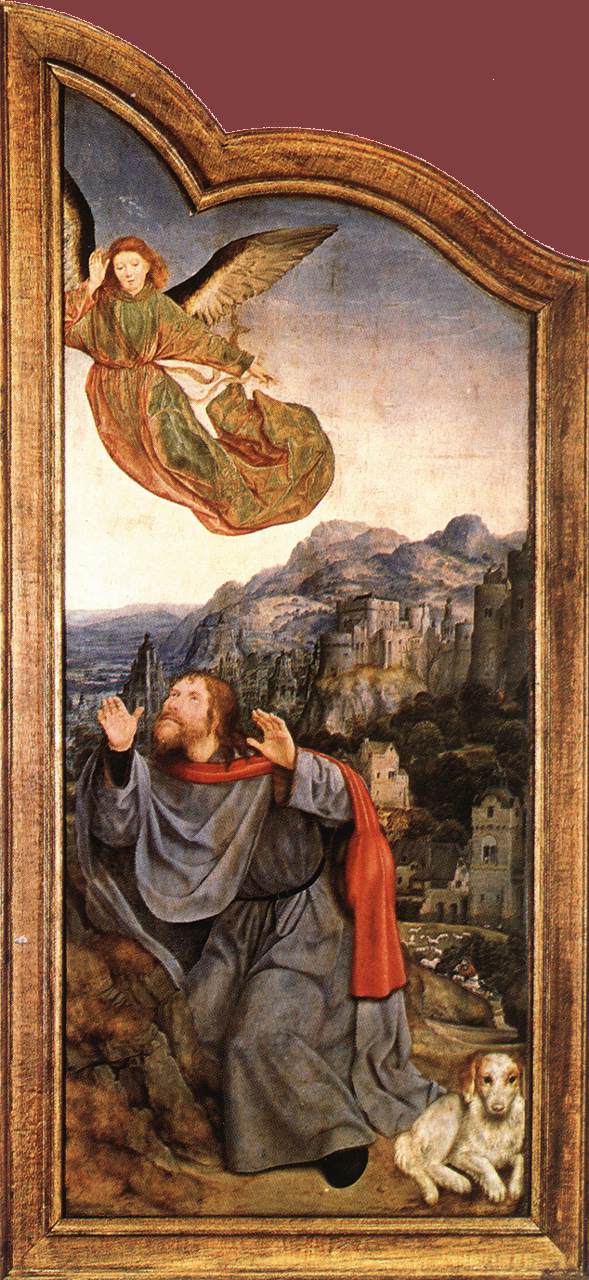

 Quentin Massys, Pala di S. Anna, 1507-08, Musées Royaux des Beaux-Arts, Bruxelles
-
26-07-05, 16:53 #16**********
- Data Registrazione
- 04 Jun 2003
- Messaggi
- 23,775
-
- 18
-
- 35
- Mentioned
- 2 Post(s)
- Tagged
- 0 Thread(s)

 Eugène Delacroix, Educazione della Vergine, 1842, Musée Delacroix, Parigi

 Francisco de Zurbarán, Immacolata Concenzione con i SS. Gioacchino ed Anna, 1638, National Gallery of Scotland, Edinburgo
 Giovanni Battista Tiepolo, Visione di S. Anna, 1759, Gemäldegalerie, Dresda
 Noël Hallé, S. Anna rivela alla Vergine la profezia di Isaia, 1749, Los Angeles County Museum of Art, Los Angeles

 Pietr Paulus Rubens, Sacra Famiglia con i SS. Anna, Francesco d'Assisi e Giovannino, 1630-34, Metropolitan Museum of Art, New York
-
26-07-05, 16:59 #17**********
- Data Registrazione
- 04 Jun 2003
- Messaggi
- 23,775
-
- 18
-
- 35
- Mentioned
- 2 Post(s)
- Tagged
- 0 Thread(s)
Link tematici collegati
Natività della Beata Vergine Maria
SS. Nome di Maria Vergine
Presentazione della Beata Vergine Maria
Immacolata Concezione di Maria
Annunciazione della Beata Vergine Maria
Visitazione della Beata Vergine Maria a S. Elisabetta
S. Gioacchino, padre dell'Immacolata Vergine Madre di Dio
SS. Elisabetta e Zaccaria genitori del Precursore
-
26-07-05, 22:47 #18**********
- Data Registrazione
- 04 Jun 2003
- Messaggi
- 23,775
-
- 18
-
- 35
- Mentioned
- 2 Post(s)
- Tagged
- 0 Thread(s)




-
26-07-06, 08:02 #19**********
- Data Registrazione
- 04 Jun 2003
- Messaggi
- 23,775
-
- 18
-
- 35
- Mentioned
- 2 Post(s)
- Tagged
- 0 Thread(s)
Good St. Anne
Nihil Obstat: William J. Blacet, J.C.L.
Censor Librorum
Imprimatur: +J. John P. Cody, S.T.D.
Bishop of Kansas City-St. Joseph
December 4, 1957
Originally published by the Benedictine Convent of Perpetual Adoration, Clyde, Missouri in 1958. Revised edition published in 1963. Retypeset and re-published by TAN Books and Publishers, Inc. in 1998. Updates and additions made to information on shrines by the Publisher, 1998.
The Dignity and Sanctity of Saint Anne
How holy must have been the woman in whom the great mystery of the Immaculate Conception was accomplished! How holy the womb into which the fullness of grace descended, in which the child "full of grace" was conceived and took flesh! Great was the dignity of St. Elizabeth, the mother of St. John the Baptist, who was privileged to have her son sanctified in her womb; but how much greater is the dignity of St. Anne, whose child, by a special prerogative, from the first instant of her conception was preserved from all taint of sin! Holy was the root from which sprouted the tree that bore the holiest Fruit, Jesus. St. Anne's sanctity was increased still more through this wonderful conception: and indeed, how highly must she have been sanctified who bore the Mother of God!
Is it any wonder that St. Jerome praises her in the words: "Anne is the glorious tree from which bloomed a twig under Divine influence. She is the sublime heaven from whose heights the Star of the Sea neared its rising. She is the blessed barren woman, happy mother among mothers, from whose pure womb came forth the shining temple of God, the sanctuary of the Holy Ghost, the Mother of God!"
Yes, great indeed was the privilege and dignity conferred by God on St. Anne in electing her to be the mother of the treasury of all graces! How great must have been St. Anne's joy, how blissful her delight, when, contrary to all hope, she gave birth to a child! And what a child! Never before had earth beheld a child so fair and noble as Anne's infant daughter, "conceived without stain of Original Sin." Never had there been a maternity so rich in blessings as hers -she who was privileged to call her child by the exalted title of "Mother of God."
Well indeed might St. John Damascene, a great Doctor of the Church, exclaim: "Blessed, thrice blessed art thou, O Saint Anne, who didst receive from God and bring forth the blessed child from whom proceeded Christ, the Flower of life! We congratulate thee, O blessed Anne, on the dignity of being the mother of Mary, for thou hast brought forth our common hope, the germ of Promise! All pious lips bless thee in thy daughter, all languages glorify thy child! Worthy art thou above all praise, worthy of the praise of all who are redeemed, for thou hast given life to her who brought forth our Savior, Jesus Christ."
Even her name "Anne" signifies "gracious, loving" and typifies her sublime destiny. She too had been chosen by God from eternity, and to her, as to her daughter, Mary, may be applied the words: "The Lord possessed me in the beginning of His ways . . . I was set up from eternity." [Prov. 8: 22-23] God prepared St. Anne with magnificent gifts and graces. Of her may be said what St. Bernardine of Siena wrote of St. Joseph: "In the kingdom of grace the universal rule is: If God elects anyone for a special privilege and a sublime state, He bestows on that person all the gifts necessary for his state and adornment."
"Anne was the most chaste of virgins," wrote Mary of Agreda in The Mystical City of God. "From her very childhood, she possessed the fullness of every virtue. She was continually engaged in devout meditation. Her unceasing prayer was that the Redeemer might come soon."
As the works of God are perfect, it was natural to expect that He should make St. Anne a worthy mother of that most pure creature who was superior in sanctity to all creatures and inferior only to God. Had St. Anne not been adorned with angelic purity, she could not have become the mother of the Virgin of virgins. The great miracle of Mary's Immaculate Conception fittingly took place in St. Anne's pure womb.
In her visions, the servant of God, Anne Catherine Emmerich, beheld St. Anne in ecstasy, enveloped in heavenly splendor and surrounded by a host of Angels at the moment of Mary's Immaculate Conception. She beheld how the heavens opened, and she saw the holy Angels and the Most Holy Trinity rejoice. Equally great was the jubilation at the Blessed Virgin's birth. These are but a few rays of St. Anne's dignity and sanctity.
Veneration of Saint Anne
How long has St. Anne been honored by Catholics? Baronius, a celebrated ecclesiastical writer, says: "Veneration of St. Anne is as ancient as the Church itself. In the East and in the West, she has been venerated from the beginning." It is related that the Apostles themselves transformed St. Anne's dwelling at Jerusalem into a church. Why is St. Anne one of the most popular Saints of Holy Church? Because of the plenitude of her virtues, the height of her exalted dignity and her close relationship with the holiest of all persons, Jesus and Mary. After St. Joseph, no Saint enjoys such widespread veneration as good St. Anne. It would be impossible to enumerate the churches and chapels dedicated to her and the many places of pilgrimage where, in the course of centuries, manifold favors have been granted and astounding miracles wrought. The number of churches having an altar or image in honor of St. Anne is constantly increasing.
Love and veneration of the faithful for St. Anne is manifested in a practical way by giving the name "Anne" to girls in Baptism. Certainly, after the name of Mary, none is more beautiful. Frequently the two names, Mary and Anne, are combined.
Miraculous Discovery of Relics
According to a most ancient and uninterrupted tradition, the body of St. Anne was carried to Gaul [a province of the Roman empire which included what are now the countries of France and upper Italy] by the same vessel which carried Lazarus and his sisters there. During the first century of the Christian era, these friends of Our Lord were banished from Palestine because of their faith. From their hands St. Anne's precious remains were taken for safekeeping to the city of Apta Julia, which in our own times is the city of Apt, France. In those stormy days of persecution, it was necessary to hide the relics of the Martyrs and Saints.
Consequently, the body of St. Anne was buried in an underground church or crypt. The martyrology of Apt, one of the most ancient in existence, mentions this fact.
The first bishop of Apta Julia, St. Auspicius, who died before 118, took further precautions to guard this holy treasure from desecration and had the body buried still deeper in the subterranean chapel. All approach to it was carefully concealed till persecutions and invasions should have ceased. For centuries, the country was repeatedly overrun by hordes of barbarians, and it was only natural that during these agitated years the precise spot where St. Auspicius had carefully hidden his treasure became lost in obscurity.
After Charlemagne's decisive victory over the Saracens at the close of the eighth century, peace and security returned to Gaul. It was then that the people began to restore and rebuild the holy places destroyed or desecrated by the invaders. Priests and bishops of Apta Julia began to seek for the exact Spot in the deep crypt where St. Auspicius had hidden and walled up the sarcophagus of St. Anne.
Charlemagne's first care on his arrival at Apt was to have the cathedral reconsecrated. This took place during the Easter solemnities, in the presence of an enormous crowd of nobles, clergy and people. But there was one cause of sadness amid all the rejoicing, namely, that every effort to find the remains of St. Anne had proved fruitless. A miracle, however, was to lead to the discovery of her resting place, as is related by Charlemagne in a letter to Pope Adrian I.
Among the young nobles who accompanied their parents on this occasion was John, a lad of fourteen, the son of Baron Casanova, deaf, dumb and blind from birth. People near the boy in the sanctuary remarked that during the services he was carried away by some overpowering emotion. With rapt and upturned face he seemed to be listening to voices from above. Presently, he moved toward the high altar, struck with his staff the steps leading up to it and made signs that they should dig there. His persistence caused considerable disturbance amid the solemn rites, but neither the clergy nor the royal guards could quiet or restrain the youth.
Charlemagne was deeply impressed. After Mass, he commanded that the excavation desired by the boy should be made. The altar steps were removed and a door, closed up with huge stones, was revealed. This was the door of the ancient crypt in which St. Auspicius had been accustomed to celebrate the holy Mysteries and to feed his flock with the Bread of Life. Its size and adornments reminded one of the Roman catacombs. No sooner had this door been opened and the flight of steps leading down from it disclosed than the blind boy rushed forward, as if his eyes had been suddenly opened, and led the way into this underground church. Charlemagne now held the boy's hand and gave orders to keep back the excited multitude.
John made signs that they should search farther, and he struck the wall of the crypt, indicating that what they sought lay beyond. When the wall was broken down, another and lower crypt was discovered at the end of a long and narrow corridor. As they came in view of this crypt, a bright light flashed upon the Emperor and his assistants. They beheld, in front of a walled recess, a burning lamp, which flooded the place with unearthly splendor. No sooner, however, had the Emperor and his cortege entered this place, than the lamp went out. But, more wonderful still, at that very moment the blind boy could see, speak and hear. "The body of Saint Anne, mother of the Virgin Mary, Mother of God, is in yonder recess," were his first words.
The awe-stricken Emperor and his followers, at first dumb with amazement, gave vent to their emotion in words of praise and thanksgiving. The walled recess was thrown open, a sweet fragrance like that of oriental balm filled the air, and a casket of cypress wood was discovered containing the body of St. Anne wrapped round and round with folds of precious cloth. On the casket was the inscription: "Here lies the body of Blessed Anne, mother of the Virgin Mary."
Charlemagne, with all those present, venerated the sacred deposit thus brought to light. Afterward he had an exact narrative of the discovery drawn up by one of his notaries and a copy sent to the Pope with the royal letter. This letter and the Pope's answer are still extant.
The miraculous discovery at once made the Cathedral of Apt the center of attraction for Christian pilgrims from every part of Gaul. In the wars which followed the reign of Charlemagne down to our own times, the clergy and people of Apt have watched with never failing love over the sacred treasure which is the glory of their city. Travelers visiting the venerable Cathedral of St. Auspicius will find piles of ex votos, the indisputable testimonies during eleven centuries of the wonders wrought there by Christ at the intercession of His sainted Grandmother. The chief cities of Gaul hastened to solicit from the church of Apta Julia portions of the hallowed body thus miraculously discovered. Fragments detached from the head found their way to various places through the favor of sovereigns or powerful prelates, but the greatest portion of St. Anne's sacred body still reposes in Apt.
Vienna, Austria, possesses the right hand of St. Anne, which is devoutly venerated in the beautiful church which bears her name.
An arm of the Saint was solicited and obtained by the Popes and placed under the care of the Benedictine monks in the magnificent monastery church of St. Paul-Outside-the-Walls in Rome. In May, 1960, the Benedictines gave the forearm to the Shrine of St. Anne de Beaupré in Canada. [More later on this shrine.]
In the Cathedral of Bologna, Italy, a large portion of the Saint's head is venerated.
Through these precious relics, which have proved efficacious in every kind of distress, miracles have been wrought-up to the present day.
Veneration of Saint Anne in the Americas
The Spanish missionaries in particular, who labored in Mexico and South America, sought to inspire their converts with affection for St. Anne. These zealous heralds of the Faith, while announcing the doctrine of our Divine Savior, also laid the foundation of fervent and tender devotion to Mary, His virgin Mother, and proclaimed everywhere the honor and glory of good St. Anne.

 The Canadian Shrine of St. Anne de Beaupré (Quebec) boasts of a beautiful pillared statue of the Saint; behind this statue is the side altar which contains the reliquary of her arm bone [Picture 3].
 Holy Card Image of the Shrine Statue

 The front of the shrine: Sainte-Anne-de-Beaupré, the oldest shrine in North America

Saint Anne de Beaupré
In recent years, the New World has been venerating St. Anne in a special manner. Canada claims the title of the "Land of St. Anne." The early missionaries who came from Bretagne [Brittany], France, firmly established devotion to St. Anne in the hearts of the faithful. The first and principal place of pilgrimage to the honor of St. Anne in Canada was Beaupré, with its magnificent basilica of St. Anne.
The history of this shrine is as interesting as it is miraculous.
One night in 1650, some sailors were overtaken on the St. Lawrence by a frightful storm. Their vessel was driven by the wind and waves toward the rocky banks. They were seemingly about to perish, and no earthly aid was near. In their peril, they implored the help of good St. Anne, the patroness of their beloved Brittany, and vowed, if saved, to build a chapel in her honor on whatever spot they should land.
Morning dawned, and to their great astonishment, they found themselves on the north bank of the river at Beaupré. They landed and erected a little shrine in honor of good St. Anne, their deliverer. In 1656, Beaupré was made a parish by Msgr. de Laval, Bishop of Quebec. A parish church was erected the following year.
While the foundation of the building was being laid, the first attested marvel was wrought. Louis Guimond, a prey to keen sufferings, cherished an ardent devotion to St. Anne. He wished to have a share in erecting a shrine in her honor and managed to bring three stones for the foundation of the church. After accomplishing this act of devotion, he was suddenly and completely cured.
The wonders began to multiply. They were attested by Bishop de Laval in 1662. Father Morel, who was pastor at that time, wrote: "Of much more importance than all these cures are the spiritual graces daily bestowed by Almighty God through the intercession of good St. Anne on many a sinner, by converting him to a better life. Having performed the pastoral functions in the church for five or six years, I have known many persons who experienced the grace of so happy a change."
In 1662, while Father Morel was still pastor at Beaupré, Blessed Marie of the Incarnation, who was the foundress of the Ursuline Nuns of Quebec, wrote from that city to a relative who lived back in France:
"Some twenty miles from here . . . is a church of St. Anne in which Our Lord works great wonders for the sake of the holy mother of the most Blessed Virgin Mary. At this shrine, paralytics obtain strength to walk, the blind receive their sight, and the sick, no matter what their ailment may be, regain their health."
Over three centuries have elapsed since then, but the wonders wrought by good St. Anne have never ceased. In time a basilica, magnificent in its beauty and proportions, was erected to her honor at Beaupré. Its most remarkable feature was the countless number of crutches, canes, trusses and even eyeglasses which were suspended or piled in the chapels as the ex votos of innumerable invalids who thus bore witness to their recovery through the assistance of good St. Anne.
But even such monuments are in the hands of Divine Providence, and as though to indicate that a yet worthier monument should be dedicated to the honor of good St. Anne, the magnificent basilica was completely destroyed by fire on the morning of March 29, 1922. After the hungry flames had completed their work of destruction, all that remained of the splendid structure were broken and scattered turrets, charred and dismantled walls, heaps of debris, seared and scattered ex votos. The disaster was complete, but wonder of wonders, over the shapeless mass of what had been: the basilica, above the crumbling portal, between the two broken towers, stood the wooden statue of St. Anne, holding in her arms the Blessed Virgin Mary. And standing unscathed amid the ruins, the miraculous statue of the Saint still held in its gilt casing the great relic of St. Anne.
What was to be done to accommodate the crowds of pilgrims who came to venerate the wondrous statue? The problem was solved by erecting a temporary church. In thirty-seven days St. Anne was provided with a new "basilica," a simple wooden church in which the miraculous statue was enshrined and which witnessed the cures of thousands of devout clients. But alas, during the night of November 8, 1926, the wooden framework of this temporary basilica fell; prey to another conflagration.
Rising upon the ashes of this modest shrine to the honor of St. Anne is the present great Basilica, beautiful and majestic in its Romanesque architecture, Indeed a worthy monument in stone to the great Saint from whose maternal heart streams of mercy have flowed to mankind.
Well over two million pilgrims visit the shrine annually, proving how greatly St. Anne is venerated among the faithful and what confidence they place in her intercession. Since the beginning of the shrine in 1658, over 46,500,000 pilgrims [1963 statistics] and visitors from all over the world have come to venerate the relics of good St. Anne and to implore her intercession. The peak of 2,000,000 visitors was reached in 1957. Many people come in pilgrimages, which are becoming ever more popular. St. Anne's feast [July 26] always draws immense crowds to the shrine. As is natural, most of the visitors are from the United States and Canada, though far distant parts of the globe are not without representatives.
The year 1958 marked the Third Centenary of the founding of the Shrine of St. Anne de Beaupré. Nearly three million pilgrims took part in the Tercentennial celebrations, inaugurated on the first Sunday of May and concluded on October 12. Congresses, pilgrimages, novenas, triduums and symposia highlighted each month.
Precious Relics
The Church of St. Anne de Beaupré in Quebec, in Canada has long been privileged to possess a rare relic of the Saint. It is a fragment of the wrist bone of St. Anne, about two or three inches in length, with the skin and flesh still adhering to the bone and showing the joint near the thumb. When the precious relic arrived in New York from Rome on May 1, 1892, a holy enthusiasm seized the busy metropolis. Crowds of the faithful began to flock to the church of St. Jean Baptiste, where the relic was temporarily deposited for the veneration of the faithful. It was a spectacle never before witnessed in the New World.
After obtaining this relic, the Redemptorist Fathers, guardians of the Shrine of St. Anne de Beaupré, sought to obtain possession of the forearm from which the wrist bone had been detached in 1892. This relic had been venerated for centuries in the Major Basilica of St. Paul- Outside-the-Walls in Rome. In May, 1960, this cherished desire of the Redemptorist Fathers was realized when the Benedictines in charge of the Basilica of St. Paul donated the entire forearm of St. Anne to the Basilica of St. Anne de Beaupré. This relic measures seven inches in length by two inches at the base.
On the occasion of its translation, splendid spiritual celebrations again took place in the church of St. Jean Baptiste in New York and at the Shrine of St. Anne de Beaupré. On July 3, 1960, the first Sunday of the month of St. Anne, the new relic was solemnly enthroned in the Basilica of St. Anne, where it has since been venerated by the crowds of pilgrims who come to the shrine.
 Picture 3 of the Canadian Shrine
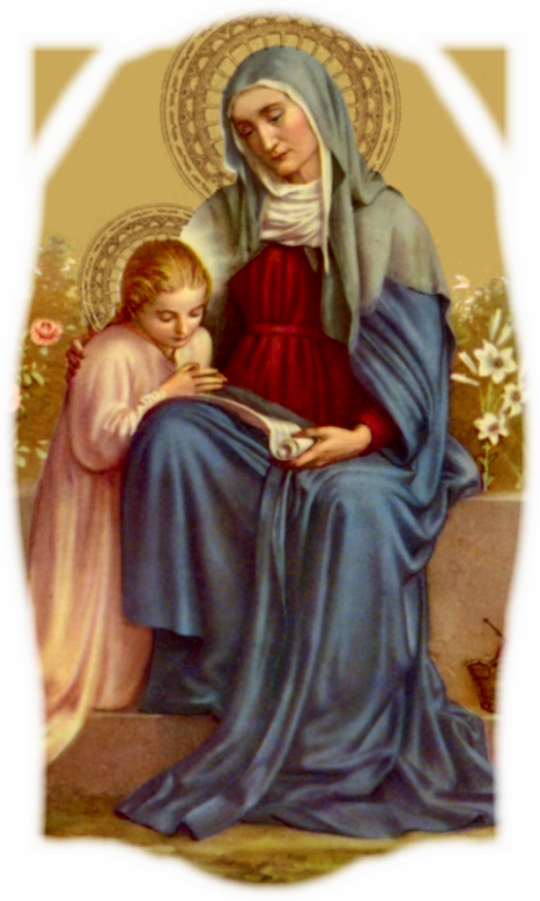 From THE HOUSETOPS Image of St. Anne, Canadian Shrine Picture
Saint Anne of New York
So great had been the enthusiasm of the faithful of New York in venerating the relic of St. Anne in 1892, when on its way to the Shrine of St. Anne de Beaupré, that it had remained exposed for three weeks, instead of three days, as first intended. Throngs gathered from every direction. Their pious zeal was rewarded by Pope Leo XIII, who soon afterward presented them with a considerable portion of the forearm of St. Anne, which since that time has been preserved and devoutly venerated in the church of St. Jean Baptiste.
In October, 1900, the Fathers of the Blessed Sacrament, whose chief work is the perpetual adoration of the Blessed Sacrament, were put in charge of the church. Such numbers of worshipers came to honor the Blessed Sacrament and St. Anne that the church proved too small. In 1901 a crypt dedicated to St. Anne was built under the upper church, but this too soon proved inadequate. However, on the appeal of Cardinal Farley, generous donations of the devotees of the Blessed Sacrament and St. Anne made it possible to erect a magnificent new church, at 194 E. 76th St. [Lexington Avenue and East 76th Street], which was opened in February, 1913.
St. Anne, as if to show her gratitude, has not ceased to bestow marvelous cures and spiritual and temporal favors upon her children. In the sanctuary, tier upon tier of crutches, canes and braces witness her miraculous power. Four times daily the relic is applied to the sick, the lame, the blind, the broken-hearted and the needy. Every Tuesday, [see note below] the perpetual novena services are attended by large crowds.
Every year, solemn novena services are held before the feast of St. Anne in July, and large as the church is, the novena crowds strain its capacity to the utmost. Nine Masses are celebrated daily, and thousands of Holy Communions are distributed during the novena. Seven priests are on duty in the confessionals from early morning until night. Two sermons and Benediction of the Blessed Sacrament are given in the afternoon and evening; the holy relic is applied almost continuously from morning until late at night. Conservative estimates put the number of pilgrims who visit the shrine during the novena at no less than 100,000.
NOTE:
While we have checked all the U.S. shrines mentioned here to make sure they still exist, anyone who wishes to attend devotions at any of them is advised to call beforehand to check the schedule. Also, those shrines which are not located inside a parish church may not be open every day.------Publisher, 1998.
Other Shrines of St. Anne in the United States
While the other shrines of St. Anne in the United States are not so widely known as that in New York and that of St. Anne de Beaupré in Canada, nevertheless the Saint does not disdain to work the prodigies of her goodness elsewhere too.
The Blessed Sacrament Fathers and Brothers have a shrine to St. Anne in Cleveland at 5384 Wilson Mills Rd. St. Anne's shrine stands next to St. Paschal's Church.
In Arvada, Colorado [7555 Grant Place], there is a shrine dedicated to St. Anne which is privileged to possess a true relic of the Saint, a particle of bone. In former years the relic was venerated through the intercession of good St. Anne.
In the Middle West, also, are located several shrines of St. Anne, the one in Chicago, Illinois being known as "St. Anne of Brighton Park." This shrine was begun in 1900 by French Canadians. Its simple origin centered about the authentic relics of the Saint, portions of bones, the largest being about one inch in length. Because of the many reported miracles and spiritual favors received, the shrine grew to be one of the largest and most notable in the United States and has attracted thousands of pilgrims who are unable to journey to the more famous shrine of St. Anne de Beaupré. At the Fountain of St. Anne, the waters of which pass over the encased relic of the Saint, many cures have been wrought, and there are on record at the shrine the names of hundreds of persons who have been cured or helped by the holy mother of the Blessed Virgin.
The shrine itself is a chapel in Our Lady of Fatima parish at West 38th Place [formerly the church of St. Joseph and St. Anne at 3836 S. California Avenue]. Devotions to St. Anne are held there every Thursday. The Basilica of St. Mary in Minneapolis, Minnesota, was formerly a center of devotion to St. Anne and is still blessed in the possession of a precious relic of the Saint, which is now imbedded in a side altar. In former years the devoted clients of St. Anne came in large numbers to venerate the relic when it was presented for public veneration, and many favors were received through the loving mother of the Mother of Mercy. [In recent years the shrine of St. Anne has also served as a memorial to children and youths who have died.]
A fitting monument to the glories of St. Anne is the shrine in Scranton, Pennsylvania, known as St. Anne of Scranton, or St. Anne's Basilica parish. It is located at 1239 St. Anne St. and is served by the Passionist Fathers. A perpetual novena is conducted there every Monday, and a steady stream of clients continues from early morning till night. For centuries St. Anne has been invoked as patroness of miners, and it surely cannot be a coincidence that this shrine is located in the center of the anthracite coal mining region.
In St. Louis, Missouri, too, there is a shrine to St. Anne. It is now a combined parish called Visitation-St. Anne's Shrine. The parish is listed in the Catholic Directory as "African-American." The church is located at 4145 Evans Ave. Devotions are held every Thursday.
In the village of St. Anne, Illinois, a novena of Masses is held yearly at St. Anne Catholic Church from July 18 to July 26, with other festive observances on July 26, the Feast of St. Anne. St. Anne Church was founded in 1872; it is blessed to possess a relic of the Saint. The church is located about 60 miles south of Chicago and 15 miles: southeast of Kankakee. The novena has been the occasion of many blessings, both spiritual and physical-----as testified by the canes, crutches and wheelchairs left behind.
In the south, New Orleans, Louisiana, boasts of a beautiful shrine of St. Anne, dedicated in 1935. It consists of a grotto and small gift shop located at 2101 Ursuline Avenue [Ursuline and Johnston], next to St. Peter Claver Parish [with which it is not connected]. Although Church authorities, had decided in 1995 to close the shrine, they consented to allow lay devotees of St. Anne to keep it open on a limited basis. Currently the shrine is open a few mornings per week [Tuesdays, Saturdays and Sundays-----and Fridays in Lent].
While the above-mentioned shrine is the original shrine of St. Anne in New Orleans, the title of National Shrine of St. Anne now belongs to St. Anne Church and Shrine, located at 3601 Transcontinental in nearby Metairie, Louisiana 70006. Devotions are held there on Tuesday nights. The St. Anne Group of New Orleans, which had taken over the work of constructing a basilica and other units, was raised to the rank of an Archconfraternity for the whole United States by Pius XI on May 18, 1926.
A relic of St. Anne is venerated in the relic chapel of St. Mary's College in St. Mary's, Kansas.
The Benedictine Sisters of Clyde, Missouri are privileged to possess a small particle of bone of St. Anne, which is enshrined in their relic chapel. Visitors are welcome to visit the chapel. The convent and chapel are located on County Road P, off Hwy 136, 16 miles SSE of Maryville.
The Blessed Virgin Mary and Saint Anne
Veneration of St. Anne is closely allied to veneration of the Blessed Virgin Mary. The feasts of Mary's nativity and presentation are in reality feasts of St. Anne, as all praises referring to the daughter are directed also to the mother. Mary surpasses all the faithful in veneration, esteem and in tender and filial love for her holy mother. While Anne and Mary lived on earth, the bond of love that united their hearts was most ardent and intimate. Nor has this bond been dissolved in Heaven.
Rather, it has been drawn still closer and has become indissoluble for all eternity. Mary once appeared to one of her clients and asked her to add to her customary Rosary devotion an Our Father and Hail Mary in honor of Mary's holy mother, St. Anne. "Those who honor St. Anne," said Our Lady, "will obtain great aid in every need, especially at the hour of death." To another person she said: "The honor you show to my mother is doubly dear and pleasing to me."
The learned Bollandists relate that a hermit who was especially devoted to the Blessed Virgin was once seized with bitter anguish of spirit. He fled for refuge to the Queen of Heaven. Radiant with splendor, Mary appeared to him and said: "Since you are lovingly devoted to me, I will take away all your grief and sorrow of soul, but I admonish you to venerate and praise my dear mother also, if you desire great graces from me. I am highly pleased with the affection accorded to my beloved mother. Know, too, that my Son, Jesus, has promised to deliver from misfortune all who honor my mother and to assist them in attaining eternal glory. My son, practice this devotion and make it known."
After speaking these words, Mary vanished, leaving a heavenly perfume in the hermit's cell. The anchorite faithfully complied with the request of the Virgin Mother. From that time on, to every greeting addressed to the Queen of Heaven, he added the prayer: "And blessed be thy sweet mother, Anne, from whom thou didst assume thy virginal flesh."
If we wish to give Mary special joy, let us fervently venerate St. Anne, for every child is pleased to see her mother honored.
How the Saints Honored Saint Anne
It would be impossible to enumerate the many Saints who practiced great devotion to St. Anne. St. Augustine, the illustrious Doctor who illumined the Church of God with his profound wisdom, practiced an ardent devotion to St. Anne. Every year on the Saint's feast, he preached on her virtues and dignity with an eloquence which encouraged and inspired his numerous hearers.
St. John Damascene, another Doctor of the Church, not only most ardently venerated Mary, but St. Anne as well. He preached many sermons in her honor and composed books that treated of her glory and dignity. "St. Anne," he declares in his writing, "is a generous mother, a compassionate mother, a gracious mother, because the word 'Anne' means 'generous, merciful, gracious.' "
St. Thomas Aquinas, hailed as one of the greatest of intellectuals, a prodigy of learning, a pillar of Holy Church, an angel of wisdom and one of the most eminent Doctors of the Church, was a fervent client of good St. Anne. His example ought to strengthen our confidence in this privileged Saint and urge us to venerate her most fervently. He frequently refers to St. Anne and sets forth reasons for honoring her dignity and power. He assures us that the privilege of aiding man in every distress has been given to good St. Anne.
St. Teresa of Avila, the seraphic virgin and reformer of religious discipline, entertained a tender love of St. Anne. This highly gifted teacher of prayer delighted to speak of St. Anne's dignity and power, and she inspired those under her care with a fervent affection for Our Lady's mother. In all convents of the Carmelite Order, she introduced special devotions to St. Anne. The same was done by St. Bridget in her order.
Anne Catherine Emmerich, who bore the sacred stigmata in her body, said, "In desperate cases of need, I always invoke the holy mother Anne."
The Power of St. Anne's Intercession
Almighty God privileged St. Anne above all others in choosing her to be the mother of the Queen of Heaven. This favored Saint ranks high in merit and glory, near to the Word Incarnate and to His most holy Mother. Certainly, then, St. Anne has great power with God. Yes, assuredly the mother of the most powerful and amiable Virgin is likewise full of power and mercy.
To many Saints God has granted the power of working miracles. He told His Apostles that they would do greater things than He had done. Now surely, what He promised to His chosen followers He could not refuse to His own grandmother! Those related to Him by the ties of blood were dear to Him in life and still have great power through their intercession. There can be no question, then, that St. Anne has great influence over her Divine Grandson and that by her intercessory power she can also work miracles in favor of her clients.
Tradition, the history of the Church and the chronicles of various places of pilgrimage have recorded countless miracles wrought by Christ through the intercession of His Sainted grandmother. Nor have they ceased to this day. Yearly, hundreds of thousands of persons visit the shrine of St. Anne de Beaupré in Canada alone. Many are cured of diseases; all are comforted and consoled. These favors serve to strengthen and confirm our trust and confidence in the power of the intercession of good St. Anne.
The famous and learned Abbot Trithemius practiced an extraordinary devotion to St. Anne and did all in his power to induce others to venerate her. He wrote a book in her praise in which he says: "To St. Anne God has given the power to aid in every necessity, because Jesus, her Divine Grandchild according to the flesh, will refuse her no petition, and Mary, her glorious daughter, supports her every request. Those who venerate good St. Anne shall want for nothing, either in this life or the next. Believe me, if you love and venerate this Saint, you will experience how highly God esteems her. He grants all she asks! It would be impossible to enumerate the many graces she obtains daily for her servants."
The same writer continues: "St. Anne by her intercession dispels melancholy and evil desires. She also aids the poor, cures the sick and comforts the sorrowing. She removes tribulations and by her intercession obtains for her clients the grace to eradicate vice and implant virtue. She obtains light for the intellect, strength for the will and affection for the heart. This powerful Saint has preserved thousands from contagious diseases. Through her intercession, evil spirits have been expelled. For the barren in the married state, she obtains children and Heavenly assistance in delivery. She inspires the despairing with trust in God's mercy and excites the tepid to zeal and fervor. St. Anne has rescued many from imminent death; yes, through her intercession the dead have, in several instances, been restored to life. Those who worthily venerate St. Anne can obtain aid in every necessity through her mediation."
Pope Gregory XIII, when introducing the feast of St. Anne into the Church, declared: "We believe that St. Anne continually intercedes for us with the merciful Lord, for through her great benefits have come to mankind. From her was born the ever pure and immaculate Virgin Mary, who was found worthy to bring forth Jesus Christ, our Redeemer."
Pope Gregory XV encourages us thus: "We do not doubt that the more love we show to the mother of Mary, the more we merit the intercession and aid of the holy Virgin who brought forth the only-begotten Son of God, Our Lord Jesus Christ."
St. Teresa of Avila often said: "We know and are convinced that our good mother St. Anne helps in all needs, dangers and tribulations, for Our Lord wishes to show us that He will do also in Heaven what she asks of Him for us."
The saintly Abbot Trithemius again exhorts us: "Approach St. Anne, your amiable protectress, with full confidence. Knock at her gates with persevering prayer, because she can obtain for you the forgiveness of your sins and can open Heaven for you. She lacks nothing that can profit you . . . Believe me, who has already obtained many a favor through her whom the Queen of Heaven honors as her dearest mother . . . No one knows, no one believes, how many favors God confers on lovers of St. Anne!"
Patroness of Christian Mothers
St. Anne is the great model of all in the married state and of those otherwise charged with the education of children. Great was her honor in being the mother of the Mother of God and in giving to a lost world the Advocate of Mercy. Sublime was her office in instructing this blessed child in virtue and holiness.
St. Anne herself was a "vessel of grace," not in name only, but in the possession of those gifts with which God had endowed her to be the worthy mother of the Virgin Mary. Her motherly care for the Blessed Virgin was the means of St. Anne's sanctification. Because of this she receives and will receive a special glory in the Church to the end of ages.
How encouraging this is to all parents who make the holy education of their children their principal duty. By this they glorify their Creator, perpetuate His honor on earth and sanctify their own souls. From the hands of the parents God will one day require the souls of their children. Happy will those parents be who can say to the Divine Judge: "Not one of those whom Thou hast given me has been lost through my fault."
Realizing, therefore, the great duty she has in rearing her children well, the Catholic mother will daily recommend her children to God and pray especially to St. Anne for the gift of imparting to them a good training, the highest and most difficult of all arts.
St. Anne obtains many graces, priceless graces, for all who venerate her, but she grants her maternal assistance in particular to Christian mothers who choose her for their patroness and model.
Numberless examples prove that St. Anne obtains great favors for Christian mothers. She preserves peace in married life, restores harmony in discord and often wonderfully changes the bad disposition of a husband or wife. She protects the birth of children in an extraordinary manner; bestows blessings that lighten the task of rearing children properly; brings wayward children back upon the right path; obtains restoration to health for the mother when sick; preserves her precious life for her family, for her helpless children; and prevents the loss of husband and father. She revealed to St. Bridget that she would protect all who live chastely and peacefully in the married state.
St. Anne is glorious among the Saints, not only because she is the mother of Mary, but also because she gave Mary to God. She did not hesitate to sacrifice this child, her greatest joy, to the call of God, dedicating her at the age of three to His service in the Temple. In this she is a beautiful example to parents to foster and encourage vocations to the religious life among their children, rather than running the dread risk of hindering them. Through the intercession of St. Anne, parents come to know and acknowledge Divine guidance and learn that children are born to them not for earthly ends, but for God.
The Titles of Saint Anne
In the glorious Middle Ages, St. Anne was fondly called: Comfortress of the Sorrowing-----Mother of the Poor-----Health of the Sick-----Patroness of the Childless-----Help of the Pregnant-----Model of Married Women and Mothers-----Protectress of Widows-----Patroness of Laborers.
Comfortress of the Sorrowing. St. Anne was spared neither trials nor bitterness. God tested her severely, especially by ordaining that she would have to wait so long for Mary, her child of predilection. For years, hidden sorrow was her daily bread.
Mother of the Poor. St. Anne's love for the poor is evident from the praise bestowed upon her by St. John Damascene, who relates that she and St. Joachim distributed one third of their possessions to the poor. St. Anne still continues her charity in Heaven by assisting the poor, often in a wonderful manner. Nor does St. Anne forget the dying, the poorest of the poor. These, above all others, experience her motherly protection.
Health of the Sick. The number of cures wrought through the intercession of St. Anne is countless. Day after day the churches dedicated to her, as that at St. Anne de Beaupré, have resounded with the suppliant voices of her clients. Sight has been restored to the blind, hearing to the deaf, soundness to the bodies of the infirm and crippled.
These are the exterior signs of the power and maternal goodness of St. Anne, but what shall we say of the interior cures of spiritual ailments known to God alone? How many times has the good Saint strengthened a wavering courage, given a new vitality to a languid spiritual life, opened a mind to the light of the true Faith? Numberless prodigies of this kind have taken place at the Shrine of St. Anne, unknown to men for the most part, but known to God, whose loving Providence seems to take delight in granting multiplied graces through the intercession of good St. Anne, so that the ex votos, the mute testimonies of innumerable physical cures, could well be supplemented by testimonials of spiritual favors, were such a thing possible.
Good St. Anne, like a true and faithful mother, does not turn a deaf ear to the pleas of her children; and as a mother's heart is deeply touched at the sight of the afflictions of her children, so is St. Anne's motherly heart touched by the petitions of those who come to her seeking solace and comfort.
Patroness of the Childless. Childless mothers invoke good St. Anne because, only after many years of married life, did this Saint finally receive from God the child of grace, Mary. Full of compassion for those in like sorrow, she intercedes with God and, if it be His holy will, obtains for them the favor which completes the happiness of conjugal union.
Help of the Pregnant. This office of good St. Anne is connected with the foregoing. As she obtains for women the much-desired favor of motherhood, so she will also guard the fruit of the womb, so that the child may receive holy Baptism. She assists mothers when they are in their great anxiety, and she obtains a happy delivery.
Model of Married Women and Mothers. St. Anne is the shining example of all Christian women. This was her vocation on earth as wife of St. Joachim and mother of the Blessed Virgin. She is, indeed, the patroness of Christian women and mothers, their special protectress and advocate, having herself borne the heavy burdens of the married state and tasted all the bitterness which makes this vocation difficult. In every family where good St. Anne is invoked, she shows herself a loving protectress, and never has she been venerated or invoked in vain.
She obtains for women, particularly in our misguided age, the light to understand the high purpose of Matrimony. God instituted this Sacrament for the propagation of mankind. Since the Fall, the state of Matrimony is, especially for the wife, a state of penance, of labor, of submission. But although children are often a source of much trouble and care to parents, particularly to the mother, they are, nevertheless, to be regarded as a blessing, "the blessing of children," for they are a gift of God, a pledge of His Fatherly goodness. This is the sublime, the sacred purpose of Matrimony: to bring forth children who will be children of God, heirs of Heaven, who are destined to possess forever the places of the Fallen Angels! The hope of the Church is in good Christian mothers; their sons and daughters will fill the sanctuaries and convents.
Protectress of Widows. Difficult is the state of the Christian widow. Bereft of her husband, her staff and the support of her children, she stands alone in the world-----if poor, doubly needy. Is it any wonder, then, that Holy Scripture, after recommending to our charity the poor and orphans, also begs our compassion for widows? Their patroness, good St. Anne, will lovingly shield and protect them in their many dangers and temptations, both spiritual and temporal. Hence, Christian widows feel drawn to place themselves under her powerful protection.
Patroness of Laborers. Among the various classes of laborers, many regard St. Anne as their special protectress. But it is very significant that Christian sculptors venerate her as their model. They have chosen as their emblem the image of St. Anne teaching the child Mary, with these words inscribed beneath: "Thus she wrought the Tabernacle of God." For every Christian sculptor, the Tabernacle, the dwelling of God, is in a certain sense the masterpiece of his art.
St. Anne Obtains a Happy Death for Her Clients
As the Blessed Virgin revealed, St. Anne obtains for her clients the grace of a happy death. A priest tells of this experience of St. Anne's power:
"While I was assistant pastor in the parish of X, I was aroused one night by the ringing of the door bell. A stately woman, a stranger to me, called up the stairs: 'Father, please go quickly and take the Blessed Sacrament to a servant in a house upon the hill, for she will not live through the night. The sexton is waiting for you in the church.'
"The sexton had been awakened by the same person. I took the Blessed Sacrament, and we started for the house. An hour later we arrived. To our great surprise, we found the house locked, and nowhere a sound or a light. We knocked at the door, but when it was opened, no one knew anything of a servant being ill there, so we concluded that some person, wishing to make light of us, had deceived us. However, in order that I would not need to return with the Blessed Sacrament, one of the servants declared her readiness to go to Confession and to receive Holy Communion. Her suggestion was readily accepted. During her Confession, she began to feel indisposed. She finished her Confession and received Holy Communion. Before long her condition became worse, and she was obliged to go to bed. Soon it was evident that her end was near. I administered Extreme Unction and imparted the indulgence for the dying. Scarcely had this been done when the servant died.
"About her bed hung pictures of many Saints, among which was a large decorated representation of St. Anne. 'This servant,' said the inmates of the house, 'practiced special devotion to St. Anne. In her honor she abstained from milk every Tuesday.' I have no doubt that the woman who called the sexton and myself was none other than St. Anne, who obtained for her client this last great favor." Let us practice special devotion to St. Anne in order to obtain a happy death, upon which depends our happiness for all eternity.
Tuesday Dedicated to Saint Anne
St. Anne obtains numerous favors for those who dedicate Tuesday to her honor. The Blessed Virgin is said to have revealed to different Saints that she wished them to practice special devotion in honor of her glorious mother each Tuesday.
An ancient tradition tells us that when St. Anne was about to die, Our Lord addressed her thus:
"Blessed art thou, My beloved grandparent! All who venerate thee shall have blessings for soul and body. If they invoke thee in their needs, I will hear them for thy name's sake. Since thou dost die on a Tuesday, I appoint this day for thy honor, and I will grant the prayers of all who honor thee on this day."
Various devotions may be practiced on Tuesdays. It will greatly please St. Anne if on this day we assist at Holy Mass and receive Holy Communion in her honor and offer it to God in thanksgiving for the prerogatives bestowed upon her. St. Gertrude beheld in a vision how pleasing it is to the Saints if we thank God for the graces He has bestowed upon them. It was revealed to her that those who do this will be adorned with the merits of the Saints they thus honor.
There is also another simple way by which we may show our veneration for St. Anne. We are told that she was very charitable and gave alms freely. It will give her great joy if we give alms in her honor on Tuesdays.
One may also pray the Hail Mary nine times in honor of the nine months during which she bore the Immaculate Virgin Mary in her womb.
Clients of St. Anne should devoutly celebrate her Feast Day, July 26, and prepare for it by a novena. Lastly, we should try to spread devotion to good St. Anne, which can be done effectively by purchasing this booklet, GOOD ST. ANNE from TAN and circulating it.
Cures and Prodigies
In 1917, Miss Kirby of Newark, New Jersey, experienced a severe pain in her hip. The doctor ordered her not to use her foot for six weeks. At St. Joseph's Hospital in Paterson, New Jersey, three X-rays were taken and a brace made for the foot. Miss Kirby wore the brace, though it occasioned her intense pain and caused sores to form on her foot. She went to several other doctors and had eight more X-rays taken, but treatments were of no avail. Some doctors declared it to be tuberculosis, others a hip disease.
Concerning her cure in 1920, we quote her own words: "I had heard a great deal of St. Anne's devotion, and the Sisters of St. Joseph where I attended school told me of the relic of St. Anne. This filled me with great faith and confidence in St. Anne. My mother was going to take me to another doctor, but I asked her to take me to the church, where I had the relic applied to my foot, and within one hour I had a complete cure. At once I bought a statue of St. Anne and had a Mass said in her honor. I promised to return to the same church for a few Sundays, to do all in my power to spread devotion to St. Anne and to spend one hour a week in the presence of the Blessed Sacrament in thanksgiving for the great favor which I feel St. Anne granted me. Thanks to God and dear St. Anne!"
The following account is taken from the Annals of Good Saint Anne de Beaupré of August, 1937:
St. Paul, Minn., May 12, 1937
"About four years ago my son, then twenty-two years old, was flying in an airplane with a friend when their plane crashed and landed in water. Coming down, the plane hit some electric power lines, but through a miracle of God, my son was saved from being burned to death. The accident, however, left him in such a state that no one thought he would reach the hospital alive. I happened to be some fifty miles from the town. When they notified me of the accident, the first thing I thought of was prayer, and I pleaded that my son would live until I reached the hospital. When I arrived, the nurse took me into the room, and I did not know my own son, for there was not a bone in his face that was not smashed, and his head was about three times its normal size. The doctors were doing all they could, but they saw very little hope of recovery.
"I at once implored the help of good St. Anne, who had never failed me, and I begged her to ask the Lord to save my son, to preserve him from being blind or crippled. I promised to send her the only thing of value I had, a gold watch, that it might be used for the altar or some such purpose. I stayed beside my son all day and all night, as they thought the end would come at any time. Toward morning he spoke, telling me not to worry, as he felt he was going to be all right. In one week's time, my boy walked out of the hospital with me. When people saw him, they could not believe their eyes.
"After taking treatments for a year [for the accident had left a hole in the roof of his mouth, which made it difficult for him to eat or drink], he was feeling much better. Now the doctors have put a silver plate in his mouth and he is back at work again. I wish to thank good St. Anne not only for this, but for the many other favors she has granted me."-----Mrs. J.L.
"In order to cure an insidious lung infection, two serious operations had to be performed on me. I prayed to St. Anne and the Blessed Mother to carry me through this ordeal safely. Thanks to them, I am well on the road to recovery."-----H.K., N.Y.
"It is with a grateful heart that I thank good St. Anne, who, through her powerful intercession with her Divine Grandson and her beloved Daughter, has obtained my brother's return to the Sacraments after years of neglect. After twenty years he was reconciled to God on his deathbed and died a truly repentant death. His mind was crystal clear at the time of his reconciliation; his thoughts were continually on Heaven, and he repeatedly asked pardon for his sins. This happy death was little short of a miracle, as he had been very bitter against the Church. St. Anne is truly the Saint of Miracles. For years I prayed to her with confidence that my brother might see the error of his ways, and she has rewarded my trust."-----Ireland, June, 1962
"St. Anne has helped me through many heartaches and has been with me through the years. Many years ago, I made a novena to St. Anne for a special favor, promising to name my first child in her honor. My little girl is now three years old, and her name is Anne. St. Anne has also helped me to overcome a nervous breakdown. I only wish more people would pray to this wonderful Saint!"-----Mrs. E.U., New Jersey
"For sixteen years my mother suffered from acute rheumatic arthritis, which steadily grew worse. For the past six months she was unable to kneel and had the greatest difficulty in walking even a short distance. We had to help her in and out of her chair. We made several novenas to St. Anne for this intention and applied St. Anne's oil to the affected parts while praying for God's will to be done. Last night, for the first time in six months, she was able to kneel down without any help. I thank St. Anne from the bottom of my heart for this and countless other favors, particularly that of sending me a wonderful friend, who has brought me closer to Jesus and to her."-----Miss K.D., 1961
A CONSTANT FLOW OF TESTIMONIES
Each month the Annals of Good St. Anne, published at the shrine of St. Anne de Beaupré, Quebec, carries testimonials of marvelous favors obtained through the intercession of this good mother, which proves that her maternal solicitude extends to all times, to all needs.
The almost unceasing stream of pilgrimages to the shrine speaks louder than words concerning the faith and confidence which the faithful cherish in St. Anne's intercession. Truly impressive and inspiring is the devotion of the pilgrims here and at other shrines of this Saint.
The Archconfraternity of Saint Anne
The Archconfraternity of St. Anne de Beaupré, erected in the Basilica of St. Anne de Beaupré, Quebec, Canada, on April 26, 1887, has since made gigantic progress and has been enriched with many indulgences.
Its object is to glorify St. Anne by rendering her veneration more universal and more practical; to extend to a greater number of souls those marvelous graces God has been pleased to bestow on her devout clients; to procure for the faithful, and more especially for poor sinners, for the sick, infirm and dying, the precious privilege of sharing in the immense union of prayers to St. Anne and in the Masses offered in her honor; to promote better Christian living.
In order to become a member of the Archconfraternity it is only necessary to be enrolled in the register of members, either at St. Anne de Beaupré or in any church in which the association may have been erected. If possible, personal presence is desirable, but in case of impossibility, registration may be made by letter.
Full information regarding pious practices observed by members, indulgences to be gained, etc. can be obtained from the Archconfraternity located at:
Shrine of St. Anne de Beaupré
10018 Royale Ave.
St. Anne de Beaupré, P.Q. G0A 3C0
CANADA
A Prayer in Honor of the Blessed Virgin and Saint Anne
HAIL MARY, full of grace, the Lord is with thee, and may thy grace be with me! Blessed art thou among women, and blessed be St. Anne, thy mother who brought thee forth, O Virgin Mary, all immaculate, who didst give birth to Jesus Christ, the Son of the living God. Amen.
Novena Prayer to Saint Anne
To obtain some special favor
O GLORIOUS St. Anne, filled with compassion for those who invoke thee and with love for those who suffer, heavily laden with the weight of my troubles, I cast myself at thy feet and humbly beg of thee to take under thy special protection the present affair which I commend to thee.
[State your petition.]
Be pleased to commend it to thy daughter, the Blessed Virgin Mary, and lay it before the throne of Jesus, so that He may bring it to a happy outcome. Cease not to intercede for me until my request is granted. Above all, obtain for me the grace of one day beholding my God face to face, and, with thee and Mary and all the Saints, of praising and blessing Him for all eternity. Amen.
Good St. Anne, mother of her who is our life, our sweetness and our hope, pray to her for us and obtain our request. [Three times.]
Good St. Anne, pray for us.
Jesus, Mary, Anne.
Memorare to Saint Anne
To obtain some special favor
REMEMBER, O holy mother St. Anne, that never was it known that anyone who fled to thy protection, implored thy help and sought thy intercession was left unaided, for thou art a most merciful mother and aid all who are in distress.
Inspired with this confidence, I take refuge with thee and beseech thee, by thy great prerogative of being the mother of the Queen of Heaven and grandmother of the Savior of the world, come to my aid with thy powerful intercession, and obtain from thine Immaculate Daughter this favor [mention it]. In honor of the nine months during which thou didst bear the ever-blessed Virgin in thy womb and brought her forth without stain of Original Sin, I now pray nine Hail Marys, which offer thee through my Guardian Angel. Amen.
Hail Mary . . . [Nine times.]
Prayer for God's Blessing on the Married
I BLESS THEE, most gracious Lord Jesus Christ, for having ordained that Thy holy Mother, the Virgin Mary, of whom Thou, O Redeemer of all men, didst will to assume flesh, should proceed from the chaste union of Joachim and Anne. By Thy goodness I beseech Thee, through the merits of the holy parents Joachim and Anne, have mercy on me and on all who, in their memory, sanctify their life in the state of Matrimony. Give them rest and peace, health of body and soul; make them fruitful in good children, and after this exile, grant them eternal glory to Thy praise and honor, O sweetest and most gracious Savior. Amen.
Prayer for a Wayward Child
O HOLY MOTHER, St. Anne, so rich in graces! Thou wilt never leave unheard the pleadings and tears of a mother who invokes thee for a wayward child. Thou knowest my grief and the anguish of my heart. Look down with thy maternal eyes upon this poor erring child, and bring him [her] back upon the way of salvation, that he [she] may again serve God faithfully and thus obtain eternal happiness. Through Christ our Lord. Amen.
Hail Mary . . . [Three times.]
Recommendation to Saint Anne
HAIL, O illustrious St. Anne, blessed among women because thou hadst the happiness of bearing in thy womb the holy and immaculate Virgin Mary, Mother of God. I participate in the joy thou didst experience on giving birth to her and offering her in the Temple to the Eternal Father. I pray thee, good mother, to present me to thy well-beloved Daughter and to her Son, Jesus. Be my protectress and advocate with Jesus and Mary; be my intercessor, my refuge, my consolation. Amen.
Devotions in Honor of the Five Joys of St. Anne
1. O most gracious St. Anne! I remind thee of the great dignity bestowed on thee by the Most High in choosing thee to be the mother of the Mother of God. By this grace, I beseech thee, obtain from God that I may be numbered among His elect. Amen. Hail Mary . . .
2. O most noble St. Anne! I remind thee of the great joy thou didst experience when the Angel appeared to thee and announced that thou wouldst conceive a daughter who would become the Mother of the Son of God. By this great joy, I beseech thee, obtain patience and spiritual joy for me in all my adversities. Amen. Hail Mary . . .
3. O most excellent St. Anne! I remind thee of the joy thou didst experience when thou didst bring forth the fruit of thy womb. By this great joy, I beseech thee, obtain God's grace and favor for me through thy daughter's Divine Son. Amen. Hail Mary . . .
4. O most happy St. Anne! I remind thee of the great joy thou didst experience when thou didst offer to God the Father thy daughter of three years in the Temple of Jerusalem. By this great joy, I beseech thee, obtain for me the grace to serve God faithfully according to my state of life. Amen. Hail Mary . . .
5. O good St. Anne, worthy of all praise! I remind thee of the great joy which is thine in Heaven in beholding thy most loving daughter and all thy family. By this great joy, I beseech thee, assist me at the hour of my death, and aid me to attain life everlasting. Amen. Hail Mary . . .
Devotions in Honor of the Five Sorrows of St. Anne
1. O blessed Anne, remember that grief which pierced thy heart when thou with thy God-fearing spouse, St. Joachim, wast innocently humiliated and despised on account of thy barrenness. By this bitter grief, I beseech thee, obtain for me patience and resignation in every adversity, and preserve me from the everlasting pains of Hell. Amen. Hail Mary
2. O blessed Anne, remember that grief which pierced thy heart when thy holy spouse Joachim, impelled by the Holy Ghost, departed from thee and for a long time remained far away on a mountain. By this thy bitter grief, I beseech thee, obtain for me patience and resignation in every adversity, and preserve me from the everlasting pains of Hell. Amen. Hail Mary . . .
3. O blessed Anne, remember that grief which pierced thy heart when thou didst hear that thy loving daughter Mary, her Divine Child and St. Joseph were obliged to flee into Egypt on account of Herod's cruelty. By this bitter grief, I beseech thee, obtain for me patience and resignation in every adversity, and preserve me from the everlasting pains of Hell. Amen. Hail Mary . . .
4. O blessed Anne, remember that grief which pierced thy heart when thou didst hear nothing of Jesus, Mary and Joseph for seven years and didst fear for their lives. By this thy bitter grief, I beseech thee, obtain for me patience and resignation in every adversity, and preserve me from the everlasting pains of Hell. Amen. Hail Mary . . .
5. O blessed Anne, remember the grief which l pierced thy heart when thou wast informed by neighbors who returned home that Mary and Joseph had lost the Divine Child in Jerusalem and had returned thither to find Him. By this grief, I beseech thee, obtain for me patience and resignation in every adversity, and preserve me from the everlasting pains of Hell. Amen.
Hail Mary . . .
The Chaplet of Saint Anne
[not in the TAN booklet]
This chaplet dates back to 1875 and is the source of a great number of favors both spiritual and temporal.
The chaplet consists of the recitation of the following prayers:
1. In honor of Jesus, say one Our Father and five Hail Marys. After each Hail Mary say: Jesus, Mary and St. Anne, grant the favor I ask.
2. In honor of Mary, say one Our Father and five Hail Marys. After each Hail Mary say: Jesus, Mary and St. Anne, grant the favor I ask.
3. In honor of St. Anne, say one Our Father and five Hail Marys. After each Hail Mary say: Jesus, Mary and St. Anne, grant the favor I ask.
FONTE
-
26-07-06, 14:31 #20**********
- Data Registrazione
- 04 Jun 2003
- Messaggi
- 23,775
-
- 18
-
- 35
- Mentioned
- 2 Post(s)
- Tagged
- 0 Thread(s)

 Rispondi Citando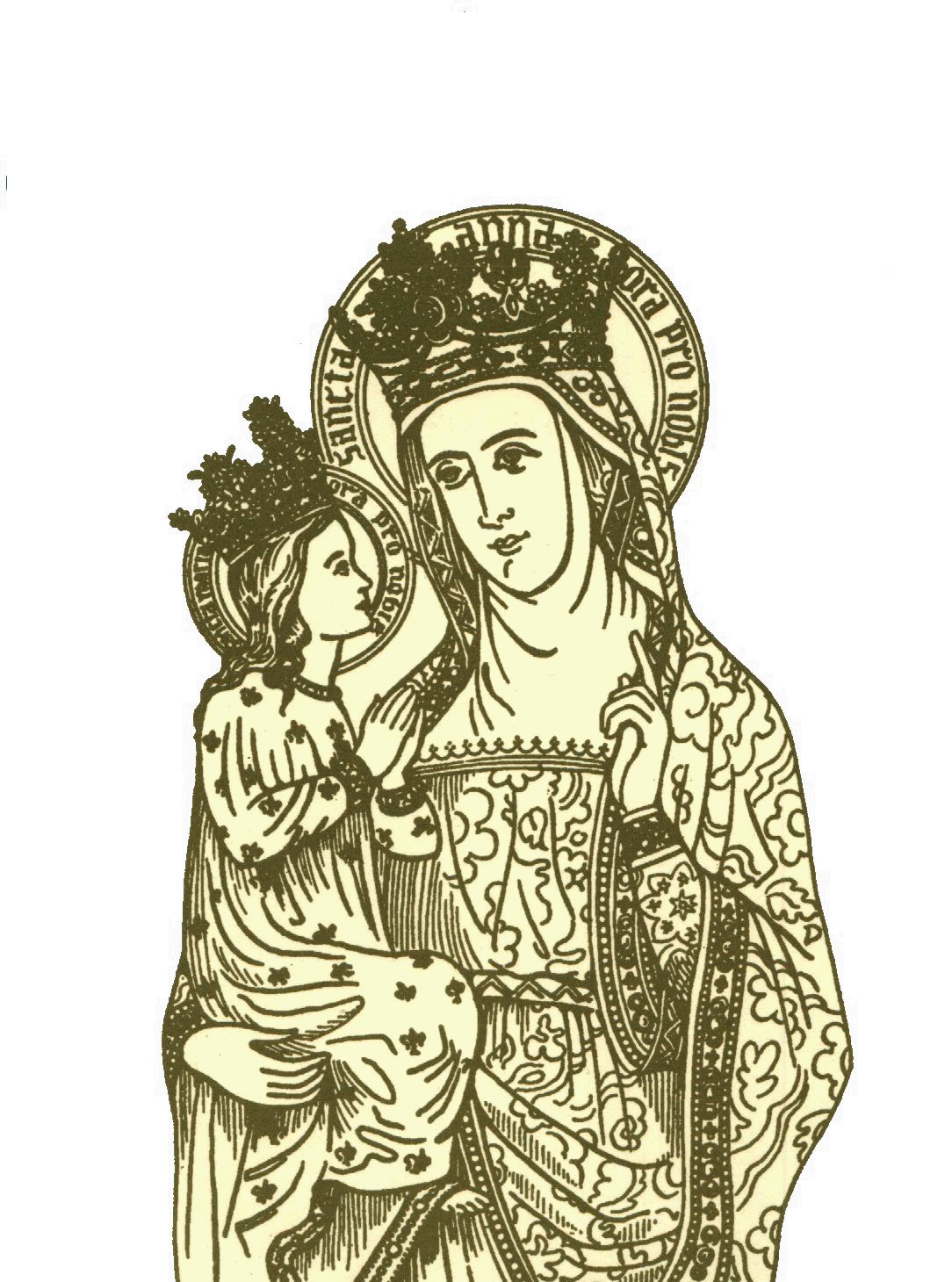


Discussioni Simili
-
8 Dicembre: Immacolata Concezione della Beata Vergine Maria
Di Thomas Aquinas nel forum CattoliciRisposte: 27Ultimo Messaggio: 08-12-19, 22:57 -
16 luglio - Beata Vergine Maria del Carmelo
Di Augustinus nel forum TradizionalismoRisposte: 39Ultimo Messaggio: 16-07-19, 22:31 -
negazione di Maria come Madre di Dio
Di Haxel nel forum Chiese e Comunità Cristiane EvangelicheRisposte: 452Ultimo Messaggio: 11-03-14, 19:47 -
16 agosto (26 luglio) - S. Gioacchino, padre dell'Immacolata Vergine Madre di Dio
Di Augustinus nel forum TradizionalismoRisposte: 8Ultimo Messaggio: 16-08-08, 07:54 -
1 gennaio - Maria SS. Madre di Dio
Di Colombo da Priverno nel forum CattoliciRisposte: 3Ultimo Messaggio: 01-01-06, 15:34
 Permessi di Scrittura
Powered by vBulletin® Version 4.2.5
Copyright © 2026 vBulletin Solutions Inc. All rights reserved.
Change privacy settings
Copyright © 2026 vBulletin Solutions Inc. All rights reserved.
Change privacy settings
Tutti gli orari sono GMT +2. Adesso sono le 00:55.
