


Dal sito SANTI E BEATI:
San Volfango di Ratisbona, Vescovo
31 ottobre
Svevia, Germania, ca. 924 - Pupping, Austria, 994
Nato nel 924 in Svezia, diventò monaco a Ginsiedeln. Inviato missionario in Ungheria nel 971, l'anno successivo fu eletto vescovo di Ratisbona. Riorganizzazò la diocesi e operò per la sua prosperità fino alla morte che giunse nel 994.
Patronato: Taglialegna
Etimologia: Volfango = che cammina come il lupo
Emblema: Bastone pastorale
Martirologio Romano: A Ratisbona nella Baviera, in Germania, san Volfango, vescovo, che, dopo aver svolto l’ufficio di maestro di scuola e aver fatto professione di vita monastica, elevato alla sede episcopale, ristabilì la disciplina del clero e morì umilmente mentre era in visita nel territorio di Pupping.
Martirologio tradizionale (31 ottobre): A Ratisbona, in Baviera, san Volfango Vescovo.
E’ riuscito addirittura a farsi aiutare dal diavolo a costruire una chiesa. Questa è una delle molte leggende sorte intorno alla popolarissima figura del vescovo Volfango, uomo di Chiesa e organizzatore della vita civile; costruttore di edifici sacri, e anche di case e di villaggi nelle campagne germaniche. E questo nel X secolo, in prossimità dell’anno Mille. Cioè nell’epoca in cui, secondo invenzioni messe in giro vari secoli dopo, l’Europa sarebbe vissuta nel terrore apatico della “fine del mondo”.
Al contrario, questi sono anni di grandi speranze fondate su realtà evidenti: fine delle aggressioni ungare in Germania e in Italia; cacciata degli arabi dalle teste di ponte sulle coste italiane e francesi. Nell’imminenza dell’anno Mille, si fondano addirittura nuovi Stati (Polonia e Ungheria). E anche la piccola Boemia conia la sua prima moneta d’argento: il “denaro”. Tra i costruttori dell’Europa nuova c’è appunto Volfango, tedesco di Svevia. Educato nel monastero benedettino di Reichenau, sul lago di Costanza, dal 956, pur non essendo prete, ha diretto la scuola arcivescovile di Treviri, in Renania.
Nel 965 lascia l’incarico e si ritira nell’abbazia di Einsiedeln (attuale Svizzera), e tre anni dopo viene ordinato sacerdote. Vorrebbe lavorare alla cristianizzazione degli Ungari che, smesse le razzie, stanno diventando agricoltori. Ma i suoi sforzi hanno poca fortuna. Nel 972 viene nominato vescovo di Ratisbona, la città bavarese che le valli dei fiumi Regen e Naab collegano con le terre boeme; e queste, dal punto di vista ecclesiastico, dipendono da lui, dalla diocesi di Ratisbona.
Ma questo non piace a Volfango, che vede il futuro d’Europa meglio di molti altri, e fa perciò una cosa che sbalordisce: vuole rimpicciolire la sua diocesi, per dare ai cristiani boemi una diocesi boema, con sede a Praga e con un loro vescovo. Intorno a lui si protesta: ma come, se quasi tutti i vescovi cercano di ingrandire le loro diocesi, perché questo qui vuole mutilare la sua? Volfango sa che per incarnare il cristianesimo in un popolo bisogna riconoscerne e valorizzarne la personalità, anche con sede e gerarchia ecclesiastica locale. Un problema che occuperà anche il XX secolo, e che Volfango aveva già compreso. Infatti lascia che a Ratisbona si mormori e si protesti, ma la diocesi di Praga si fa. E nel 976 ha il suo primo vescovo, Tiethmaro, predecessore del grande sant’Adalberto.
Nel 974 la lotta del duca Enrico II di Baviera e l’imperatore Ottone II lo costringe a rifugiarsi nel monastero di Mondsee (regione di Salisburgo). E lì vicino egli innalza una chiesa dedicata a san Giovanni (quella appunto di cui parla la leggenda). Ingrandita e abbellita, essa verrà più tardi dedicata al suo nome. Volfango muore sul lavoro, durante una campagna di predicazione, in Austria. Nel 1052 il papa Leone IX lo proclamerà santo.
Autore: Domenico Agasso
Risultati da 1 a 6 di 6
Discussione: 31 ottobre - S. Volfango di Ratisbona, vescovo
-
31-10-08, 08:36 #1**********


- Data Registrazione
- 04 Jun 2003
- Messaggi
- 23,775
-

- 18
-

- 35
- Mentioned
- 2 Post(s)
- Tagged
- 0 Thread(s)
 31 ottobre - S. Volfango di Ratisbona, vescovo
-
31-10-08, 11:19 #2**********
- Data Registrazione
- 04 Jun 2003
- Messaggi
- 23,775
-
- 18
-
- 35
- Mentioned
- 2 Post(s)
- Tagged
- 0 Thread(s)
St. Wolfgang
Bishop of Ratisbon (972-994), born about 934; died at the village of Pupping in upper Austria, 31 October, 994. The name Wolfgang is of early German origin. St. Wolfgang was one of the three brilliant stars of the tenth century, St. Ulrich, St. Conrad, and St. Wolfgang, which illuminated the early medieval period of Germany with the undying splendour of their acts and services. St. Wolfgang sprang from a family of Swabian counts of Pfullingen (Mon. Germ. His.: Script., X, 53). When seven years old he had an ecclesiastic as tutor at home; later he attended the celebrated monastic school on the Reichenau. Here he formed a strong friendship with Henry, brother of Bishop Poppo of Würzburg, whom he followed to Würzburg in order to attend at the cathedral school there the lectures of the noted Italian grammarian, Stephen of Novara. After Henry was made Archbishop of Trier in 956, he called his friend to Trier, where Wolfgang became a teacher in the cathedral school, and also laboured for the reform of the archdiocese, notwithstanding the enmity with which his efforts were met. Wolfgang's residence at Trier greatly influenced his monastic and ascetic tendencies, as here he came into connection with the great reformatory monastery of the tenth century, St. Maximin of Trier, where he made the acquaintance of Ramwold, the teacher of St. Adalbert of Prague. After the death (964) of Archbishop Henry of Trier, Wolfgang entered the Order of St. Benedict in the Abbey of Maria Einsiedeln, Switzerland, and was ordained priest by St. Ulrich in 968.
After their defeat in the battle of the Lechfeld (955), a victory gained with the aid of St. Ulrich, the heathen Magyars settled in ancient Pannonia. As long as they were not converted to Christianity they remained a constant menace to the empire. At the request of St. Ulrich, who clearly saw the danger, and at the desire of the Emperor Otto the Great, St. Wolfgang, according to the abbey annals, was "sent to Magyars" as the most suitable man to evangelize them. He was followed by other missionaries sent by Bishop Piligrim of Nassau, under whose jurisdiction the new missionary region came. After the death of Bishop Michael of Ratisbon (23 September, 972) Bishop Piligrim obtained from the emperor the appointment of Wolfgang as Bishop of Ratisbon (Christmas, 972). Wolfgang's services in this new position were of the highest importance, not only for the diocese, but also for the cause of civilization. As Bishop of Ratisbon, Wolfgang became the tutor of Emperor St. Henry II, who learned from him the principles which governed his saintly and energetic life. Poppe, son of Margrave Luitpold, Archbishop of Trier (1016), and Tagino, Archbishop of Magdeburg (1004-1012), also had him as their teacher.
St. Wolfgang deserves credit for his disciplinary labours in his diocese. His main work in this respect was connected with the ancient and celebrated Abbey of St. Emmeram which he reformed by granting it once more abbots of its own, thus withdrawing it from the control of the bishops of Ratisbon, who for many years had been abbots in commendam, a condition of affairs that had been far from beneficial to the abbey and monastic life. In the Benedictine monk Ramwold, whom St. Wolfgang called from St. Maximin at Trier, St. Emmeram received a capable abbot (975). The saint also reformed the convents of Obermunster and Niedermunster at Ratisbon, chiefly by giving them as an example the convent of St. Paul, Mittelmunster, at Ratisbon, which he had founded in 983. He also co-operated in the reform of the ancient and celebrated Benedictine Abbey of Altach (Nieder-altach), which had been founded by the Agilolf dynasty, and which from that time took on new life. He showed genuine episcopal generosity in the liberal manner with which he met the views of the Emperor Otto II regarding the intended reduction in size of his diocese for the benefit of the new Diocese of Prague (975), to which St. Adalbert was appointed first bishop. As prince of the empire he performed his duties towards the emperor and the empire with the utmost scrupulousness and, like St. Ulrich, was one of the mainstays of the Ottonian policies. He took part in the various imperial Diets, and, in the autumn of 978, accompanied the Emperor Otto II on his campaign to Paris, and took part in the great Diet of Verona in June, 983.
St. Wolfgang withdrew as a hermit to a solitary spot, now the Lake of St. Wolfgang, apparently on account of a political dispute, but probably in the course of a journey of inspection to the monastery of Mendsee which was under the direction of the bishops of Ratisbon. He was discovered by a hunter and brought back to Ratisbon. While travelling on the Danube to Pöchlarn in Lower Austria, he fell ill at the village of Pupping, which is between Efferding and the market town of Aschach near Linz, and at his request was carried into the chapel of St. Othmar at Pupping, where he died. His body was taken up the Danube by his friends Count Aribo of Andechs and Archbishop Hartwich of Salzburg to Ratisbon, and was solemnly buried in the crypt of St. Emmeram. Many miracles were performed at his grave; in 1052 he was canonized. Soon after his death many churches chose him as their patron saint, and various towns were named after him. In Christian art he has been especially honoured by the great medieval Tyrolese painter, Michael Pacher (1430-1498), who created an imperishable memorial of him, the high altar of St. Wolfgang. In the panel pictures which are now exhibited in the Old Pinakothek at Munich are depicted in an artistic manner the chief events in the saint's life. The oldest portrait of St. Wolfgang is a miniature, painted about the year 1100 in the celebrated Evangeliary of St. Emmeram, now in the library of the castle cathedral at Cracow. A fine modern picture by Schwind is in the Schak Gallery at Munich. This painting represents the legend of Wolfgang forcing the devil to help him to build a church. In other paintings he is generally depicted in episcopal dress, an axe in the right hand and the crozier in the left, or as a hermit in the wilderness being discovered by a hunter. The axe refers to an event in the life of the saint. After having selected a solitary spot in the wilderness, he prayed and then threw his axe into the thicket; the spot on which the axe fell he regarded as the place where God intended he should build his cell. This axe is still shown in the little market town of St. Wolfgang which sprang up on the spot of the old cell. At the request of the Abbey of St. Emmeram, the life of St. Wolfgang was written by Othlo, a Benedictine monk of St. Emmeram about 1050. This life is especially important for the early medieval history both of the Church and of civilization in Bavaria and Austria, and it forms the basis of all later accounts of the saint. The oldest and best manuscript of this "Life" is in the library of the Abbey of Maria Einsiedeln in Switzerland (manuscript No. 322), and has been printed with critical notes in "Mon. Germ. His.: Script.", IV, 524-542. It has also been printed in, "Acta SS.", II November, (Brussels, 1894), 529-537; "Acta SS. O. S. Ben.", V, 812-833; and in P.L., CXLVI, 395-422.
Bibliography
Der hl. Wolfgang, Bischof von Regensburg, hist. Festschrift z. jahr. Gedachtnisse seines Todes, ed., in connection with numerous historical scholars, by MEHLER (Ratisbon, 1894), among the chief collaborators on this work being BRAUNMULLER, RINGHOLZ (of Einsiedeln), and DANNERBAUER; KOLBE, Die Verdienste des Bischofs Wolfgang v. R. um das Bildungswesen Suddeutschlands. Beitrag z. Gesch. der Padogogik des X und XI Jahrhunderis (Breslau, 1894); WATTENBACH, Deutschlands Geschichtsquellen im Mittelalter, I (Berlin, 1904), 449-452; DETZEL, Christl. Iknographie, II (Freiburg, 1896), 683; POTTHAST, Bibl. medii aevi, II (Berlin, 1896), 1641.
Fonte: The Catholic Encyclopedia, vol. XV, New York, 1912
-
31-10-08, 11:24 #3**********
- Data Registrazione
- 04 Jun 2003
- Messaggi
- 23,775
-
- 18
-
- 35
- Mentioned
- 2 Post(s)
- Tagged
- 0 Thread(s)
Ratisbon
DIOCESE OF RATISBON (RATISBONENSIS), also called REGENSBURG.
Suffragan of Munich-Freising. It embraces the greater portion of the administrative district of Oberpfalz, and portions of the districts of Upper and Lower Bavaria, and Upper Franconia (see GERMANY, map), an area of about 5340 square miles. It is divided into the three episcopal commissariates of Ratisbon, Amberg, and Straubing, and into thirty deaneries. In 1910 it numbered 473 parishes, 167 benefices (exclusive of 74 united with other prebends), 80 expositurships, 371 curacies, and 36 other pastoral offices, 1283 clergy (including 442 pastors and 159 regular priests), and over 865,000 Catholics. In addition to the ordinary, there is a coadjutor bishop (consecrated 18 April, 1911); the cathedral chapter consists of a provost, 8 capitulars, 6 cathedral vicars, and a cathedral preacher. There is also a chapter at the collegiate Church of Our Lady "Zur Alten Kapelle" in Ratisbon, with 11 members, and a chapter in the collegiate Church of Sts. John the Baptist and John the Evangelist at Ratisbon, with 7 members. The diocesan institutions include the episcopal seminary for the ecclesiastics at Ratisbon, with four courses in theology and one in philosophy, and the episcopal seminaries for boys at Ratisbon, Metten, and Straubing. For philosophical and theological studies there exists at Ratisbon a state lyceum, in which 10 religious and a few lay professors lecture.
The monasteries and monastic institutions are: for the Benedictines, the Abbey of Metten with a gymnasium and episcopal seminary for boys (43 fathers, 8 clerics, and 15 lay brothers) and the Priory of Weltenburg (6 fathers, 2 clerics, and 12 lay brothers); 3 monasteries of the Discalced Carmelites, with 22 fathers, 3 clerics, and 21 brothers; 2 monasteries of the Calced Carmelites, with 13 fathers, and 11 brothers; 5 monasteries of the Franciscans, with 21 fathers, and 46 brothers; 1 Capuchin monastery, with 7 fathers and 7 brothers; 2 hospices of the Minorites, with 4 fathers and 6 brothers; 2 Augustinian priories, with 7 fathers, and 6 brothers; 3 Redemptorist colleges with 27 fathers, and 26 brothers; 4 monasteries of the Brothers of Mercy, with 5 fathers and 100 brothers; 1 brotherhood of hermits, with 30 brothers, in 25 hermitages; 3 convents of the Poor Clares; 2 of the Dominican Sisters; 2 of the Cistercian Sisters; 1 of the Ursulines; 1 of the Elizabethines; 1 of the Franciscan Sisters of the Third Order; 1 of the Ladies of the Good Shepherd; 76 establishments of the Poor School Sisters; 3 of the English Ladies; 23 of the Sisters of Mercy, in 12 townships; 1 mother-house and 67 branches of the Sisters of the Third Order of St. Francis of Mallersdorf; 5 establishments of the Franciscan Sisters from the mother-house at Dillingen; 1 institute for the Daughters of the Divine Redeemer from the mother-house at Niederbronn in Alsace; 1 convent of Carmelite Sisters. The total number of sisters is 2400. The religious and social societies are highly developed; it will be sufficient to mention here the Confraternity of Perpetual Adoration, the Congregations of Mary for men, boys, and girls, the Catholic associations for workmen, journeymen, and apprentices, the students' associations, the Albertus Magnus association, the Volksverein for Catholic Germany, and the Catholic Press Association for Bavaria.
Among the churches of the diocese may be mentioned: the Gothic cathedral of St. Peter, begun in 1275, but not completed until the nineteenth century; the old cathedral, or St. Stephanskirche (end of tenth century); the Churches of St. Emmeram (eleventh century), St. Jakob (twelfth century), the former Dominican Church of St. Blasius (1273-1400), all at Ratisbon; the churches of Amberg, Straubing, Naabburg; numerous old monastery churches, such as those of Weltenburg, Prüfening, Ober-Alteich etc. Much-frequented places of pilgrimage are: Mariahilf, near Amberg; the Eichelberg, near Hemau; the Kreuzberg, near Schwandorf; and Neukirchen beim hl. Blut.
Ratisbon, the oldest town in Bavaria, had its origin in the Roman camp, Castra Regina, the remains of whose walls exist today. Christianity was introduced during the time of the Romans. In the sixth century Ratisbon was the chief town of Bavaria, and the seat of the apostolic labours of several holy evangelists, such as St. Rupert (about 697), St. Emmeram (about 710), St. Erhard (about 720), and Blessed Albert (about 720). In 739 St. Boniface divided the Duchy of Bavaria into the four dioceses of Ratisbon, Passau, Freising, and Salzburg, and appointed as first Bishop of Ratisbon Blessed Gawibald or Gaubald (739-61). The early bishops were chosen alternately from the canons of the Church of St. Peter and the monks of the Benedictine monastery of St. Emmeram, of which monastery they were simultaneously abbots; after the elevation of Salzburg to metropolitan rank by Leo III, Ratisbon was placed under it. Through the favour of the native dukes and, after their removal, through that of the Carlovingians and Ottos, the bishops received much property and many gifts for their churches. The possessions of the chapter consisted of the three free imperial domains Donaustauf, Wörth (both on the Danube), and Hohenburg on the River Lautrach, the domain of Pechlarn below the Enns, and the administration of a few places in Lower Bavaria. During the early period the chief care of the bishops was the conversion of the Slavs, Bohemia being for the most part won for Christianity by Ratisbon. Bishop Bahurich (817-48) baptized fourteen Bohemian princes at Ratisbon in 847, and Bohemia long belonged to the diocese. Under Ambricho (864-91) Louis the German built the celebrated "Alte Kapelle" in which his spouse Emma and the last Carlovingian emperors Arnulf and Louis the Child found their resting-places. During the reign of Blessed Tuto (894-931) the see suffered much from the inroads of the Hungarians; Bishop Michael (942-72) took personal part in the wars against these invaders, especially in the battle of Lechfeld. St. Wolfgang (972-94) agreed to the separation of Bohemia from the diocese of Ratisbon, and also separated the property of the cathedral from the Monastery of St. Emmeram.
The era of the following bishops is characterized by the foundation of numerous monasteries. Gebhard I (995-1035) founded the Abbey of Pruhl; his attempt to annul the separation between the diocese and Emmeram gave rise to much dispute; he received from Otto III the right of coinage. Gebhard III (1036-60) received from Henry III the Abbey of Kempten; during his episcopate the collegiate chapter of Ohringen and the convent of Geisenfeld were founded. Otto of Ritenberg (1061-89) espoused the cause of the emperor in the Conflict of Investitures, while Blessed William, provost of St. Emmeram and later abbot of the renowned monastery of Hirsau, the "hero of monasticism and champion of reform", worked in the spirit of Pope Gregory. Under Gebhard IV, who received neither papal ratification nor consecration, the Benedictine abbey of Oberalteich was founded; under Hartwich I (1105-26) were founded the Scots monastery of St. James at Ratisbon, and the Benedictine monasteries of Mallersdorf, Prüfening, Reichenbach, and Ensdorf; under the zealous Konrad I (1126-32), the Cistercian abbey of Waldsassen, the Benedictine monastery of Biburg; under Heinrich I (1132-55), the Premonstratensian monastery of Windberg and several chapters of Augustinian Canons. Konrad III (1186-1204) took part in Barbarossa's crusade; Konrad IV again confirmed the dominion of the bishops over the city of Ratisbon, which in the following period gradually acquired independence and developed into a free town of the empire; in 1226 Konrad gave the recently-founded Franciscan Order a residence and chapel in the city. Under Siegfried the Carmelites and Dominicans also established themselves in the diocese. Prominent among the Franciscans was Blessed Bernhard of Ratisbon, one of the most powerful preachers of the Middle Ages; the Dominicans gave to the diocese the great bishop, Albertus Magnus, on whose voluntary retirement Leo Thundorfer (1262-77), who began the building of the cathedral, was elected. The building was continued vigorously under Heinrich II of Rotteneck (1277-96), who led a truly holy life and proved himself an excellent spiritual and secular prince. Konrad of Luppurg (1296-1313), Nikolaus of Stachowitz (1313-40), and Konrad VI (1368-81) were also distinguished bishops. Albert of Stauf (1409-21), an adherent of the popes of Pisa, devoted himself zealously to the reform of the monasteries and the clergy; in 1419, at a diocesan synod, he issued an excellent pastoral instruction for his diocese. Albert and his immediate successors — Johann of Streitberg (1421-28) and Konrad VII of Rehlingen (1428-37), a Westphalian — had to take the field against the Hussites, who had made several devastating inroads into the territory of the diocese. Heinrich IV of Absberg (1465-92), an admirable bishop, took energetic measures against the Hussites and other fanatics, against the superstitions of the people, and the incontinency of the clergy; to the restoration of discipline and order in the monasteries, especially in several convents, he devoted a restless activity. In the same spirit worked Rupprecht II, Count Palatine of Sponheim (1492-1507), under whom the diocese had to suffer much in consequence of the war between the Wittelsbachs concerning the succession in Bavaria-Landshut.
The religious innovations of Luther were on the whole successfully opposed by Johann III of the Wittelsbach family, the administrator of the diocese (1507-38); in 1524 he took part in the assembly of the South-German bishops and princes at Ratisbon, which, under the presidency of the papal legate Campeggio, decreed the execution of the Edict of Worms and the maintenance of the old religion. Under his weak successor Pankraz von Sinzenhofen (1538-48), however, the new doctrines were allowed to spread, and this prelate was unable to prevent the town from accepting the Reformation and demolishing the cathedral. The negotiations at the Diet of Ratisbon in 1541 resulted in the Ratisbon Interim, which went very far towards meeting the wishes of the Protestants, but yet did not find approval with the Protestant princes. The efforts of the zealous Georg Marschalk of Pappenheim (1548-63) and David Kölderer of Burgstall (1567-79) met with especially obstinate resistance from the city. Under Philipp (1579-98), son of Duke William V of Bavaria and afterwards cardinal, the Jesuits were assigned a college at Ratisbon, with which a gymnasium was combined in 1589. Wolfgang II von Hausen (1600-13) was a zealous patron of the Jesuits and promoter of Catholic reform, and joined the Catholic League in 1609. Albert von Törring (1613-59), when the Count Palatine Wolfgang Wilhelm became a Catholic in 1614, brought back under his spiritual jurisdiction a portion of the Protestant parishes, especially in the Upper Palatinate; even the town of Eger with its territory was recovered in 1627 for the Catholic faith.
The Thirty Years' War caused great injury to the diocese; Duke Bernhard of Weimar, a partisan of the Swedes, captured the town of Ratisbon and a portion of the diocesan territory in 1633, looted the church treasury, exacted from the clergy large contributions, and held the bishop in confinement for fourteen months. Franz Wilhelm von Wartenberg (1649-61), who was also Bishop of Osnabrück, Minden, and Verden, sought to supply the growing need for priests by founding a clerical seminary in 1653. With Albert Siegmund (1668-85) began the series of bishops from the house of Wittelsbach, which for nearly a century occupied the episcopal see. Albert was simultaneously Bishop of Freising, as was Joseph Klemens (1685-1716), who, as Elector of Cologne (from 1688), espoused the cause of Louis XIV in the War of the Spanish Succession, and was for this reason, like his brother Elector Max Emmanuel, placed under the imperial ban. Cardinal Johann Theodor (1719-63) occupied, in addition to Ratisbon, the Dioceses of Freising and Liège, and other benefices. Excellent administrators were the last prince-bishops, Anton Ignaz von Fugger (1769-87), Max Prokop von Törring (1787-89), and Joseph Konrad von Schroffenberg (1790-1803). On the secularization of the German Church in 1803 a portion of the diocese was left undisturbed for a time; then Napoleon named, even during the lifetime of Schroffenberg, as Archbishop of Ratisbon and Prince-Primate of Germany, Karl Theodor von Dalberg, Elector of Mainz, and assigned him a portion of the earlier ecclesiastical territory. It was only on 1805 that Dalberg received the papal consent to the exercise of archiepiscopal power (1805-17). Although Dalberg, in his desire to save his precarious sovereignty, accepted Cardinal Fesch, Napoleon's uncle, as coadjutor, he was compelled to surrender the secular territory of the Diocese of Ratisbon to Bavaria in 1810, whereupon its secularization was finally accomplished. With Dalberg's death the short-lived Archdiocese of Ratisbon came to an end.
The Bavarian Concordat of 1817-18 declared Ratisbon a simple suffragan see in the newly-created ecclesiastical province of Munich-Freising, and assigned to it its present limits. The first bishop of the new diocese was the former coadjutor, Johann Nepomuk von Wolf (1821-29). He was succeeded by the celebrated Michael Sailer (1829-32). George Michael Wittmann, who was named successor to the latter, died before his preconization (1833). Franz Xaver von Schwäbl (1833-41), under whom Diepenbrock (later cardinal) worked at Ratisbon, restored the cathedral. Valentin Riedel (1842-57) founded the boys' seminary at Metten and the priests' hermitage, and prepared the way for the reform of church music. Ratisbon now possesses the world-renowned school for the special study of Church music, founded by Haberl. Ignatius von Senestréy (1858-1906) completed, with the help of King Louis I, the towers of the cathedral, founded the boys' seminaries at Ratisbon and Straubing, reformed the liturgy in accordance with the Roman model, and greatly promoted the religious life of the diocese by frequent tours of visitation, the establishment of new pastoral offices, the holding of popular missions, and the building of churches and schools. At the Vatican Council he belonged to the Commission on Faith, and was one of the most resolute champions of the dogma of the infallibility of the pope. In the ecclesiastico-political wars in Bavaria, especially since the appearance of the Old Catholic movement and its encouragement by Minister Lutz, von Senestréy always fearlessly and unyieldingly contended for the rights of the Church. The pallium was conferred on him as a mark of distinction by the pope in 1906. He was succeeded in 1906 by Antonius von Henle, who had occupied the See of Passau from 1901 to 1906.
Bibliography
ENHUBER, Conciliorum Ratisbonensium brevis recensio (Ratisbon, 1768); GEMEINER, Chronik der Stadt u. des Hochstifts Regensburg vom Jahre 143 bis zum J. 1496 (4 vols., Ratisbon, 1816); RIED, Codex chronologico-diplomaticus episcopatus Ratisbonensis (2 vols., Ratisbon, 1816-17); GUMPOLZHEIMER, Gesch. der Stadt Regensburg (2 vols., Ratisbon, 1830-38); WITTMANN, Gesch. der Reformation in der Oberpfalz (Augsburg, 1847); JANNER, Gesch. der Bischöfe von Regensburg (3 vols., Ratisbon, 1883-86), reaching to 1507; Matrikel des Bistums Regensburg (2 vols., 1863); VON WALDERSDORFF, Regensburg in seiner Vergangenheit u. Gegenwart (4th ed., Ratisbon, 1896); SCHLECHT, Bayerns Kirchen-Provinzen (Munich, 1902), 90 sq.; SCHEGLMANN, Gesch. der Säkularisation im rechtsrheinischen Bayern (3 vols., Ratisbon, 1903-07); SCHRATZ AND DENGLER, Regensburg (7th ed., Ratisbon, 1910); HAGER, Die Kunstdenkmale des Königsreichs Bayern: II: Oberpfalz (Ratisbon, 1905—); HILDEBRANDT, Regensburg (Leipzig, 1910); Verhandlungen des hist. Vereins von Oberpfalz u. Regensburg (Ratisbon, 1831—); Schematismus der Geistlichkeit des Bistums Regensburg (Ratisbon, 1910).
Fonte: The Catholic Encyclopedia, vol. XII, New York, 1911
-
31-10-08, 11:28 #4**********
- Data Registrazione
- 04 Jun 2003
- Messaggi
- 23,775
-
- 18
-
- 35
- Mentioned
- 2 Post(s)
- Tagged
- 0 Thread(s)


-
31-10-08, 12:09 #5**********
- Data Registrazione
- 04 Jun 2003
- Messaggi
- 23,775
-
- 18
-
- 35
- Mentioned
- 2 Post(s)
- Tagged
- 0 Thread(s)
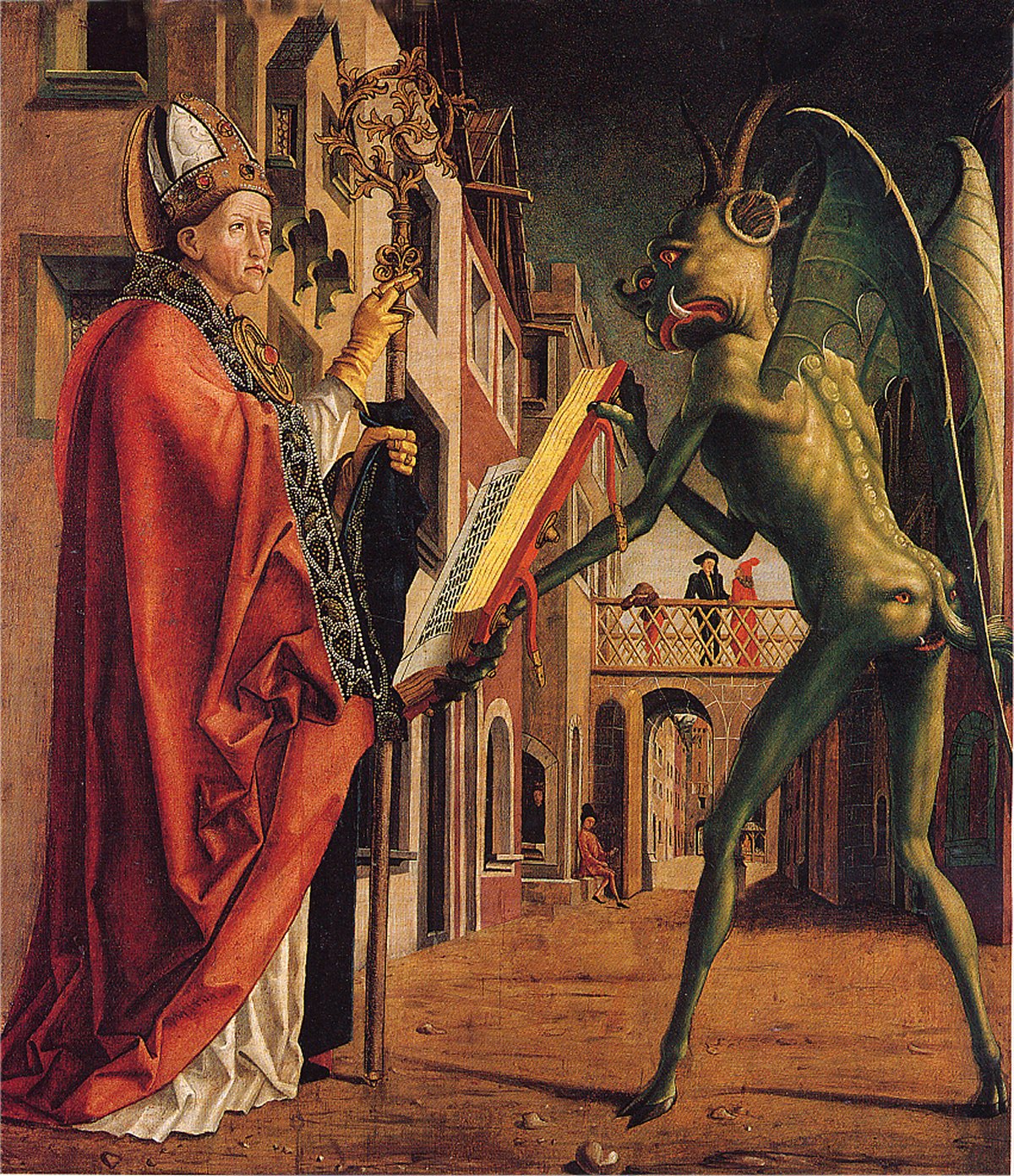 Michael Pacher, S. Volfango ed il diavolo, 1471-75, Alte Pinakothek, Monaco
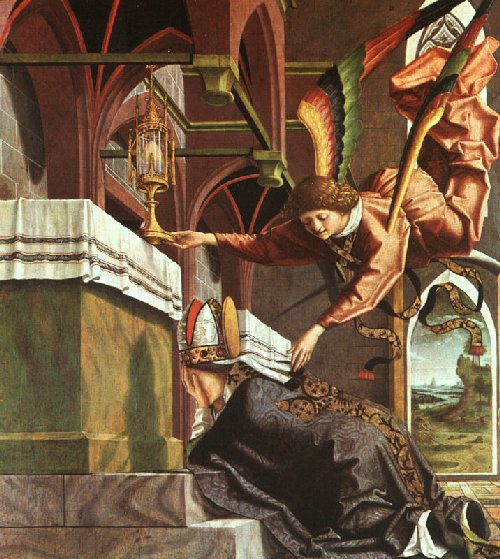 Michael Pacher, Visione di S. Volfango, 1471-75, Alte Pinakothek, Monaco
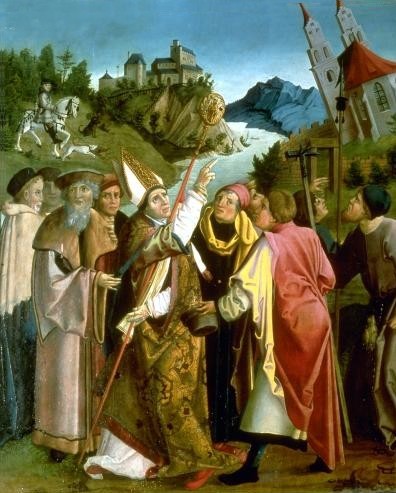 Autore anonimo, S. Volfango compie un miracolo, 1518 circa
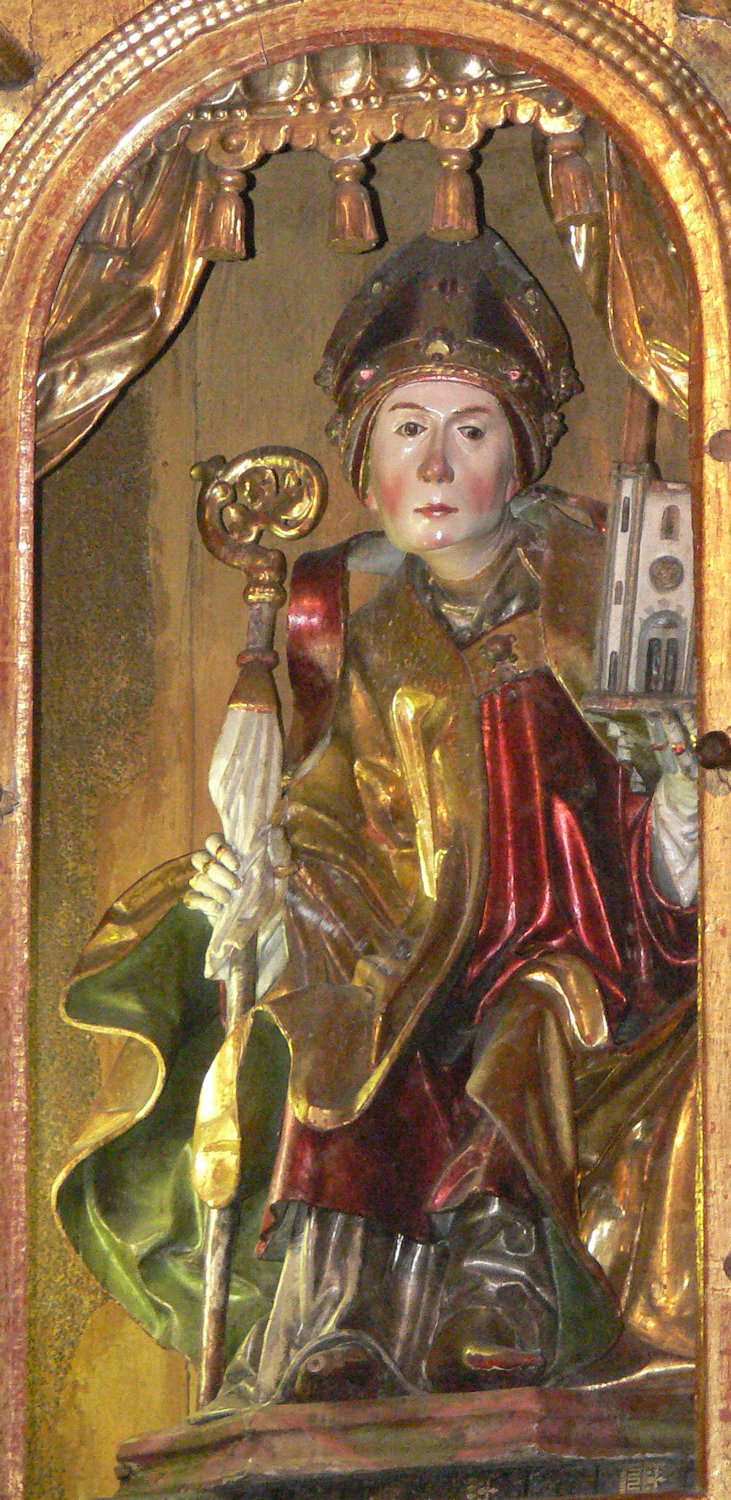 S. Volfango, statua, 1430
-
31-10-17, 23:58 #6Forumista senior

- Data Registrazione
- 31 Mar 2009
- Località
- IPERURANIO INTERIORE
- Messaggi
- 4,328
-
- 63
-
- 331
- Mentioned
- 47 Post(s)
- Tagged
- 2 Thread(s)
 Re: 31 ottobre - S. Volfango di Ratisbona, vescovo
31 ottobre 2017: Vigilia di Ognissanti (astinenza e digiuno)…
http://www.unavoce-ve.it/pg-1nov.htm
Vigilia di Ognissanti - Sodalitium
http://www.sodalitium.biz/vigilia-di-ognissanti/
“31 ottobre, Vigilia di Ognissanti, digiuno e astinenza.”

Ognissanti e giorno dei defunti - Sodalitium
http://www.sodalitium.biz/ognissanti...o-dei-defunti/
https://www.facebook.com/CdpSursumCorda/
http://www.sursumcorda.cloud/
https://www.sursumcorda.cloud/preghi...i-defunti.html
Ligue Saint Amédée
http://www.saintamedee.ch/
https://www.facebook.com/SaintAmedee/
"31 octobre : le catholique ne fête pas Halloween mais fête la vigile de la Toussaint par le JEÛNE et l'ABSTINENCE."

"En 1521, le vrai Pape Léon X excommunie Luther.
En 2017, le faux pape et imposteur François lui dédie un timbre du Vatican et parle de "bénédiction de la commémoraison de la Réforme".
Personne ne pourra dire : "je ne savais pas"."
"31 Octobre : Saint Quentin, Martyr (IIIème siècle)."

"31 Octobre : Vigile de la Toussaint."

https://w2.vatican.va/content/pius-x...mmaculata.html
"RADIOMESSAGGIO DI SUA SANTITÀ PIO XII
PREGHIERA PER LA CONSACRAZIONE DELLA CHIESA E DEL GENERE UMANO AL CUORE IMMACOLATO DI MARIA*
Sabato, 31 ottobre 1942
Regina del Santissimo Rosario, ausilio dei cristiani, rifugio del genere umano, vincitrice di tutte le battaglie di Dio! supplici ci prostriamo al vostro trono, sicuri di impetrare misericordia e di ricevere grazie e opportuno aiuto e difesa nelle presenti calamità, non per i nostri meriti, dei quali non presumiamo, ma unicamente per l'immensa bontà del vostro materno Cuore.
A Voi, al vostro Cuore Immacolato, in quest'ora tragica della storia umana, ci affidiamo e ci consacriamo, non solo in unione con la Santa Chiesa, corpo mistico del vostro Gesù, che soffre e sanguina in tante parti e in tanti modi tribola, ma anche con tutto il mondo straziato da feroci discordie, riarso in un incendio di odio, vittima della propria iniquità.
Vi commuovano tante rovine materiali e morali; tanti dolori, tante angoscie di padri e di madri, di sposi, di fratelli, di bambini innocenti; tante vite in fiore stroncate; tanti corpi lacerati nell'orrenda carneficina; tante anime torturate e agonizzanti, tante in pericolo di perdersi eternamente!
Voi, o Madre di misericordia, impetrateci da Dio la pace! e anzitutto quelle grazie che possono in un istante convertire i cuori umani, quelle grazie che preparano, conciliano, assicurano la pace! Regina della pace, pregate per noi e date al mondo in guerra la pace che i popoli sospirano, la pace nella verità, nella giustizia, nella carità di Cristo. Dategli la pace delle armi e la pace delle anime, affinché nella tranquillità dell'ordine si dilati il regno di Dio.
Accordate la vostra protezione agli infedeli e a quanti giacciono ancora nelle ombre della morte; concedete loro la pace e fate che sorga per essi il Sole della verità, e possano, insieme con noi, innanzi all'unico Salvatore del mondo ripetere: Gloria a Dio nel più alto dei cieli e pace in terra agli uomini di buona volontà! (Luc. 2, 14).
Ai popoli separati per l'errore o per la discordia, e segnatamente a coloro che professano per Voi singolare devozione, e presso i quali non c'era casa ove non si tenesse in onore la vostra veneranda icone (oggi forse occultata e riposta per giorni migliori), date la pace e riconduceteli all'unico ovile di Cristo, sotto l'unico e vero Pastore.
Ottenete pace e libertà completa alla Chiesa santa di Dio; arrestate il diluvio dilagante del neopaganesimo; fomentate nei fedeli l'amore alla purezza, la pratica della vita cristiana e lo zelo apostolico, affinché il popolo di quelli che servono Dio aumenti in meriti e in numero.
Finalmente, siccome al Cuore del vostro Gesù furono consacrati la Chiesa e tutto il genere umano, perché, riponendo in Lui ogni speranza, Egli fosse per loro segno e pegno di vittoria e salvezza; così parimenti noi in perpetuo ci consacriamo anche a Voi, al vostro Cuore Immacolato, o Madre nostra e Regina del mondo : affinché il vostro amore e patrocinio affrettino il trionfo del Regno di Dio, e tutte le genti, pacificate tra loro e con Dio, Vi proclamino beata, e con Voi intonino, da un'estremità all'altra della terra, l'eterno Magnificat di gloria, amore, riconoscenza al Cuore di Gesù, nel quale solo possono trovare la Verità la Vita e la Pace.
*Discorsi e Radiomessaggi di Sua Santità Pio XII, IV,
Quarto anno di Pontificato, 2 marzo 1942 - 1° marzo 1943, pp. 453-454
Tipografia Poliglotta Vaticana.”
Tradidi quod et accepi: Pio XII e la Consacrazione della Chiesa e del genere umano al Cuore Immacolato di Maria
http://tradidiaccepi.blogspot.it/201...la-chiesa.html
“martedì 31 ottobre 2017
Pio XII e la Consacrazione della Chiesa e del genere umano al Cuore Immacolato di Maria
Mentre il mondo era sconvolto dalla Seconda Guerra Mondiale, il Vicario di Cristo Pio XII, il 31 ottobre 1942, consacrava al Cuore Immacolato di Maria la Chiesa e il genere umano tutto nello spirito del messaggio di Fatima. All’inizio del 1943, Suor Lucia, però, spiegò che Nostro Signore le aveva detto che avrebbe accettato questo Atto di Consacrazione per contribuire a far finire prima la guerra, anche se non ottemperava alla richieste formulate nel 1917.”


Radio Spada | Radio Spada ? Tagliente ma puntuale
https://www.facebook.com/radiospadasocial/?fref=nf
http://www.radiospada.org/
“31 ottobre 2017: Vigilia di Ognissanti (astinenza e digiuno).”

“31 ottobre 1512: Papa Giulio II della Rovere inaugura la nuova Cappella Sistina.”
“Il 31 ottobre 1942 Pio XII consacrava la Chiesa e il mondo al Cuore Immacolato di Maria.”
“Commemorazione cattolica della pseudo-Riforma Luterana.
"Ora viene solennemente dichiarato eretico, e così anche gli altri, qualunque sia la loro autorità e rango, che non hanno curato nulla della propria salvezza, ma pubblicamente e davanti gli occhi di tutti gli uomini diventano seguaci della perniciosa ed eretica setta di Martino, e coloro che hanno dato a lui apertamente e pubblicamente il loro aiuto, consiglio e favore, incoraggiandolo in mezzo a loro nella sua disobbedienza e ostinazione, o ostacolando la pubblicazione della nostra suddetta missiva: questi uomini sono incorsi nelle pene stabilite in tale missiva, e devono essere trattati legittimamente come eretici ed evitati da tutti fedeli cristiani, come dice l’Apostolo".”
https://www.radiospada.org/2013/04/p...-luteranesimo/
“Prima traduzione italiana della Bolla di Papa Leone X contro il luteranesimo
BOLLA DI SCOMUNICA “Decet Romanum Ponteficem” di Sua Santità Leone X.”
https://www.radiospada.org/2016/10/florilegioluterano/
https://www.radiospada.org/2013/10/l...ria-halloween/
https://www.radiospada.org/2013/10/h...iri-demoniaci/
https://www.radiospada.org/2017/10/h...re-ognissanti/
“Halloween: la festa degli spettri nata per combattere Ognissanti il 31 ottobre 2017 di Paolo Gulisano
HALLOWEEN 2017. Negli ultimi giorni di ottobre, non è difficile trovare le streghe. Basta che si entri in qualsiasi centro commerciale, o in molti negozi e locali, e si trovano delle povere commesse agghindate di nero come le loro bisnonne quando erano in lutto, e con alti cappelli a punta. Quella che si presenta è un’occasione unica e irripetibile: puoi chiamare “strega” una donna senza alcuna conseguenza giudiziaria. Altre di queste ragazze portano cerchietti con dei cornini che fanno bella mostra sulle loro capigliature. I loro partners sono terribilmente infedeli e loro protestano pubblicamente? No: si tratta dei corni di satana, il diavolo della tradizione cristiana.
Ma come? Dei simbolismi religiosi là dove non deve più comparire nulla di esplicitamente religioso, dai presepi in avanti? Bè, ma tutto l’apparato di Halloween, l’apparato di maschere, teschi, zucche, neri mantelli e cappellacci, è perfettamente accetto. È una festa nuova, divertente, diversa, “trasgressiva”, che si celebra nei bar e nelle discoteche, dove ci si può travestire da fantasma, strega, zombie… è un carnevale fuori stagione che anticipa lo shopping natalizio. E’ insomma un notevole business, dove il mercato è riuscito a speculare su una festività antichissima, su una delle prime e principali manifestazioni del Sacro in Europa. Il 1° novembre infatti era la più importante celebrazione del mondo celtico: era il capodanno dei Celti. Un momento in cui si poteva venire in contatto con il mondo che c’è oltre la morte, una morte che ha non ha l’ultima parola sull’uomo.
L’attuale Halloween, che è una vera e propria parodia dei valori secolari rappresentati dalla festa celtica di Samonios prima e di Ognissanti dopo, porta dunque in sé un atteggiamento negativo verso la morte e verso i defunti, come se i morti fossero solo qualcosa di ostile da cui difendersi. Si vuole esorcizzare la morte, facendone la caricatura.
E’ significativo invece che moltissimi piatti della nostra tradizione di Ognissanti fossero dei dolci, quasi a confermare che la vita è cosa buona, che anche la morte non ci deve lasciare un gusto amaro.
Nella tradizione popolare, le anime dei defunti tornano dall’aldilà. Il viaggio che li separa dal mondo dei vivi è lungo e faticoso. Nasce così, per ristorare i propri cari e per renderli benevoli verso i giorni che verranno, la tradizione culinaria della festa dei morti. I dolci dei morti inoltre simboleggiano anche i doni che i defunti portano dal cielo.
Nella saggezza popolare dunque si è sempre ritenuto che dei morti non bisogna avere paura, dal momento che essi portano la vita.
Come è potuto accedere che la tradizione di Ognissanti abbia ceduto il posto alla kermesse di Halloween? Tutto parte dall’America, e dalla forza che in quel Paese ha il marketing. Ma c’è di più: dietro c’è una storia di lunga ostilità verso il cattolicesimo. Nell’America protestante la festività dei Santi era stata portata dagli immigrati irlandesi, che in quanto cattolici e in quanto celti avevano in questo culto dei cari defunti una delle colonne portanti della loro spiritualità.
La Riforma protestante aveva scatenato la ribellione contro la fede e le tradizioni della Chiesa e soppresso molte feste cattoliche. Quella Riforma che — guarda caso — aveva preso il via proprio alla vigilia di Ognissanti, quando Lutero aveva appeso le sue tesi alla porta della cattedrale di Wittenberg, una chiesa dedicata proprio a tutti i santi e che Lutero sapeva sarebbe stata gremitissima, proprio per l’importanza della festa.
L’America riformata dunque, ostile al cattolicesimo, non poté accettare che una festa decisamente cattolica come Ognissanti prendesse piede, e la trasformò in Halloween, paradossalmente (ma non troppo) riesumando una forma di paganesimo e incoraggiando di quest’ultimo gli aspetti più cupi.
Questa “festa” degli spettri contribuiva in qualche modo a ridicolizzare la festa dei Santi che doveva essere cancellata.
Una festa che ricorda che quello dei santi e dei defunti è il culto della nostra storia. E’ il momento in cui si apre la speranza per l’eternità. Concetti troppo scomodi per il mondo postmoderno. Fonte”
PERCHE? NON PARTECIPARE A HALLOWEEN « www.agerecontra.it
http://www.agerecontra.it/public/press40/?p=30001
“ IL “CIRCOLO CHRISTUS REX” RECITERA’ IL SANTO ROSARIO IN PREPARAZIONE DELLA FESTA DI OGNISSANTI (ore 21.00 in sede) ED INVITA TUTTI AD UNIRSI NELLA PREGHIERA E A NON FESTEGGIARE IL DEMONIO. INOLTRE, RICORDIAMO CHE IL 31/10, VIGILIA DI OGNISSANTI SONO PRESCRITTI DIGIUNO E ASTINENZA (N.d.r.)
di Padre Romualdo Maria Lafitte O.S.B. (…) Il 31 è la vigilia del 1 novembre, Ognissanti, festa di tutti i Santi del paradiso, e il 2 di novembre il giorno delle anime del purgatorio. (…)”
Lutero, maestro d?odio « www.agerecontra.it
https://giulianoguzzo.com/2017/10/25...maestro-dodio/
https://www.facebook.com/romancatholicsnonunacum/
“La Roma modernista celebra Martin Lutero con un francobollo.”
Vaticano e Luterani: ?Una benedizione la commemorazione della Riforma? - La Stampa
«Vaticano e Luterani: “Una benedizione la commemorazione della Riforma”
Comunicato di Federazione Luterana Mondiale e Dicastero per l’Unità dei Cristiani a conclusione del 500enario. E la Santa Sede emette un francobollo con Wittenberg.
Il francobollo emesso dall'Ufficio filatelico vaticano per i 500 anni della Riforma.
La Federazione Luterana Mondiale e il Pontificio Consiglio per la Promozione dell’Unità dei Cristiani si dicono «grati per i doni spirituali e teologici» ricevuti nel corso della commemorazione ecumenica della Riforma protestante, nel giorno in cui si conclude l’anno delle sue celebrazioni, a 500 anni esatti del giorno in cui secondo la tradizione Martin Lutero appese le sue 95 tesi sul portone della cattedrale di Wittenberg, il 31 ottobre del 1517. (…)
Sempre oggi l’Ufficio filatelico e numismatico dello Stato della Città del Vaticano manda alle stampe un francobollo commemorativo della Riforma, cheRitrae in primo piano Gesù crocifisso sullo sfondo dorato e atemporale della città di Wittenberg. In atteggiamento di penitenza, inginocchiati rispettivamente a sinistra e destra della Croce, Martin Lutero sostiene la Bibbia, fonte e meta della sua dottrina, mentre Filippo Melantone, teologo e amico di Martin Lutero,uno dei maggiori protagonisti della riforma tiene in mano la Confessione di Augusta, Confessio Augustuana, la prima esposizione ufficiale dei principi del protestantesimo da lui redatta».
La brama di potere politico ed economico alla base della nascita e della diffusione del Protestantesimo ? Ordine Futuro.net
Idolatria del nulla ? Ordine Futuro.net
https://www.facebook.com/pietroferrari1973/
“Pietro Ferrari
Se è un culto pagano necrofilo la cosa è spaventosa, se è un pretesto per una festa in discoteca è un pò kitch. I cattolici credono alla Communio Santorum ma non so se i neo-pagani credono davvero che a samhain tornano i morti. Insomma è una farsa a cui non crede nessuno tranne gli aderenti alla Wicca. Sta di fatto che Tradizioni interrotte non sono più Tradizioni e che se dagli Usa ci venne la moda delle filosofìe orientali coi Campus sessantottini, oggi ci viene Halloween. Scopo di tutto ciò è solo il commercio? Probabilmente no e per questo motivo: i Paesi di tradizione protestante non credono che esista il Purgatorio e da ciò viene la loro ossessione per i film horror, per gli zombie e menate varie..... non hanno un Luogo per le anime in pena ma non ancora in Paradiso. Ecco perchè proprio da un Paese protestante come gli USA è stata mutuata una festa antica del paganesimo celtico e trasformata in un businnes mentre le cosiddette tavole dei morti di tradizione contadina anche nei paesi cattolici sono soltanto un marginalissimo residuo irreligioso e scaramantico dell'Antico paganesimo. Obbiettivo evidente e purtroppo riuscito: rincoglionire bambini e genitori con le zucche e distrarli dalla Festa Cattolica di Ognissanti.....che di fatto viene oscurata e dimenticata assieme a quella dei Defunti che non è neanche più giorno festivo. Proprio nel giorno dedicato alla Chiesa Trionfante dei Santi e a quello successivo della Chiesa Purgante dei Defunti, il Sistema anticristiano ci propina il consumo forzoso di uno pseudo satanismo all'amatriciana.”
“Pietro Ferrari
Onore ai Santi, nostri migliori Amici, elevati alle vette dall'Altissimo, Servi umili dell'Onnipotente, autentica Nobiltà del genere umano. Le zucche stanno bene dentro ai ravioli. https://youtu.be/CKWRuFjIRFo Litaniae Sanctorum.”
https://www.facebook.com/CdpSursumCo...12755455427525
"Carlo Di Pietro - Sursum Corda
Domanda. Chi è più pagano e satanista: a) la madre (resa ignorante) che fa festeggiare #Halloween a suo figlio, oppure b) i tanti stipendiati da Bergoglio e Ratzinger che professano l'ecumenismo? Io non ho alcun dubbio: chi dimostra di professare il paganesimo (ed il satanismo), peraltro dietro retribuzione e prebende, sono i secondi. La prima è solo la vittima di detti stipendiati (e dei loro mandanti o datori di lavoro). Così sembra.
Cito:
<<Veniamo ora ad un’altra sorgente trabocchevole dei mali, da cui piangiamo afflitta presentemente la Chiesa: vogliamo dire l’indifferentismo, ossia quella perversa opinione che per fraudolenta opera degl’increduli si dilatò in ogni parte, e secondo la quale si possa in qualunque professione di Fede conseguire l’eterna salvezza dell’anima se i costumi si conformano alla norma del retto e dell’onesto. Ma a voi non sarà malagevole cosa allontanare dai popoli affidati alla vostra cura un errore così pestilenziale intorno ad una cosa chiara ed evidentissima, senza contrasto. Poiché è affermato dall’Apostolo che esiste “un solo Iddio, una sola Fede, un solo Battesimo” (Ef 4,5), temano coloro i quali sognano che veleggiando sotto bandiera di qualunque Religione possa egualmente approdarsi al porto dell’eterna felicità, e considerino che per testimonianza dello stesso Salvatore “essi sono contro Cristo, perché non sono con Cristo” (Lc 11,23), e che sventuratamente disperdono solo perché con lui non raccolgono; quindi “senza dubbio periranno in eterno se non tengono la Fede cattolica, e questa non conservino intera ed inviolata” (Symbol. S. Athanasii). Ascoltino San Girolamo il quale – trovandosi la Chiesa divisa in tre parti a causa dello scisma – racconta che, tenace come egli era del santo proposito, quando qualcuno cercava di attirarlo al suo partito, egli rispondeva costantemente ad alta voce: “Chi sta unito alla Cattedra di Pietro, quegli è mio” (S. Girolamo, Ep. 58). A torto poi qualcuno, fra coloro che alla Chiesa non sono congiunti, oserebbe trarre ragione di tranquillizzante lusinga per essere anche lui rigenerato nell’acqua di salute; poiché gli risponderebbe opportunamente Sant’Agostino: “Anche il ramoscello reciso dalla vite ha la stessa forma, ma che gli giova la forma se non vive della radice?”(S. Agostino, Salmo contro part. Donat.). Da questa corrottissima sorgente dell’indifferentismo scaturisce quell’assurda ed erronea sentenza, o piuttosto delirio, che si debba ammettere e garantire a ciascuno la libertà di coscienza: errore velenosissimo, a cui apre il sentiero quella piena e smodata libertà di opinione che va sempre aumentando a danno della Chiesa e dello Stato, non mancando chi osa vantare con impudenza sfrontata provenire da siffatta licenza qualche vantaggio alla Religione. “Ma qual morte peggiore può darsi all’anima della libertà dell’errore?” esclamava Sant’Agostino (Ep. 166). Tolto infatti ogni freno che tenga nelle vie della verità gli uomini già diretti al precipizio per la natura inclinata al male, potremmo dire con verità essersi aperto il “pozzo d’abisso” (Ap 9,3), dal quale San Giovanni vide salire tal fumo che il sole ne rimase oscurato, uscendone locuste innumerabili a devastare la terra.>> (da Enciclica Mirari vos, 15 agosto 1832, Gregorio XVI alla Chiesa universale).”
Il miracolo delle castagne - Centro Studi Giuseppe Federici
http://www.centrostudifederici.org/m...elle-castagne/
“Il miracolo delle castagne 31 ottobre 2017
Centro studi Giuseppe Federici – Per una nuova Insorgenza Comunicato n. 88/17 del 31 ottobre 2017, Vigilia di Ognissanti
Il miracolo delle castagne
Le castagne (dal Bollettino Salesiano, ottobre 2017)
Quelli erano i nostri giorni. Quando ancora non c’era la “festa della Santa Zucca”, i cristiani celebravano la festa di Ognissanti e la Commemorazione dei Fedeli Defunti. In Piemonte c’era una bella tradizione: nel periodo di Ognissanti le famiglie festeggiavano con caldarroste e vino nuovo. E anche don Bosco lo voleva fare.
Nel 1849, quando il suo Oratorio era nuovo nuovo, don Bosco portò tutti i giovani interni ed esterni dell’Oratorio al cimitero a pregare per i defunti. «Al ritorno, castagne per tutti!» aveva promesso don Bosco. Mamma Margherita ne aveva comperati tre sacchi, ma pensando che il figlio ne volesse solo una manciata per divertire i giovani, ne aveva messe a bollire solo poche.
I ragazzi si stavano già accalcando alla porta della Chiesa di S. Francesco. Don Bosco si mise alla soglia per fare la distribuzione. Buzzetti versò la pentola dentro un cestello e lo teneva fra le sue braccia. Don Bosco credendo che sua madre avesse fatto cuocere tutte le castagne comperate, riempiva il berretto che ogni giovane gli sporgeva. Buzzetti, vedendo che ne dava troppe a ciascuno, gridò: «Don Bosco, se continua così, non ce n’è neanche per metà!».
«Ma va» rispose don Bosco «ne abbiamo comperati tre sacchi». Tuttavia don Bosco, rincrescendogli diminuire le porzioni, gli disse tranquillamente: «Continuiamo fin che ce ne sarà». E continuava come prima. Finché nel canestro non vi fu più altro che la porzione per due o tre. Solo una terza parte dei giovani aveva ricevute le sue castagne, ed erano almeno 600. Alle grida di gioia successe un silenzio di ansietà, poiché i più vicini si erano accorti che il cesto era quasi vuoto.
Che fare? Don Bosco non si sgomentò: «Le ho promesse ai giovani e non voglio mancar di parola». E riprese la distribuzione. Qui incominciò la meraviglia. Buzzetti era come fuori di sé. Don Bosco calava il mestolo nel canestro e lo ritraeva traboccante; mentre la quantità che rimaneva nel cesto sembrava non diminuisse. Ne ebbero tutti a sazietà. Quando Buzzetti portò il canestro in cucina vide che dentro c’era ancora una porzione, quella di don Bosco. La Madonna gli aveva tenuto la sua parte.
La storia
Nacque così la castagnata. In memoria di questo prodigio don Bosco volle che si distribuissero alla sera di Ognissanti, come asserisce il canonico cav. Anfossi, le castagne lessate a tutti quelli dell’Oratorio. «Noi abbiamo esposta fedelmente questa moltiplicazione delle castagne, secondo la narrazione che ascoltammo da Giuseppe Buzzetti confermata per iscritto da Carlo Tomatis, e riconosciuta da tutti gli antichi allievi di quei tempi come autentica» (Memorie biografiche volume III, pp. 576-578).”
Dom Prosper Guéranger, L'Anno Liturgico - 1° novembre. Festa di tutti i Santi
http://www.unavoce-ve.it/pg-1nov.htm
Luca, Sursum Corda!ADDIO GIUSEPPE, amico mio, sono LUCA e nel mio CUORE sarai sempre PRESENTE!
«Réquiem aetérnam dona ei, Dómine, et lux perpétua lúceat ei. Requiéscat in pace. Amen.»
SURSUM CORDA - HABEMUS AD DOMINUM!!! A.M.D.G.!!!

 Rispondi Citando
Discussioni Simili
-
1° ottobre (13 gennaio) - S. Remigio di Reims, vescovo
Di Augustinus nel forum TradizionalismoRisposte: 10Ultimo Messaggio: 20-10-19, 22:46 -
Papa/ Vescovo Ratisbona: Dopo il Concilio sacerdozio in crisi
Di carlomartello nel forum CattoliciRisposte: 2Ultimo Messaggio: 09-11-10, 02:51 -
25 ottobre - S. Gaudenzio di Brescia, vescovo
Di Augustinus nel forum TradizionalismoRisposte: 1Ultimo Messaggio: 25-10-08, 07:03 -
23 ottobre (24 ottobre) - S. Antonio Maria Claret, vescovo
Di Augustinus nel forum TradizionalismoRisposte: 14Ultimo Messaggio: 23-10-08, 07:01 -
9 ottobre - SS. Dionigi, vescovo, e compagni martiri
Di Augustinus nel forum TradizionalismoRisposte: 8Ultimo Messaggio: 19-10-08, 12:02
 Permessi di Scrittura
Powered by vBulletin® Version 4.2.5
Copyright © 2026 vBulletin Solutions Inc. All rights reserved.
Change privacy settings
Copyright © 2026 vBulletin Solutions Inc. All rights reserved.
Change privacy settings
Tutti gli orari sono GMT +2. Adesso sono le 02:25.
