


MOLNAR, Thomas Steven, 89, died peacefully on July 20, 2010, in Richmond, Va. Dr. Molnar (born Molnar Tamas) was born in Budapest, Hungary, on July 26, 1921, and was the only child of Aranka and Sandor Molnar. Dr. Molnar completed his undergraduate studies at the University of Brussels in Belgium and received his Ph.D. in philosophy and history from Columbia University in New York City. He was a Catholic philosopher, a historian and political theorist. He taught religious philosophy at several universities throughout the U.S., Europe, South America and South Africa. He also authored over 40 books and numerous articles in English, French, Spanish and Hungarian, and was a renowned author and intellect in political and philosophical circles. Dr. Molnar was a frequent contributor to or on the editorial board of National Review, Catholica, Monde et Vie, Modern Age, and and other prestigious periodicals. Dr. Molnar received the Szechenyi Award, the nation's highest honor from the President of the Republic of Hungary. Dr. Molnar leaves behind his devoted wife of 32 years, Ildiko. He is also survived by his son, Eric Molnar of New York; his stepson, Dr. John Nestler and his wife, Michelle, of Richmond, Va.; his stepdaughter, Mrs. Patricia Berardino and her husband, Louis, of Damascus, Md.; and his stepdaughter-in-law, Mrs. Stacy Scofield Nestler of Fredericksburg, Texas. He will be greatly missed by his seven loving grandchildren and his large extended family and close friends. The Mass of Christian burial and interment will be private.
Published in Richmond Times-Dispatch on July 22, 2010
Thomas Steven Molnar Obituary: View Thomas Molnar's Obituary by Richmond Times-Dispatch
Risultati da 1 a 4 di 4
Discussione: E' morto Thomas Molnar
-
27-07-10, 21:11 #1Forumista

- Data Registrazione
- 07 Apr 2009
- Messaggi
- 760
-

- 0
-

- 34
- Mentioned
- 0 Post(s)
- Tagged
- 0 Thread(s)
 E' morto Thomas Molnar
Ultima modifica di Timoteo; 27-07-10 alle 21:16
-
27-07-10, 21:14 #2Forumista
- Data Registrazione
- 07 Apr 2009
- Messaggi
- 760
-
- 0
-
- 34
- Mentioned
- 0 Post(s)
- Tagged
- 0 Thread(s)
Rif: E' morto Thomas Molnar
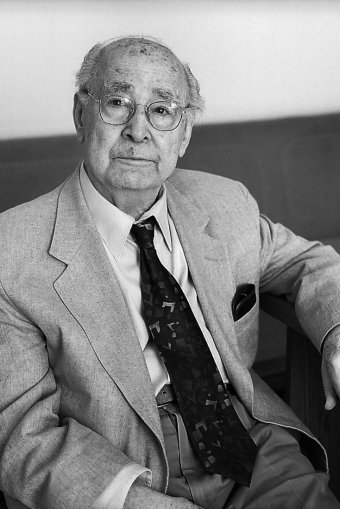
Thomas Molnar, 1921–2010
The Catholic philosopher and historian Thomas Molnar died last week in Virginia at eighty-nine years of age, just six days short of reaching his ninetieth year. Born Molnár Tamás in Budapest in 1921, the only son of Sandor and Aranka, Molnar was schooled across the Romanian border in the town of Nag árad (Rom.: Oradea) in the Körösvidék, a region often included in Transylvania and an integral part of Hungary until the Treaty of Trianon cleaved it a year before. In 1940 he moved to Belgium to begin his higher education in French, and as a leader in the Catholic student movement he was interned by the German occupiers and sent to Dachau. With the end of hostilities, he returned to Brussels before arriving home in Budapest to witness the gradual Communist takeover of Hungary.
Molnar left for the United States, where he earned his Ph.D. from Columbia University in 1950. He frequently contributed to the pages of National Review after its foundation by William F. Buckley in 1955, and his periodic writings were often found in Monde et Vie, Commonweal, Modern Age, Triumph, and other journals. From 1957 to 1967 he taught French & World Literature at Brooklyn College before moving on to become Professor of European Intellectual History at Long Island University. In 1969 he was a visiting professor at Potchefstroom University in the Transvaal. In 1983 he was awarded an honorary doctorate by the University of Mendoza in Argentina while he was a guest professor at Yale. After the fall of the Communist regime in Hungary, he taught at the University of Budapest and at the Catholic University (PPKE). In 1995 he was elevated to the Hungarian Academy of Arts.
While his first book, Bernanos: his political thought and prophecy (1960), was well-received, it was Molnar’s second published work that was arguably his best known. The Decline of the Intellectual (1961) was, in Molnar’s own words, “greeted favorably by conservatives, with respectful puzzlement by the left, and was dismissed by the liberal progressives.” Gallimard began discussions to print a French translation as part of its prominent Idées series, before the publisher’s in-house Marxist Dionys Mascolo vetoed it for its treatment of Marxism not as a utopian ideology. The celebrated & notorious Soviet spy Alger Hiss complimented it in a Village Voice review, but Molnar noted that The Decline of the Intellectual‘s harshest criticism came from liberal Catholic circles. “Obviously,” he wrote, “in that moment’s intellectual climate, they would have preferred a breathless outpouring of Teilhardian enthusiasm.”
The book argued, from a deeply conservative European mindset, that the rise of the intelligentsia during the nineteenth century was tied to its capacity as an agent of bourgeois social change. As the intellectual class increasingly shaped the more democratic, more egalitarian (indeed, more bourgeois) world around it, the intelligentsia’s vitality, so tied to its capability to enact social change (Molnar argued), became self-destructive. The “decline” set in as the intelligentsia searched for alternative methods of social redemption in increasingly extreme fashions (such as nationalism, socialism, communism, fascism, &c.) and led to the intellectuals allying themselves with ideology, which is the surest killer of genuine intellectual and philosophical speculation.
The same year Molnar’s The Future of Education was published with a foreword by Russell Kirk, whose study of American conservative thinkers, The Conservative Mind, was admired by Molnar. Among the many works that followed were Utopia, the perennial heresy (1967), The Counter-Revolution (1969), Nationalism in the Space Age (1971), L’éclipse du sacré : discours et réponses in 1986 with Alain Benoist, and the following year The Pagan Temptation refuting Benoist’s neo-paganism, The Church, Pilgrim of Centuries (1990), and in 1996 Archetypes of Thought and Return to Philosophy. From then until his death, the remainder of his new books have been published in his native Hungarian language.
Molnar and his work have become sadly neglected for the very reasons he detailed in his major work: the overwhelming triumph of ideology over the intellectual sphere. While Russell Kirk defined conservatism as the absence of ideology, modern conservatism in America has become almost completely enveloped by ideology, and the Molnar’s deep, traditional way of thinking — influenced by de Maistre and Maurras — is now met more by silence and ignorance than by direct condemnation.
The triumph of ideology (be it on the left or the right) was aided and abetted, Molnar argued, by a culture dominated by media and telecommunications. “Around 1960,” Professor Molnar wrote later in his life, “the power of the media was not yet what it is today.”
Hardly anybody suspected then that the media would soon become more than a new Ceasar, indeed a demiurge creating its own world, the events therein, the prefabricated comments, countercomments—and silence. … The more I saw of universities and campuses, publishers and journals, newspapers and television, the creation of public opinion, of policies and their outcome, the less I believed in the existence of the freedom of expression where this really mattered for the intellectual/professional establishment. For the time being, I saw more of it in Europe, anyway, than in America: over there, institutions still stood guard over certain freedoms and the conflict of ideas was genuine; over here the democratic consensus swept aside those who objected, and banalized their arguments. The difference became minimal in the course of decades.
Needless to say, the world of American conservatism has been silent in responding to the death of Professor Molnar.
Ideology’s enforced forgetfulness aside, Molnar’s native Hungary renewed its appreciation for him just before his death: last year the Sapientia theological college organised the first conference devoted to his works, which was well-attended and much commented-upon in the Hungarian press. Besides his serious corpus of works, Molnar is survived by his wife Ildiko, his son Eric, his stepson Dr. John Nestler, and his seven grandchildren.
Requiem aeternam dona ei, Domine, et lux perpetua luceat ei.
Requiescat in pace.
Andrew Cusack : Thomas Molnar, 1921–2010
-
27-07-10, 21:31 #3Forumista
- Data Registrazione
- 07 Apr 2009
- Messaggi
- 760
-
- 0
-
- 34
- Mentioned
- 0 Post(s)
- Tagged
- 0 Thread(s)
Rif: E' morto Thomas Molnar
Thursday, July 22, 2010
Professor Thomas Molnar: In Memoriam
We received news today that the noted Catholic intellectual Thomas Molnar has died:
Obituary
His name may not mean much to the current generation. Yet, in the early 60’s he was ranked as one of the three or four key conservative Catholic thinkers in the US: along with Eric von Kuehnelt-Leddihn and John Lukacs (what a strange grouping!). Molnar has left us major works in philosophy, political science, literature and criticism of current events. Among his innumerable articles, his contributions to the early Traditionalist magazine Triumph and as a contributor of many years to National Review stand out for the Catholic Traditionalist. Those used to the products of conservative catholic thought today will be amazed by Molnar’s profundity of thought and his clarity of expression.
“A prophet is without honor in his own country” - assuming the US was Thomas Molnar’s country, truer words were never spoken. Here, his highest academic attainment was a professorship in French in the CUNY system. France, however, was a kind of spiritual homeland to Molnar; he was highly regarded by the diverse, usually warring communities of the French right. France, the home of Action Francaise, Bernanos and Msgr. Lefebvre, has a lively tradition of the intellectual discourse and of organized resistance to the authorities of modernity. Indeed, many of Thomas Molnar’s best works were in French and dealt with issues of French intellectual life. And after 1989, towards the end of his life, Molnar was finally welcomed home to his native Hungary. He was given a professorship at the University of Budapest, his works were translated into his native tongue and he received many awards and honors.
Given the scale of his achievement, I can only touch on one aspect of Molnar’s thought. He was a preeminent chronicler and analyst of the ideological trends and deceptions of the current age. In conducting his dissections, Thomas Molnar drew primarily on Thomism, on the thought of the French right and on his immense knowledge of European literature, philosophy and history. In The Two Faces of American Foreign Policy (1962) he described the dangers of the recurrent American temptation to ideology in foreign affairs forty years before the march into Iraq squarely raised this issue. In The Decline of the Intellectual (1961; perhaps his magnum opus), he analyzed “global ideology” decades before globalization became the mantra of every corporation and government on earth. In The Counter-Revolution (1969) we find an extremely perceptive (and harshly critical) analysis of Vatican II and the papacy of Paul VI. Molnar had reached the latter conclusion only after some hesitation: in Ecumenism or New Reformation?(1968) he had still recommended rallying to the papacy as the cure for the present disorders in the Church.
Later, Molnar spelled out the dangers of the Neuhaus/Novak/First Things ideology 25 years before the bankruptcy of the “neocon” movement’s political, economic and ecclesiastical policies. Need I say that he likewise clearly foresaw the ignominious end of the National Review crowd as a claque of the establishment they had once opposed? Indeed, Molnar, generally speaking, was a critic of the “American conservative movement” and considered it a failure.
In all this Thomas Molnar was by no means a vastly learned academic pedant, let alone an ideologue. Any private conversation with Thomas Molnar was a revelation. He had a novelist’s eye for detail. By pointing out a few seemingly unimportant features or by making an unexpected juxtaposition he could shine a whole new light on a speaker, a conference or an entire organization. His candid evaluations of figures like Cardinals Lustiger, O’Connor or Joseph Ratzinger (for each after one encounter!) were prophetic. He nourished this sense for the real and concrete through extensive travel throughout the world. Moreover, he was a great listener: he always sought out and evaluated the experiences of others: college students, young and not-so-young professionals - even taxi drivers.
For many of his conservative or Catholic colleagues he was a somewhat uncomfortable figure. He would be accused of “pessimism.” But is this not another word for willingness to tell the truth: that the Second Vatican Council had disastrously failed; that the policies of John Paul II were no answer to the crisis; and that no personality or movement offering a real solution was on the horizon? Others found fault with his “anti-Americanism.” But is Molnar’s critique of American cultural hegemony that different from the earlier observations of Graham Greene (whose work I happen to be rereading at the moment)? There is an amazing agreement on this topic between these two entirely different personalities united by a common European and Catholic perspective. Similar to Greene, Molnar hated Puritanism and its progeny: ideological thought and the reduction of life to formulas. He saw this puritanical legacy – along with democracy - as the Achilles heel of the United States. His views on the American educational system and its products are negative and forceful. I will not conceal that Molnar was not a little embittered against a Church that in France had turned its back on its cultural legacy and had become the obsequious courtier of the progressive establishment. The destruction of the traditional, Catholic society of Spain that Molnar experienced first hand over the years – and in which the Church collaborated - undoubtedly added to these feelings.
I last saw Thomas Molnar early this year. Although suffering from painful and debilitating afflictions, he was, as always, polite and, despite everything, serene – ever the European gentleman. I would advise every Catholic – and in particular every Traditionalist Catholic – to seek out and read the works of Molnar. You will find there a precious legacy of European Catholicism that will help you understand the issues of today. Our condolences and prayers are with his devoted wife Ildiko, his children and grandchildren.
The Society of St. Hugh of Cluny: Professor Thomas Molnar: In Memoriam
-
13-08-10, 12:28 #4email non funzionante

- Data Registrazione
- 21 Apr 2009
- Messaggi
- 562
-
- 0
-
- 0
- Mentioned
- 0 Post(s)
- Tagged
- 0 Thread(s)
Rif: E' morto Thomas Molnar
RIP


 Rispondi Citando
Discussioni Simili
-
San Thomas More
Di Nazzareno (POL) nel forum CattoliciRisposte: 6Ultimo Messaggio: 14-07-08, 16:34 -
Per Thomas
Di Caterina63 nel forum CattoliciRisposte: 1Ultimo Messaggio: 22-10-05, 17:34 -
Per Thomas
Di torquemada nel forum CattoliciRisposte: 3Ultimo Messaggio: 12-10-05, 00:00 -
Sig. Thomas
Di pensiero nel forum FondoscalaRisposte: 23Ultimo Messaggio: 23-06-04, 02:39 -
X Thomas
Di Vikkk nel forum Destra RadicaleRisposte: 0Ultimo Messaggio: 19-06-04, 22:45
 Permessi di Scrittura
Powered by vBulletin® Version 4.2.5
Copyright © 2026 vBulletin Solutions Inc. All rights reserved.
Change privacy settings
Copyright © 2026 vBulletin Solutions Inc. All rights reserved.
Change privacy settings
Tutti gli orari sono GMT +2. Adesso sono le 09:20.
