


Un esempio del Fracklog (ovvero pozzi quasi finiti o finiti ma non ancora sfruttuati):
....
EOG – the largest operator in the U.S. shale oil fields – is cutting its capital budget 40 per cent this year to $5-billion. EOG is pursuing a strategy that is increasingly used in the industry – drilling wells but waiting until the market improves to frack them and start production. The company has an inventory of 200 uncompleted wells and plans for that number to build through the year.
..
Deep in the heart of the Texas oil boom - The Globe and Mail
Now many are adopting a new strategy that will allow them to pump even more crude as soon as oil prices begin to rise. They are drilling wells but holding off on hydraulic fracturing, or forcing in water and chemicals to free oil from shale formations. The delay in the start of fracking lets companies store oil in the ground in a way that enables them to tap it unusually quickly if they wish—and flood the market again.
.....
EOG Resources Inc., an oil producer based in Texas, is drilling about 285 wells that it won’t start finishing off until crude oil’s price rebounds to between $60 and $65 a barrel.
“When oil prices recover, EOG will be prepared to resume strong double-digit oil growth,” Chief Executive Bill Thomas said recently.
Some other big names in U.S. energy also are delaying well completions, among themAnadarko Petroleum Corp., Apache Corp., Chesapeake Energy Corp. and Continental Resources Inc. These four plus EOG pumped 312 million barrels of oil in the U.S. in 2014, or almost 10% of American crude production.
The number of wells in Texas and North Dakota that have been drilled but aren’t yet pumping is at least 3,000, RBC Capital Markets estimates. That oil still in the ground “provides a war chest that could temper fundamental price spikes in the coming year,” RBC analyst Scott Hanold wrote in a Friday note.
This essentially is more U.S. crude in storage, akin to that in the tanks now brimming. The U.S. has 449 million barrels of oil sloshing around in tanks, the highest level on record and almost 70% of capacity, according to the U.S. Energy Information Administration.
U.S. Producers Ready New Oil Wave - WSJ
Risultati da 1,191 a 1,200 di 2175
Discussione: Il suicidio del fracking
-
14-03-15, 18:20 #1191Viva la piadina!!!


- Data Registrazione
- 20 Nov 2009
- Località
- Miami, FL, USA
- Messaggi
- 96,627
-

- 1,937
-

- 8,531
- Mentioned
- 723 Post(s)
- Tagged
- 4 Thread(s)
 Re: Il suicidio del fracking
Ultima modifica di Amati75; 14-03-15 alle 18:24
Globalizzazione..... si grazie.
-
14-03-15, 19:43 #1192email non funzionante

- Data Registrazione
- 30 Nov 2009
- Località
- new york
- Messaggi
- 164,924
-
- 17
-
- 12,232
- Mentioned
- 1841 Post(s)
- Tagged
- 13 Thread(s)
Re: Il suicidio del fracking
 Originariamente Scritto da animal

Ma detto nulla del genere!!
Ho scritto che il surplus di shales avrebbe prodotto un aumento di offerta sul mercato
-
15-03-15, 12:15 #1193email non funzionante


- Data Registrazione
- 06 Apr 2009
- Località
- Helvetia
- Messaggi
- 66,277
-
- 19,096
-
- 24,996
- Mentioned
- 961 Post(s)
- Tagged
- 0 Thread(s)
Re: Il suicidio del fracking
L'argomento e' interessante, ma sinceramente non capisco come si pensino di convincere i tanti lettori, dato che questo 3D e' nei primi forum clikkati, continuando a postare agenzie di stampa di compagniette americane, o articoli di giornali americani chiaramente prezzolati.
Qualche seria analisi magari da parte degli strenui difensori del fracking non alzerebbe il livello della discussione?
Vorrei chiedere a quei due o tre filoUSA se:
1.Pensano veramente che il fracking sia una risorsa auspicabile in futuro per tutto il mondo?
2. Ritengono invece che nel giro di pochi anni il fenomeno si circoscriva a limitate aree e per particolari situazioni socioeconomiche
3. Il fatto che venga usata acqua in maniera assolutamente spropositata a qualsiasi altro sistema di sfruttamento, non comporta che per paesi nei quali l'acqua sara' sempre piu' il vero oro azzurro quali la Cina e i paesi africani, l'uso del fracking sara' una vera catastrofe?
4. Sono percaso portavoce di qualche interesse nel settore? basta che dicano SI senza specificare per quale compagnia o agenzia!Ultima modifica di animal; 15-03-15 alle 12:17
-
15-03-15, 18:09 #1194email non funzionante

- Data Registrazione
- 09 Jul 2012
- Messaggi
- 16,123
-
- 11,791
-
- 6,197
- Mentioned
- 125 Post(s)
- Tagged
- 3 Thread(s)
Re: Il suicidio del fracking
Il fracking è già fallito, basta vedere che le stesse società di rating usa non gli danno una lira. Originariamente Scritto da lupettalberta
-
15-03-15, 18:24 #1195Viva la piadina!!!
- Data Registrazione
- 20 Nov 2009
- Località
- Miami, FL, USA
- Messaggi
- 96,627
-
- 1,937
-
- 8,531
- Mentioned
- 723 Post(s)
- Tagged
- 4 Thread(s)
Re: Il suicidio del fracking
Originariamente Scritto da lupettalberta
Io direi che prima di rispondere a priori, si dovrebbe, visto che qeusto 3D e' su da un bel po', legegre cosa si scriveva tempo fa,articoli, links, dati, previsioni e cosi via, e poi vedere cosa e' nei fatti accaduto... e porca paletta.. noteria che la tua posizione, quella di Metabo, Animal e cosi via, e' semplicemente errata, non perche' lo diciamo noi, perhce' appunto vi sono le cose scritte e poi quello che e' accaduto e che sta accadandeo, molto semplice.
Se vuoi una risposta ai tuoi punti:
1.Pensano veramente che il fracking sia una risorsa auspicabile in futuro per tutto il mondo?
Il Fracking e' una risorsa/metodologia come le altre, come le altre necessita di supervisione.
Il giorno che si avra' la fusione nucleare lo shale avra' meno senso, cosi come lo avranno tutte le risorse energetiche NON rinnovabili, ma fino a quel punto vi e' poco da fantasticare.
2. Ritengono invece che nel giro di pochi anni il fenomeno si circoscriva a limitate aree e per particolari situazioni socioeconomiche
Perche' sia economicamente/commercialmente sfruttabile necessita di determinati fattori, che non sono facilmente presenti o replicabili, come da articolo di FORBES portato piu' volte nel corso della vita di questo 3d (vedi, che aiuta leggere l' evolversi della discussione).
3. Il fatto che venga usata acqua in maniera assolutamente spropositata a qualsiasi altro sistema di sfruttamento, non comporta che per paesi nei quali l'acqua sara' sempre piu' il vero oro azzurro quali la Cina e i paesi africani, l'uso del fracking sara' una vera catastrofe?
Il fracking si sta evolvendo, ovvero si stanno mettendo in uso tecniche senza acqua, altre come quella del link postato poche pagine addietro, non usa ne chimichi, ne acqua (la ziedna propell technologies).
Se un paese ha poche risorse idriche, implica che gli mancherebbe uno dei fattori indicati da Forbes, ovvero la risorse sarebbe molto costosa, e/o non molto efficente.
Il fracking e' un metodo/ un insieme di know how e tecnologie... non ho capito bene cosa pensiate che sia.
Per certo, magari tu potrai darci una risposta, visto che Animal e Metabo se la danno a gambe elevato quando la faccio, ma che mi dite dell' euivalente di 6 Deephorizons che accadono ANNUALMENTE nella Russia artica? 6 DeepHorizons annualmente, fano MOLTO ma MOLTO piu' danno de fracking, o se per quello, la situazione ecologica del delta del Niger, qui si sta parlando di due situazione derivanti lo sfruttamente tradizionale del petrolio.
4. Sono percaso portavoce di qualche interesse nel settore? basta che dicano SI senza specificare per quale compagnia o agenzia!
Questa e' una idiozia.
Allora, idiozia per idiozia si potrebbe chiederti che hai qualche interesse nel settore tradizionale, se sei una portavoce e quindi specificare quale compagnia o agenzia.
Globalizzazione..... si grazie.
-
15-03-15, 18:26 #1196Viva la piadina!!!
- Data Registrazione
- 20 Nov 2009
- Località
- Miami, FL, USA
- Messaggi
- 96,627
-
- 1,937
-
- 8,531
- Mentioned
- 723 Post(s)
- Tagged
- 4 Thread(s)
Re: Il suicidio del fracking
Originariamente Scritto da Metabo

Te come al solito non fai altro che faer affermazione della tua fantasia.
Il frackin e' un metodo (o sei alquanto confuso, o in malafede)... ad esempio EXXON & CHEVRON come indicato negli articoli postato, stanno iniziando ad entrare fortemente nel settore, ad ora erano ai margini o quasi, non mi pare che le societa' di rating abbiao dei problemi con la EXXON o la CHEVRON.... o se per quello con la EOG.... insoma.. priam di fare le tue solite affermazione, cerca di capire di cosa stai parlando, senza confonderti, eh.
Globalizzazione..... si grazie.
-
16-03-15, 03:53 #1197email non funzionante
- Data Registrazione
- 30 Nov 2009
- Località
- new york
- Messaggi
- 164,924
-
- 17
-
- 12,232
- Mentioned
- 1841 Post(s)
- Tagged
- 13 Thread(s)
Re: Il suicidio del fracking
Un altra "previsione" dei nostri anfitrioni, "andata a segno".
American Oil Production Is Still Skyrocketing: Will Oil Prices Tumble?
-
16-03-15, 08:36 #1198email non funzionante
- Data Registrazione
- 06 Apr 2009
- Località
- Helvetia
- Messaggi
- 66,277
-
- 19,096
-
- 24,996
- Mentioned
- 961 Post(s)
- Tagged
- 0 Thread(s)
Re: Il suicidio del fracking
Originariamente Scritto da paulhowe
bene continuiamo con le agenzie di stampa a pagamento, addiritura adesso da parte di un mediatore che scrive per il giornale "pazzo" fool!
Avanti cosi'!
-
16-03-15, 12:58 #1199Viva la piadina!!!
- Data Registrazione
- 20 Nov 2009
- Località
- Miami, FL, USA
- Messaggi
- 96,627
-
- 1,937
-
- 8,531
- Mentioned
- 723 Post(s)
- Tagged
- 4 Thread(s)
Re: Il suicidio del fracking
Originariamente Scritto da lupettalberta
Wow... tu si che hai "argomenti"....
In una sola mini risposta hai fatto due fallacie logiche, sai quali?
Globalizzazione..... si grazie.
-
16-03-15, 17:30 #1200Viva la piadina!!!
- Data Registrazione
- 20 Nov 2009
- Località
- Miami, FL, USA
- Messaggi
- 96,627
-
- 1,937
-
- 8,531
- Mentioned
- 723 Post(s)
- Tagged
- 4 Thread(s)
Re: Il suicidio del fracking
March 15, 2015 3:11 pmUS shale industry shows remarkable resilience
Ed Crooks in New York
High quality global journalism requires investment. Please share this article with others using the link below, do not cut & paste the article. See our Ts&Cs and Copyright Policy for more detail. Email ftsales.support@ft.com to buy additional rights. http://www.ft.com/cms/s/0/372e52bc-c...#ixzz3UYxu4Vm3
For the US shale industry, competing against Saudi Arabia and the other low-cost oil producers in the Middle East is like stepping into the boxing ring with the heavyweight champion.
At its latest meeting in November, Opec, the oil producers’ cartel, decided against a cut in output to support the crude price, sending it into freefall. Saudi Arabia, the cartel’s most powerful member, has insisted that this was not intended to be a “war on shale”, but Ali al-Naimi, the country’s oil minister, used a speech in Berlin this month to stress that it was not the role of Middle East nations to “subsidise higher-cost producers”.
High quality global journalism requires investment. Please share this article with others using the link below, do not cut & paste the article. See our Ts&Cs and Copyright Policy for more detail. Email ftsales.support@ft.com to buy additional rights. http://www.ft.com/cms/s/0/372e52bc-c...#ixzz3UYxvqFsH
North American shale companies are among those higher-cost producers, and evidence of the impact on them of the near 60 per cent fall in US crude since last summer is now mounting: in declining profits, cuts in jobs and investment and idled equipment. A handful of shale producers have gone bankrupt, while some others are struggling with large debts.
The number of rigs drilling for oil in the US has dropped 46 per cent from its peak last October, and this is starting to affect output. The US government’s Energy Information Administration said last week that in two of the three principal shale regions — the Bakken of North Dakota and the Eagle Ford of south Texas — oil production was expected to fall marginally next month. Only in the Permian basin of west Texas is it still rising.
But, so far, overall US output seems to be only levelling off, rather than collapsing. If US crude stays at its present level of about $45 per barrel, then it seems likely that production will start falling later this year. But Wood Mackenzie, a consultancy, is forecasting that US oil production will grow this year and next, if there is a rebound in prices to about $60 per barrel.
The industry’s ability to keep growing at lower prices than in recent years will depend on how far it can reduce its costs. Adam Sieminski, head of the EIA, says: “We have seen that shale oil works very well at $100 per barrel. Now we are going to find out if it works at $50 to $75.”
High quality global journalism requires investment. Please share this article with others using the link below, do not cut & paste the article. See our Ts&Cs and Copyright Policy for more detail. Email ftsales.support@ft.com to buy additional rights. http://www.ft.com/cms/s/0/372e52bc-c...#ixzz3UYxyHOet
The round of earnings and outlook statements in recent weeks from the US exploration and production companies — the small to midsized independents that led the shale revolution — showed that while they are all cutting activity sharply, none is expecting a corresponding fall in output.
High quality global journalism requires investment. Please share this article with others using the link below, do not cut & paste the article. See our Ts&Cs and Copyright Policy for more detail. Email ftsales.support@ft.com to buy additional rights. http://www.ft.com/cms/s/0/372e52bc-c...#ixzz3UYy0ZH00
Even more than conventional oilfields, shale puts operators on a treadmill because the flow from each well falls rapidly after it is brought into production. Companies need to keep drilling just to hold output steady. Yet the US independents are telling their investors that they can maintain production roughly level, even while running many fewer rigs.
EOG Resources, for example, plans a 40 per cent capital spending cut this year but expects just a 3 per cent drop in production. Hess is cutting spending by 14 per cent but expects production growth of about 12 per cent.
Achieving the outcomes projected by US shale producers for this year would represent one of the most remarkable productivity performances ever achieved by any industry.
There is a precedent for such a dramatic improvement. After 2008, US natural gas prices collapsed, and some analysts predicted that shale gas producers would be wiped out.
High quality global journalism requires investment. Please share this article with others using the link below, do not cut & paste the article. See our Ts&Cs and Copyright Policy for more detail. Email ftsales.support@ft.com to buy additional rights. http://www.ft.com/cms/s/0/372e52bc-c...#ixzz3UYy2RYfY
The number of rigs drilling for gas fell from 1,606 in the summer of 2008 to just 268 last week. Yet US gas production has continued to rise.
Moreover, it is often the same companies that coped with the fall in gas prices that are now facing the same phenomenon in the oil market. They have to show they can perform the same feat twice.
The cost cuts and productivity gains that shale oil producers expect come in three categories.
First, there are savings from putting pressure on suppliers of drilling rigs, hydraulic fracturing and other services. Companies have generally been saying they expect reductions of 20 to 30 per cent this year.
Second, companies benefit from focusing spending on their most productive assets. “You’re dropping all your worst-performing rigs and worst-performing rig crews and moving the rigs you have to your core areas,” says Randall Collum of Genscape, an energy research firm.
Finally, there are productivity gains available from improved techniques.
High quality global journalism requires investment. Please share this article with others using the link below, do not cut & paste the article. See our Ts&Cs and Copyright Policy for more detail. Email ftsales.support@ft.com to buy additional rights. http://www.ft.com/cms/s/0/372e52bc-c...#ixzz3UYy5Dcvo
Companies are able to drill more wells with fewer rigs using methods such as “pad drilling”. This minimises the downtime between wells as rigs are dismantled, moved and reassembled by drilling several from a single location.
EIA data show remarkable improvements in productivity, with production per rig from new wells rising in the past year by 24 per cent in the Eagle Ford, 29 per cent in the Bakken and 30 per cent in the Permian basin.
Last October, the median break-even oil price needed for shale projects was estimated by IHS, a research group, at $57 per barrel. Falling costs mean this year that number will be significantly lower. If crude prices do start to pick up again, many analysts and executives think US shale producers may be able to step up activity again and resume production growth even with oil below $75.
Although US shale is a higher-cost source of oil than some of the great fields of the Middle East, it may well turn out to be more resilient than Saudi Arabia and other Opec members would like
High quality global journalism requires investment. Please share this article with others using the link below, do not cut & paste the article. See our Ts&Cs and Copyright Policy for more detail. Email ftsales.support@ft.com to buy additional rights. http://www.ft.com/cms/s/0/372e52bc-c...#ixzz3UYy8dZGA
‘Assembly line’ drilling planned to cut down costs
One way that US shale oil producers are attempting to drive down costs is by developing a so-called “manufacturing model” for drilling.
This involves standardising designs, equipment and techniques so that wells are less bespoke creations, and more like products coming off a factory assembly line.
There were 37,500 wells drilled in the US last year, but many of the benefits of that large scale have not yet been captured.
“Oil companies tend to change their minds a lot during the drilling process,” says Dennis Cassidy of AlixPartners, a consultancy.
“So you have a supply chain that is very inefficient, because it has a lot of inventory and a lot of inefficiency so it can respond at the last minute.”
Many companies are trying to learn from best practice in manufacturing to become more efficient. Some have even hired executives from leading manufacturers to show them how to do it.
Drilling a well out in an oilfield is a different proposition from managing workflow in a factory, but Mr Cassidy argues there are still large savings available.
“We’ve gone from the horse and buggy to maybe the Model T. We’re certainly not at the Tesla standard of state of the art modern manufacturing,” he says.
“We may never get to an A+ standard, but there’s such a long way to go still that even a B+ is light years better than what we currently have.”
http://www.ft.com/intl/cms/s/0/372e5...#axzz3UYxdzXQ5Globalizzazione..... si grazie.

 Rispondi Citando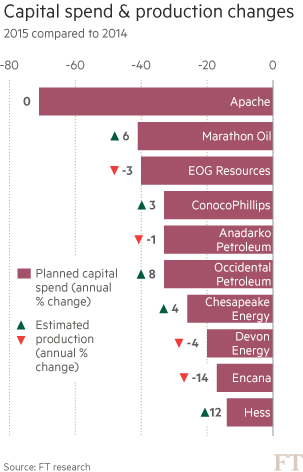
Discussioni Simili
-
Fracking e terremoti
Di Regina di Coppe nel forum Energia, Ecologia e AmbienteRisposte: 49Ultimo Messaggio: 02-11-20, 21:48 -
Il Massachusetts vuole vietare il fracking dopo i terremoti
Di dedelind nel forum Politica EsteraRisposte: 31Ultimo Messaggio: 09-01-14, 14:36 -
Suicidio ragusa: Poli bortone (gs), equitalia risponda di istigazione al suicidio
Di La 25ªora nel forum Politica NazionaleRisposte: 2Ultimo Messaggio: 15-05-13, 15:13 -
Già fatto un test di fracking in Toscana. E’ la tecnica che può innescare terremoti
Di Napoli Capitale nel forum Politica NazionaleRisposte: 3Ultimo Messaggio: 07-06-12, 18:21 -
Emilia Romagna: il fracking secondo alcuni la causa scatenante del terremoto!
Di Gianky nel forum CronacaRisposte: 4Ultimo Messaggio: 30-05-12, 07:58
 Permessi di Scrittura
Powered by vBulletin® Version 4.2.5
Copyright © 2026 vBulletin Solutions Inc. All rights reserved.
Change privacy settings
Copyright © 2026 vBulletin Solutions Inc. All rights reserved.
Change privacy settings
Tutti gli orari sono GMT +2. Adesso sono le 12:21.
