


Bernhard Plockhorst, Sulla strada di Emmaus, XIX sec.

Dirck Van Santvoort, I pellegrini di Emmaus, XVII sec., musée du Louvre, Parigi
Scuola francese, La cena di Emmaus, XVII sec., musée des Beaux-Arts, Nantes
Jacques Stella, I pellegrini di Emmaus, XVII sec., musée des Beaux-Arts, Nantes
Jean Jouvenet, La cena di Emmaus, XVII sec., musée des Beaux-Arts, Nantes
Francesco Guardi, I pellegrini di Emmaus, XVIII sec., Palais des Beaux-Arts, Lille
Pietr Pawel Rubens, La cena di Emmaus, 1638, Museo del Prado, Madrid
Risultati da 51 a 57 di 57
Discussione: Pasqua di Resurrezione
-
23-03-08, 17:47 #51**********


- Data Registrazione
- 04 Jun 2003
- Messaggi
- 23,775
-

- 18
-

- 35
- Mentioned
- 2 Post(s)
- Tagged
- 0 Thread(s)

-
23-03-08, 18:04 #52**********
- Data Registrazione
- 04 Jun 2003
- Messaggi
- 23,775
-
- 18
-
- 35
- Mentioned
- 2 Post(s)
- Tagged
- 0 Thread(s)
Emmaus
A titular see in Palæstina Prima, suffragan of Cæsarea. It is mentioned for the first time in 166-165 B.C., when Judas Machabeus defeated there the army of Gorgias (1 Maccabees 3:40, 4:25). A little later the Syrian general Bacchides fortified and garrisoned it (Josephus, Ant. Jud., XIII, i, 3). In A.D. 4, during the rebellion of Athrongius against the Romans, the inhabitants left their city, which was, nevertheless, destroyed by Varus (Joseph us, "Ant. Jud." XVII, x, 7 9; Idem, "Bel. Jud.", II, iv, 3). It soon rose again, for Josephus (Bel. Jud., III, iii, 5) and Pliny (Hist. nat., V, xiv) rank it amongst the "toparchies" of the country. Vespasian took it at the beginning of his campaign against the Jews, stationed a legion in the neighbourhood, and named it Nicopolis (Sozomen, Hist. eccl., V, xxi). According to Eusebius and St. Jerome, this name was given to it only in 223, by Julius Africanus, its governor and most illustrious son, and this is the name commonly used by Christian writers. Here a spring in which Christ is said to have washed His feet, and which was reputed to cure all diseases, was closed up by order of Julian the Apostate (Sozomen, Hist. eccl., V, xxi). Four Greek bishops are known, from the fourth to the sixth century (Lequien, Or. christ., III, 593). At the beginning of the Arab conquest the plague broke out in the city, and the inhabitants fled; they must have soon returned, however, for Emmaus remained a very important town. It was the last station of the Crusaders on their way to Jerusalem in June, 1099. Eubel (Hierarch. cath., II, 223) has a list of eleven Latin titular bishops, but only for the fifteenth century. To-day 'Am'was (the native name) is a Mussulman village about eighteen miles from Jerusalem, on the road to Jaffa. There are still visible ruins of a beautiful basilica built in the fourth or the fifth century, and repaired by the Crusaders. Near 'Am'was, at El-Atroun, the Trappists founded a priory in 1890.
In the opinion of many 'Am'was is the Emmaus of the Gospel (Luke 24:13-35), where Christ manifested Himself to two of His Disciples. Such is, indeed, the tradition of the Church of Jerusalem, attested as early as the fourth century by Eusebius of Cæsarea, Titus of Bostra, and St. Jerome, a tradition confirmed by all pilgrims, at least to the time of the Crusades; it may even date back to the third century to Julius Africanus and Origen. It is also supported by many Biblical commentaries, some of which are as old as the fourth or the fifth century; in these the Emmaus of the Gospel is said to have stood at 160 stadia from Jerusalem, the modern 'Am'was being at 176 stadia. In spite of its antiquity, this tradition does not seem to be well founded. Most manuscripts and versions place Emmaus at only sixty stadia from Jerusalem, and they are more numerous and generally more ancient than those of the former group. It seems, therefore, very probable that the number 160 is a correction of Origen and his school to make the Gospel text agree with the Palestinian tradition of their time. Moreover, the distance of 160 stadia would imply about six hours' walk, which is inadmissible, for the Disciples had only gone out to the country and could return to Jersualem before the gates were shut (Mark 16:12; Luke 24 3). Finally, the Emmaus of the Gospel is said to be a village, while 'Am'was was the flourishing capital of a "toparchy". Josephus (Ant. Jud., VII, vi, 6) mentions at sixty stadia from Jerusalem a village called Ammaus, where Vespasian and Titus stationed 800 veterans. This is evidently the Emmaus of the Gospel. But it must have been destroyed at the time of the revolt of Bar-Cocheba (A.D. 132 35) under Hadrian, and its site was unknown as early as the third century. Origen and his friends merely placed the Gospel Emmaus at Nicopolis, the only Emmaus known at their time. The identifications of Koubeibeh, Abou Gosh, Koulonieh, Beit Mizzeh, etc. with Emmaus, as proposed by some modern scholars, are inadmissible.
Bibliography
RELAND, Pal stina (Utrecht, 1714), 425 30, 758 60; Palestine Exploration Fund, Quarterly Statement, 1876, 1879, 1881, 1883, 1884, 1885, etc.; BASSI, Emmaüs, città della Palestina (Turin, 1888); BUSSELLI, L'Emmaüs evangelico (Milan, 1885); DOMENICHELLI, L'Emmaüs della Palestina (Leghorn, 1889); GUILLEMOT, Emmaüs-Nicopolis (Paris, 1886); SCHIFFERS, Amwas, das Emmaüs des hl. Lucas, 160 Stadien von Jerusalem (Freiburg im Br., 1890); Revue biblique (1893), 26 40; VAN KASTEREN, Emmaüs-Nicopolis et les auteurs arabes, ibid. (1892), 80 99, 645-649; HEIDET in Dict. de la Bible, s. v.; MEISTERMANN, L'église d'Amouas l'Emmaüs-Nicopolis et l'église de Qoubeibeh, l'Emmaüs de saint Luc (Jerusalem. 1902); VAILHÉ in Echos d'Orient (1902), 407 409; VINCENT, Les ruines d'Amwas in Revue biblique (1903), 571 99.
Fonte: The Catholic Encyclopedia, vol. V, 1909, New York
 Philippe de Champaigne, I discepoli di Emmaus, XVII sec., musée des beaux-arts, Angers
-
06-04-08, 11:39 #53**********
- Data Registrazione
- 04 Jun 2003
- Messaggi
- 23,775
-
- 18
-
- 35
- Mentioned
- 2 Post(s)
- Tagged
- 0 Thread(s)
Istruzione sopra le feste del Signore,
della B. Vergine e dei Santi
Parte prima: Delle feste del Signore
Della Pasqua di Risurrezione
69. Qual mistero si celebra nella festa di Pasqua?
Nella festa di Pasqua si celebra il mistero della Risurrezione di nostro Signore Gesù Cristo, ossia il ricongiungersi della sua santissima anima al corpo dal quale era stata separata per la morte, e la nuova sua vita gloriosa ed immortale.
70. Perché la festa di Pasqua si celebra dalla Chiesa con tanta solennità ed allegrezza e si continua per tutta l'ottava?
La festa di Pasqua si celebra dalla Chiesa con tanta solennità, e si continua per tutta l'ottava, a motivo dell'eccellenza del mistero, che fu il compimento della nostra redenzione, ed è il fondamento della nostra religione.
71. Gesù Cristo ci ha redenti colla morte; come dunque la sua Risurrezione è il compimento della nostra redenzione?
Gesù Cristo colla sua morte ci liberò dal peccato e riconciliò con Dio; per mezzo poi della sua Risurrezione ci apri l'entrata all'eterna vita.
72. Perché si dice che la Risurrezione di Cristo è il fondamento di nostra religione?
La Risurrezione di Cristo si dice il fondamento di nostra religione, perché ci venne data da Gesù Cristo istesso come prova principale di sua divinità e della verità della nostra fede.
73. Donde è derivato il nome di Pasqua, che si dà alla festa della Risurrezione di Gesù Cristo?
Il nome di Pasqua che si dà alla festa della Risurrezione di Gesù Cristo, è derivato da una delle feste più solenni dell'antica legge istituita in memoria del passaggio dell'Angelo sterminatore dei primogeniti degli egiziani, e della miracolosa liberazione del popolo di Dio dalla schiavitù di Faraone re dell'Egitto, che era una figura della nostra liberazione dalla schiavitù del demonio; la qual festa celebravano gli ebrei con molti riti, ma specialmente con sacrificare e mangiare un agnello; ed ora noi celebriamo sopratutto col ricevere il vero agnello sacrificato per i nostri peccati.
74. Che vuoi dire la parola Pasqua?
Pasqua vuoi dire passaggio, e significa nell'antica legge il passaggio dell'Angelo, che per obbligare Faraone a lasciare andar libero il popolo di Dio, uccise i primogeniti degli egiziani, e trascorse le case degli ebrei contrassegnate col sangue dell'agnello sacrificato il giorno avanti, lasciandole immuni da tal flagello; nella nuova legge poi significa, che Gesù Cristo è passato dalla morte alla vita, e che trionfando del demonio, ci ha trasferiti dalla morte del peccato alla vita della grazia.
75. Che cosa dobbiamo noi fare per celebrare degnamente la festa di Pasqua?
Per celebrare degnamente la festa di Pasqua dobbiamo fare due cose: 1.° adorare con santa allegrezza e viva riconoscenza Gesù Cristo risorto; 2.° risuscitar spiritualmente con lui.
76. Che vuoi dire risuscitare con Gesù Cristo spiritualmente?
Risuscitare con Gesù Cristo spiritualmente vuol dire, che siccome Gesù Cristo per mezzo della sua risurrezione ha cominciato una vita nuova, immortale e celeste, così noi pure dobbiamo cominciare una nuova vita secondo lo spirito, rinunziando intieramente e per sempre al peccato e a tutto ciò che ci porta al peccato; amando Dio solo, e tutto ciò che ci porta a Dio.
77. Che vuoi dire la parola Alleluja, che si ripete sì spesso in questo santo giorno, e in tutto il tempo pasquale?
La parola Alleluja vuol dire: lodate Iddio, ed era grido festivo del popolo ebreo; per questo la Chiesa lo ripete molte volte in tempo di tanta allegrezza.
78. Perché nel tempo pasquale si prega stando in piedi?
Nel tempo pasquale si prega stando in piedi in segno di allegrezza, e per figurare la risurrezione del Signore.
FONTE
-
16-04-17, 21:33 #54Forumista senior

- Data Registrazione
- 31 Mar 2009
- Località
- IPERURANIO INTERIORE
- Messaggi
- 4,328
-
- 63
-
- 331
- Mentioned
- 47 Post(s)
- Tagged
- 2 Thread(s)
 Re: Pasqua di Resurrezione
Domenica 16 aprile 2017: Santa Pasqua di Resurrezione di Nostro Signore Gesù Cristo!!!
"Il santo giorno della Pasqua"
Guéranger, L'anno liturgico - Il santo giorno della Pasqua
http://www.unavoce-ve.it/pg-pasqua.htm
"Messa"
Guéranger, L'anno liturgico - Il santo giorno della Pasqua. Messa
http://www.unavoce-ve.it/pg-pasqua-messa.htm
"Il pomeriggio"
Guéranger, L'anno liturgico - Il santo giorno della Pasqua. Il pomeriggio
http://www.unavoce-ve.it/pg-pasqua-pom.htm
"La sera"
Guéranger, L'anno liturgico - Il santo giorno della Pasqua. La sera
http://www.unavoce-ve.it/pg-pasqua-sera.htm
Santa Messa celebrata da Don Floriano Abrahamowicz a Paese oggi Domenica 16 aprile 2017; c'ero anch'io il Giovedì Santo, ieri Sabato Santo e stamattina, questo buon e coraggioso sacerdote integralmente cattolico mi ha generosamente ospitato stanotte insieme ad altre persone che ho avuto la fortuna di conoscere là, ed abbiamo festeggiato insieme la Santa Pasqua:
Santa Pasqua- Santa Messa
https://www.youtube.com/watch?v=S3Mai-zhs_s
https://www.youtube.com/user/florianoabrahamowicz
SANTA MESSA - domusmarcellefebvre110815
http://www.domusmarcellefebvre.it/santa-messa-1.php
Santa Pasqua - Sodalitium
http://www.sodalitium.biz/santa-pasqua/
“16 aprile 2017, Domenica di Pasqua.
Regina coeli, laetare, alleluia.
Quia quem meruisti portare, alleluia.
Resurrexit, sicut dixit, alleluia.
Ora pro nobis Deum, alleluia.
V. Gaude et laetare, Virgo Maria, alleluia.
R. Quia surrexit Dominus vere, alleluia.
Oremus: Deus, qui per resurrectionem Filii tui Domini nostri Iesu Christi mundum laetificare dignatus es, praesta, quaesumus, ut per eius Genetricem Virginem Mariam perpetuae capiamus gaudia vitae. Per eundem Christum Dominum nostrum. Amen.”
http://www.SaintAmedee.ch/
“Intransigeants sur la doctrine ; charitables dans l'évangélisation [Non Una Cum].”
https://www.facebook.com/SaintAmedee/?fref=nf
Dimanche de Pâques.
Gaude et laetare! Quia surrexit Dominus vere, Alleluia!
Resurrexit sicut dixit, Alleluia!
Sermon du Père Joseph-Marie pour le Dimanche de Pâques (2016)
http://prieure2bethleem.org/predica/2016_03_27_mars.mp3"
https://www.sursumcorda.cloud/
“Carlo Di Pietro - Sursum Corda
https://www.facebook.com/CdpSursumCorda/?fref=nf
Auguri di una Santa Pasqua di Risurrezione. Risurrezione nelle nostre vite è il più vivo desiderio, la più risoluta intenzione di professare integralmente la fede e la morale cattolica. Che Dio ci aiuti in questa lotta contro il mondo, contro il peccato, contro la morte dell'anima.
"Oratorio IMBC san Lorenzo Martire a Potenza. Santa Messa di Pasqua ore 19.30. Celebra la Santa Messa di Sede vacante don Giuseppe Murro (IMBC)."
"La storicità della Risurrezione di Nostro Signore Gesù Cristo"
https://www.sursumcorda.cloud/artico...su-cristo.html
"L’importanza della Risurrezione di Nostro Signore Gesù Cristo"
https://www.sursumcorda.cloud/artico...su-cristo.html
"Radio Spada
Auguri di una Santa Pasqua di Resurrezione a tutti voi!"
https://www.radiospada.org
https://www.facebook.com/radiospadasocial/?fref=nf
https://www.radiospada.org/2016/03/m...ica-di-pasqua/
"[MATTIA ROSSI] La Domenica di Pasqua.
Con la domenica di Pasqua giunge, sì, a compimento tutto l’itinerario quaresimale, ma soprattutto il Triduo Sacro iniziato il Giovedì Santo. Ed era proprio la Messa “in coena Domini” del Giovedì Santo che – come ricordavamo nell’articolo precedente – si apriva con il solenne introito Nos autem gloriari oportet. Un brano – ripetiamolo – tutto incentrato sull’esaltazione della croce che, da strumento di morte, diventa portatrice di vita, risurrezione e salvezza.
Ed è proprio alla luce di quell’introito del Giovedì Santo, inizio del Triduo, che noi possiamo e gustare appieno l’introito Resurrexi della domenica di Pasqua: entrambi sono composti in IV modo. L’inizio e il compimento del Triduo sono accomunati da un medesimo stile compositivo che, da modo mesto e addolorato, viene trasfigurato divenendo il canto della gioia della risurrezione.
Per capire la portata retorica di questa metamorfosi, basti sapere il IV modo viene descritto dai capitelli di Cluny come il “modo del pianto”, «simulans in carmine planctus». Il gregoriano si serve, dunque, di una sonorità che l’orecchio umano percepisce come triste e malinconica per farle acquisire, alla luce della Pasqua, una dimensione nuova: il canto del pianto umano per la morte di Nostro Signore diventa, così, il «canto nuovo» della letizia pasquale per la Sua risurrezione.
Un simile procedimento viene seguito dal canto gregoriano anche per la composizione graduale Haec dies che accompagna la liturgia dalla domenica di Pasqua fino al sabato “in albis”. Si tratta di un graduale scritto in II modo, altro modo che i teorici medievali definiscono «tristis».
Un ethos musicale talmente «triste» da venire impiegato nel lunghissimo tractus della Domenica delle Palme «Deus, Deus meus, respice in me: quare me dereliquisti?» nel quale Cristo emette il suo straziante grido di dolore: «Dio mio, Dio mio, guardami: perché mi hai abbandonato?».
Nuovamente, una melodia disperata e legata al dolore più tremendo viene radicalmente trasfigurata. E per fare ciò, il compositore si serve anche del copioso melisma posto sulla parola iniziale Haec: Questo è il giorno!
Il canto della gioia, però, nel tempo pasquale è anche rappresentato dall’Alleluia. Tale canto, che letteralmente significa “lodate Dio” (allelu, lodate + Yah, contrazione del tetragramma sacro), nei primi manoscritti compare come canto precedente il vangelo riservato solamente al giorno di Pasqua. Venne poi esteso a tutto il tempo pasquale e, ai tempi di Gregorio Magno, a tutte le domeniche dell’anno, fatta eccezione per la Quaresima.
Storicamente, il carattere dell’alleluia era di “preparazione” alla lettura evangelica seguente (come il graduale era di “meditazione” sulla lettura precedente). Da un punto di vista compositivo, invece, soprattutto nella struttura del versetto, esso si presenta come brano molto ornato e di natura virtuosistica, ben lontano dall’“acclamazione” come è (erroneamente e antistoricamente) inteso oggi.
Questo, per inciso, dimostra quanto del tutto illogica, oltre che nefasta, fu la riforma di Bugnini&Montini: ad oggi, infatti, all’interno della “messa” Novus Ordo, è del tutto naturale considerare l’alleluia un’acclamazione e non un vero e proprio canto tanto da esser stato praticamente ridotto ad un breve intervento o ritornellino il più delle volte privo del versetto. Il “messale” montiniano ha tolto, in sostanza, la funzione liturgica propria dell’alleluia di canto interlezionale prima del vangelo.
Ma tornando al nostro discorso, ben più interessante delle porcherie moderniste, occorrerà notare il messaggio simbolico che l’alleluia propone. Quasi tutti gli alleluia, infatti, sono strutturati in maniera simile: le sillabe allelu- sono, generalmente, poco ornate, mentre sulla sillaba finale -ia sfociano lunghissimi vocalizzi detti jubilus. Questo sta a simboleggiare che sul nome DIO la musica ne trascende il concetto e il canto si trasfigura: Egli è l’impronunciabile per eccellenza e neanche la musica, nemmeno con un’infinità di note, riesce a descriverLo. L’alleluia è il canto che più ci ricorda la distanza incolmabile tra l’immanenza terrena e l’Immacolato Sacrificio, l’indispensabile distanza tra la debolezza umana e la potenza di Dio.
L’alleluia, dunque, nella sua concezione meta-sonora, diventa il canto nuovo del salmo 95: la letteratura patristica, vera fonte esegetica per il compositore gregoriano, ci insegna che dobbiamo «cantare un canto nuovo» perché nella risurrezione di Cristo «tutto è rinnovato» (Cirillo di Alessandria). E il canto della Pasqua è proprio l’alleluia."
https://www.radiospada.org/2017/04/d...o-pungiglione/
https://www.radiospada.org/2017/04/p...-resurrezione/
http://www.unavoce-ve.it/gueranger.htm#PASQ
"PROPRIO DEL TEMPO
IL SANTO GIORNO DELLA PASQUA
AL MATTINO
La Risurrezione di Cristo.
Le lunghe ore della notte dal Sabato alla Domenica sono ormai trascorse ed il sorgere del giorno si avvicina. Maria, col cuore oppresso, attende con paziente coraggio il momento che le restituirà il Figlio. La Maddalena, con le sue compagne, ha vegliato tutta la notte e non tarderà molto ad incamminarsi verso il sepolcro. Dal fondo del Limbo, lo spirito del divin Redentore si appresta a dare il segnale della liberazione a quelle miriadi di anime giuste, prigioniere da sì lungo tempo, e che ora lo circondano di tutto il loro rispetto, di tutto il loro amore. La morte si libra silenziosa sul sepolcro ove ha racchiuso la sua vittima. Da quel giorno lontano, in cui essa divorò Abele, inghiottì innumerevoli generazioni: ma giammai aveva ghermito tra i suoi lacci una sì nobile preda. Mai come allora la sentenza del Paradiso Terrestre si era così spaventosamente adempiuta; e mai, pure, nessuna tomba aveva visto fallire le sue speranze con una smentita altrettanto crudele. Più di una volta la potenza divina le aveva involato le sue vittime: il figlio della vedova di Naim, la figlia del capo della Sinagoga, il fratello di Marta e di Maddalena, le sono stati rubati; ma essa li attende alla loro seconda morte. V'è un altro, però, di cui fu scritto: "Io sarò la tua morte, o morte; sarò la tua rovina, o sepolcro" (Osea 13, 14).
Ancora pochi istanti, e la lotta comincerà tra i due avversari.
Come per il rispetto dovuto alla divina Maestà non poteva essere permesso che quel corpo, unito a un Dio, attendesse nella polvere il momento in cui l'Angelo al suono della tromba chiamerà tutti per il giudizio supremo, cosa che avverrà per i peccatori; così era conveniente che fossero abbreviate le ore in cui il potere della morte doveva prevalere. "Una generazione malvagia ed adultera chiede un prodigio - aveva detto Gesù - nessun prodigio però le sarà dato vedere, se non quello del Profeta Giona" (Mt 12,39).
Tre giorni di sepoltura, la fine del venerdì, la notte seguente, tutto il sabato con la sua notte e le prime ore della domenica. È sufficiente: sufficiente per la giustizia divina, ormai soddisfatta; sufficiente per attestare la morte dell'augusta vittima e per assicurare il più strepitoso dei trionfi; sufficiente per il cuore desolato della più tenera tra le madri. "Nessuno mi può togliere la vita ma da me stesso io la dò; è in mio potere il darla, ed è pure in mio potere il riprenderla di nuovo" (Gv 10,18). Così aveva detto Gesù agli Ebrei prima della sua Passione; e la morte adesso sentirà tutta la forza di questa parola del padrone del mondo.
La Domenica, il giorno della Luce, comincia a spuntare; il primo chiarore dell'aurora combatte già le tenebre. E subito l'anima divina del Redentore si slancia dalla prigione del Limbo, seguita dal numeroso stuolo delle sante anime che l'avevano attorniata. Essa traversa lo spazio in un batter d'occhio e, penetrando nel sepolcro, rientra in quel corpo dal quale si era distaccata tre giorni prima in mezzo agli spasimi dell'agonia. Le sacre spoglie si rianimano, si risollevano, si liberano dai lenzuoli, dagli aromi e dalle bende in cui erano avvolte. Le lividure sono sparite, il sangue è tornato e scorre nelle vene; e da quelle membra lacerate dalla flagellazione, da quella testa ferita dalle spine, da quei piedi e da quelle mani traforate dai chiodi, si sprigiona una vivissima luce che sfolgora nella caverna. Gli Angeli che adorarono teneramente il fanciullo di Betlemme, adorano adesso, tremando, il vincitore del sepolcro; piegano con rispetto, e depongono sulla pietra, dove quel corpo riposava immobile fino a pochi istanti prima, i lenzuoli nei quali era stato avvolto dalla pietà dei due discepoli e delle pie donne.
Ma il Re dei Secoli non deve attardarsi oltre sotto la volta funebre; più rapido della luce che attraversa il cristallo, supera l'ostacolo che oppone la pietra posta all'entrata della caverna, che la pubblica autorità aveva sigillato e circondato di soldati armati. Tutto è restato intatto: ma il Trionfatore della morte è tornato a libertà, simile a quando apparve agli occhi di Maria nella povera stalla, senza alcuna violenza per il seno materno, secondo quanto unanimemente ci dicono i Dottori della Chiesa. Questi due misteri della nostra fede si riuniscono e proclamano il primo e l'ultimo termine della missione del Figlio di Dio: all'inizio una Madre rimasta vergine; alla fine un sepolcro sigillato, che restituisce colui che vi teneva prigioniero.
La sconfitta della morte.
Il silenzio più profondo regna ancora nel momento in cui l'Uomo-Dio ha spezzato lo scettro della morte. La sua e la nostra liberazione non gli hanno costato alcuno sforzo. Oh! Morte, cosa resta adesso del tuo impero? Il peccato ci aveva consegnato a te: tu riposavi sulla conquista fatta; ed ecco che la tua sconfitta arriva al colmo. Quel Gesù che eri così fiera di tenere in tuo potere, ti è sfuggito; e tutti noi, dopo esser stati in tuo possesso, ci troveremo pure liberati. La tomba che ci scavi diventerà la nostra culla per una Vita nuova, poiché colui che ha trionfato su di te è il primogenito tra i morti (Ap 1,5). Ed oggi è la Pasqua, il Transito, la liberazione, per Gesù e per tutti i suoi fratelli. Noi seguiremo tutti la strada che Egli ci ha tracciata; e verrà il giorno in cui tu, che ogni cosa distruggi, tu la nemica, tu sarai annientata a tua volta dal regno dell'immortalità (1Cor 15,26).
Ma noi contempliamo la tua sconfitta fin da questo momento e ripetiamo, a tua vergogna, il grido del grande Apostolo: "O morte, dov'è la tua vittoria? Dov'è il tuo pungiglione? Per un momento hai trionfato ed eccoti assorbita nella vittoria" (ivi, 55).
L'apertura del sepolcro.
Ma il sepolcro non dovrà restare sempre sigillato: bisogna che si apra e che dimostri in pieno giorno che colui il cui corpo inanimato vi dimorò per qualche ora, l'ha abbandonato per sempre. Improvvisamente trema la terra, come al momento in cui Gesù spirava sulla Croce; ma questa convulsione del globo terrestre non indica più l'orrore: esso adesso esprime l'allegrezza. L'Angelo del Signore scende dal Cielo; toglie la pietra dall'ingresso, sedendovi sopra maestosamente; il suo vestito è di una bianchezza abbagliante ed i suoi occhi lanciano lampi sfolgoranti. A quella vista le guardie cadono a terra dallo spavento; e restano là come morti, finché calmati nel loro terrore dalla bontà divina, si rialzano e, abbandonando quel luogo, si dirigono verso la città, a render conto di ciò che hanno veduto.
L'apparizione alla Madonna.
Nel medesimo tempo, Gesù risorto, prima che alcun essere mortale abbia potuto contemplarlo nella sua gloria, ha attraversato lo spazio e in un attimo si è riunito alla sua Santissima Madre.
Egli è il figlio di Dio, il Trionfatore della morte, ma è pure figliuolo di Maria. Ella gli è stata vicina, assistendolo fino al termine della sua agonia; ha unito il sacrificio del suo cuore materno a quello che egli stesso offriva sulla Croce; è dunque giusto che siano per lei le prime gioie della risurrezione. Il santo Vangelo non annovera tra le apparizioni quella del Salvatore a sua Madre, mentre lo fa dettagliatamente per tutte le altre; è facile capirne la ragione.
Quest'ultime avevano per scopo di divulgare il fatto della Risurrezione, mentre quella era solo reclamata dal cuore di un figlio, e di un figlio come Gesù. La natura e la grazia esigevano questo primo incontro, che nella sua misteriosità commovente, forma la delizia della anime cristiane. Non vi era bisogno che fosse registrata nei libri sacri; la tradizione dei Santi Padri, a cominciare da S. Ambrogio, era sufficiente a trasmettercela, anche se i nostri cuori non ne avessero avuto prima il presentimento. E quando noi ci domandiamo per quale ragione il Signore, che doveva uscir dalla tomba di Domenica, volle farlo nelle prime ore del giorno, ancora prima che il sole sorgesse ad illuminare l'universo, noi ci associamo senza difficoltà, al parere di quegli autori che hanno attribuito questa premura del Figlio di Dio al desiderio che aveva il suo cuore di mettere fine alla dolorosa attesa della più tenera e della più afflitta delle Madri.
Quale parola umana oserebbe provarsi a descrivere le effusioni del Figlio e della Mamma, in quell'ora tanto desiderata? Gli occhi di Maria, consumati dal pianto e dall'insonnia, si aprono improvvisamente nella dolce e viva luce che le annunzia l'avvicinarsi del suo diletto; la voce di Gesù risuona alle sue orecchie, non più con quell'accento doloroso che poco prima scendeva dall'alto della croce e, quale spada, trapassava il suo cuore materno, ma piena di gioia e di tenerezza, come si conviene a un figlio che viene a raccontare i suoi trionfi a colei che gli ha dato la luce.
L'aspetto di quel corpo sanguinante e inanimato, che tre giorni fa ella prendeva tra le sue braccia, ora è radioso e pieno di vita, come se emanasse il riflesso di quella divinità alla quale è unito; le carezze di un simile figlio, le sue parole di tenerezza, gli abbracci suoi, che son quelli di un Dio: ecco la scena rappresentataci in modo sublime dalla parola del Ruperto, che ci dipinge l'effusione di gioia di cui il cuore di Maria si trova ricolmo, come un torrente di felicità che la esalta e le toglie lo strazio dei dolori atroci che ella ha dovuto sopportare [1].
Nondimeno questa profusione di delizie che il Figlio di Dio aveva preparato a sua Madre, non fu così subitanea, come le parole di questo autore del XII secolo potrebbero farci credere. Nostro Signore ha voluto descrivere, egli stesso, quella scena in una rivelazione fatta a santa Teresa. Si degnò di confidarle che la sua divina Mamma era così profondamente abbattuta, da non resistere ancora molto senza soccombere al suo martirio e che, quando si mostrò a lei, appena uscito dal sepolcro, ebbe bisogno di qualche istante per ritornare in se stessa, prima di ritrovarsi in istato di godere una tale gioia; e il Signore aggiunge che le restò non poco vicino, perché questa sua prolungata presenza le era necessaria [2].
Noi cristiani, che amiamo la Madre nostra, che l'abbiamo vista sacrificare sul Calvario il suo Figliolo, dividiamo con cuore filiale la felicità di cui Gesù si compiace di colmarla in questo momento, e impariamo, nel medesimo tempo, a compatire i dolori del suo cuore materno. È questa la prima manifestazione di Gesù risorto: ricompensa della fede che fu sempre viva nel cuore di Maria, anche durante l'oscurità dell'eclissi che era durata tre giorni.
Ma è giunto il tempo in cui il Cristo si mostrerà ad altri, e che la gloria della Risurrezione comincerà a brillare sul mondo. Si è fatto vedere prima di tutto da colei che fra le creature gli era la più cara e che sola era degna di una tale felicità; adesso, nella sua bontà, ricompensa, con la sua visione consolante, le anime devote che sono rimaste fedeli all'amor suo, in un lutto forse troppo umano, ma ispirato a una riconoscenza che, né la morte, né il sepolcro, avevano scoraggiato.
Le Pie Donne al Sepolcro.
Maddalena e le sue compagne, ieri, quando il tramonto del sole venne ad annunciare che, secondo gli usi degli Ebrei, la grande giornata del Sabato lasciava il posto a quella della Domenica, uscirono per la città in cerca degli aromi per andare ad imbalsamare nuovamente il corpo del loro amato Maestro, appena la luce del giorno avesse permesso di recarsi a compiere questo pietoso dovere. La notte trascorse insonne; e le tenebre non erano ancora completamente dissipate, quando Maddalena, con Maria Madre di Giacomo, e Salome, prendevano la via del Calvario, presso il quale era la tomba dove riposava Gesù. Preoccupate com'erano, non si domandavano neppure quali braccia avrebbero potuto sollevare la pietra che chiudeva l'ingresso della grotta; ancor meno avevano pensato al sigillo della pubblica autorità che bisognava rompere. Arrivarono il primo sorgere del giorno e la prima cosa che colpì i loro sguardi fu la pietra posta a chiusura dell'ingresso, tolta dal suo posto, lasciando così penetrare lo sguardo nell'antro sepolcrale. L'Angelo del Signore, che aveva assolto la missione di togliere questa pietra, e che vi si era seduto sopra, come su di un trono, non le lasciò a lungo nello stupore che le aveva invase: "Non temete - dice loro - perché so che cercate Gesù il Crocifisso. Non è qui, perché è risorto, come disse; venite, vedete il luogo dove egli giaceva".
Era troppo per queste anime, che l'amore del Maestro trasportava, ma che ancora non lo conoscevano in una maniera più spirituale. Esse ne restarono "costernate", ci dice il santo Vangelo. È un morto che cercano: un morto che era carissimo; vien loro detto che è risuscitato; e questa parola non risveglia in loro nessun ricordo. Altri due Angeli si presentano nella grotta, tutta illuminata dallo splendore che diffondono. Abbagliate da questa luce inattesa, Maddalena e le sue compagne, ci dice san Luca, abbassano a terra gli sguardi contristati e pieni di meraviglia.
"Perché cercate tra i morti - dicono loro gli Angeli - colui che vive? Non sta qui, ma è risorto. Ricordatevi come vi parlò quando era ancora in Galilea, dicendo che il Figliuolo dell'Uomo doveva essere dato in mano a uomini peccatori e messo in croce e risorgere il terzo giorno".
Queste parole fanno una certa impressione sulle pie donne; e in mezzo all'emozione un lieve ricordo del passato sembra rinascere nella loro memoria. E gli Angeli continuano: "Andate a dire ai suoi discepoli e a Pietro che è risuscitato e li precede in Galilea".
Esse escono in fretta dal sepolcro e si dirigono verso la città con l'animo diviso tra un sentimento di terrore e quello di una gioia intima che le pervade loro malgrado. Nondimeno non hanno visto che un'apparizione di Angeli e un sepolcro aperto e vuoto. Gli Apostoli, al loro racconto, ben lungi dal lasciarsi andare alla speranza, attribuiscono, ci dice ancora san Luca, all'esaltazione del sesso debole tutte le meraviglie che le pie donne, insieme, vengono a riferire. La Risurrezione, predetta così chiaramente e a diverse riprese dal Maestro non torna alla memoria neppure a loro.
La Maddalena si rivolge in particolare a Pietro e a Giovanni; ma quanto è ancora debole anche la sua fede! Ella era andata ad imbalsamare il corpo del suo amato Maestro e non l'ha più trovato; ora sfoga la sua dolorosa delusione con i due Apostoli: "Hanno portato via il Signore dal sepolcro - dice - e non sappiamo dove l'abbiano messo".
Pietro e Giovanni al Sepolcro.
Pietro e Giovanni decidono di recarsi sul luogo. Penetrano nell'antro, vedono i lenzuoli piegati ordinatamente sulla tavola di pietra su cui è stato deposto il corpo del loro Maestro; ma gli Spiriti Celesti, che ne fanno la guardia, non si mostrano ad essi. Giovanni, però, come lui stesso ce ne dà testimonianza, in quel momento acquista la fede: d'ora in avanti crederà alla risurrezione di Gesù.
Noi non facciamo che sorvolare su fatti che avremo occasione di meditare più tardi, quando la Liturgia li riporterà sotto i nostri occhi. In questo momento si tratta solamente di seguire, nel loro insieme, gli avvenimenti di quel giorno: il più solenne di tutti.
Fino ad ora Gesù non è apparso che alla Madre sua; le pie donne non hanno veduto che degli Angeli che hanno loro parlato. Questi Spiriti Celesti hanno raccomandato di andare ad annunziare la risurrezione del loro Maestro ai Discepoli e a Pietro. Esse non ricevono la stessa commissione per Maria: e facile comprenderne la ragione: il figlio si è già riunito a sua Madre ed il misterioso e commovente incontro si sta ancora svolgendo, durante questi preludi. Ma ormai il sole brilla già in tutto il suo splendore e le ore del mattino avanzano; sarà l'Uomo-Dio a proclamare egli stesso il trionfo che, in lui, riporta sulla morte il genere umano. Seguiamo con profondo ossequio l'ordine di queste manifestazioni, sforzandoci di scoprirne rispettosamente il mistero.
L'apparizione a Maria Maddalena.
Maddalena, dopo il ritorno dei due Apostoli, non ha potuto resistere al desiderio di visitare nuovamente la tomba del Maestro. Il pensiero che quel corpo sparito, e forse - chissà? - divenuto lo zimbello dei suoi nemici, possa giacere senza onore e senza sepoltura, tormenta la sua anima ardente e sconvolta. Ella si è rimessa in cammino e presto arriva alla porta del sepolcro. Là, nel suo inconsolabile dolore, scoppia in singhiozzi; poco dopo, chinandosi verso l'interno dell'antro, scorge i due Angeli, seduti ciascuno ad una delle estremità della tavola di pietra sulla quale, sotto i suoi occhi, fu steso il corpo di Gesù. Ella non li interroga: son loro che parlano: - Donna - essi dicono - perché piangi?
- Hanno portato via il Signore dal sepolcro e non sappiamo dove l'abbiano messo!
E dopo queste parole si volge senza aspettarne la risposta. Improvvisamente si trova di fronte ad un uomo, e quest'uomo è Gesù. Maddalena non lo riconosce: sta cercando il corpo morto del suo Maestro e vuole seppellirlo di nuovo. L'amore la guida, ma la fede non rischiara quell'amore; non si accorge che colui del quale cerca le spoglie inanimate è là, vivente, presso di lei.
Gesù, nella sua ineffabile condiscendenza, si degna di farle sentire la sua voce: "Donna - le dice - perché piangi? Cosa cerchi?". Maddalena non ha riconosciuto neppure quella voce; il suo cuore è come intormentito da una eccessiva e cieca sensibilità. Il suo spirito non conosce ancora Gesù. Nondimeno tiene gli occhi fissi su di lui; ma la sua immaginazione, che la trascina, le fa vedere in quell'uomo il guardiano del giardino che circonda il sepolcro. Forse, pensa, è lui che ha nascosto il tesoro che cerco; e, senza riflettere più a lungo, si rivolge ad esso sotto quell'impressione: "Signore - dice umilmente allo sconosciuto - se siete voi che l'avete tolto ditemi dove lo avete messo e io lo porterò via".
Era troppo per il cuore del Redentore degli uomini, per Colui che si degnò di lodare chiaramente in casa del Fariseo l'amore della povera peccatrice; non può più tardare a ricompensare questo tenero affetto: le darà la luce per comprendere.
Allora, con un accento che ravviva nella Maddalena la memoria per tanti episodi di divina familiarità, non le dice che una sola parola: "Maria!". "Maestro", risponde lei con tutta la sua effusione, improvvisamente illuminata sullo splendore di quel mistero. E con uno slancio posa le sue labbra su quei sacri piedi, come quando, abbracciandosi ad essi, ricevette il perdono delle sue colpe. Ma Gesù la ferma; non è ancora venuto il momento di abbandonarsi a lunghe espansioni di gioia. Occorre che Maddalena, primo testimonio della risurrezione dell'Uomo-Dio, venga elevata, per merito del suo amore, al più alto grado di onore. Non è opportuno che Maria riveli ad altri i segreti del suo amore materno; sarà dunque Maddalena che dovrà testimoniare ciò che ella ha visto e ciò che ha udito in quel giardino. È lei che sarà, come dicono i Santi Dottori, l'Apostolo degli stessi Apostoli. Gesù le dice: "Va' dai miei fratelli e di' loro che io ascendo al Padre mio e Padre vostro, Dio mio e Dio vostro".
Questa è la seconda apparizione di Gesù risuscitato: l'apparizione a Maria Maddalena, la prima nell'ordine delle testimonianze.
La mediteremo nuovamente giovedì mattina; ma adoriamo fin da questo istante la bontà del Signore, che, prima ancora di pensare a confermare i suoi Apostoli nella fede della Risurrezione, si degna di compensare l'amore di quella donna che l'ha seguito fin sotto la croce, fino al di là della tomba e che, essendo a lui debitrice di più degli altri, ha saputo anche più degli altri amare. Apparendo per primo a Maddalena, Gesù ha voluto anzitutto dimostrare il suo amore divino verso le creature: amore che ha fatto precedere anche all'affermazione della sua gloria.
Maddalena si affretta ad adempiere l'ordine del suo Maestro e, dirigendosi verso la città, non tarda a trovarsi alla presenza dei Discepoli. "Ho visto il Signore - dice - ed Egli mi ha detto questo". Ma la fede non è ancora penetrata nelle loro anime; solamente Giovanni, al sepolcro, ne ha ricevuto il dono, anche se i suoi occhi non videro che la tomba vuota. Ricordiamoci che, pure essendo fuggito insieme agli altri, lo ritroviamo al Calvario per ricevere l'ultimo respiro di Gesù, e che là è divenuto il figlio adottivo di Maria.
L'apparizione alle Pie Donne.
Intanto le compagne della Maddalena, Maria madre di Giacomo, e Salome, che da lontano l'hanno seguita sulla strada del sepolcro, tornano sole a Gerusalemme. Improvvisamente Gesù si presenta al loro sguardo e le ferma: "Vi saluto" dice. A queste parole il loro cuore divampa di tenerezza e di ammirazione. Esse si gettano con ardore ai suoi piedi, abbracciandoli in atto di adorazione.
È la terza volta che il Salvatore appare risuscitato; questa, meno intima, ma più familiare di quella di cui la Maddalena fu favorita. Gesù non farà passar la giornata senza manifestarsi a coloro che sono chiamati a divenire gli araldi della sua gloria; ma ha voluto, prima di tutto, rendere onore, di fronte ai secoli futuri, a queste generose donne che, affrontando il pericolo e vincendo la debolezza del loro sesso, lo hanno consolato sulla croce con una fedeltà che non trovò in quelli che erano stati prescelti e colmati dei suoi favori. Intorno al Presepio, da dove per la prima volta si mostrava agli uomini, aveva convocato, per mezzo della voce degli Angeli, alcuni poveri pastori, prima di chiamare i re, con l'intervento di una stella. Oggi che è arrivato all'apice della gloria, che ha posto il sigillo a tutte le sue opere, mediante la sua Risurrezione, rendendo testimonianza, così, della sua origine divina e dandone la prova alla nostra fede col più irrefragabile prodigio, aspetta, prima di istruire e di illuminare gli Apostoli, che alcune umili donne siano state da lui istruite, consolate, colmate dai segni del suo amore. Quale grandezza d'animo in questo modo di agire, così soave e forte, del Signore Iddio! Come ha ragione di dirci col Profeta: "Non quali i miei pensieri, sono i vostri pensieri" (Is 55,8).
Se fossimo stati noi a dover stabilire le circostanze relative alla sua venuta nel mondo, cosa non avremmo fatto per richiamare attorno alla sua culla ricchi e poveri, in una parola l'intero genere umano? Con quale frastuono avremmo promulgato, di fronte a tutte le nazioni, il miracolo dei miracoli, la Risurrezione del Crocifisso, il suo trionfo sulla morte, l'immortalità riconquistata? Il Verbo, che è "Potenza e Sapienza di Dio" (1Cor 1,24) ha deciso altrimenti. Al momento della sua nascita non ha voluto, come primi adoratori, che degli uomini semplici, i cui racconti non dovevano riscuotere un credito al di là di Betlemme; ed ecco che, ai nostri giorni, la data di quella nascita corrisponde all'inizio dell'era di tutti i popoli civili. Quali primi testimoni della sua Risurrezione non ha scelto che alcune deboli donne; ed ecco che in questo medesimo giorno, all'epoca nostra, la terra intera celebra l'anniversario della Risurrezione. Tutto ne rimane scosso: uno slancio, sconosciuto nel resto dell'anno, si fa sentire anche dai più indifferenti; l'incredulo che vive gomito a gomito con il credente sa, per lo meno, che oggi è Pasqua; ed anche dal seno delle stesse nazioni infedeli, innumerevoli voci di cristiani si uniscono alle nostre, affinché si elevi a Gesù risuscitato, da ogni parte del globo, l'acclamazione che ci unisce tutti, quali un popolo solo: il festevole Alleluia.
Dobbiamo esclamare con Mosè, come quando il popolo eletto celebrò la prima Pasqua e traversò all'asciutto il Mar Rosso: "Chi a Te pari tra gli dei, Signore?" (Es 15,11).
[1] Gli Offici Divini, l. vii; c. xxv.
[2] Vita di santa Teresa scritta da se stessa: nelle appendici.
da: dom Prosper Guéranger, L'anno liturgico. - II. Tempo Pasquale e dopo la Pentecoste, trad. it. L. Roberti, P. Graziani e P. Suffia, Alba, 1959, p. 27-36."
"IL SANTO GIORNO DELLA PASQUA
IL POMERIGGIO
La tristezza degli Apostoli.
La giornata si avanza e Gesù non si è mostrato ai suoi discepoli. Le pie donne sono pervase dalla gioia e dalla riconoscenza che sentono per il favore di cui furono l'oggetto. Hanno reso la loro testimonianza agli Apostoli: non sono più soltanto gli Angeli ad essere loro apparsi, ma lo stesso Gesù che si è mostrato, degnandosi di parlare con esse; hanno abbracciato i suoi piedi sacri e restano ferme nelle loro affermazioni. Tuttavia non arrivano a vincere lo scoraggiamento di quegli uomini che gli avvenimenti della Passione del Maestro hanno profondamente abbattuti.
Qualunque resoconto essi ascoltino, restano tristi come persone che hanno avuto una crudele delusione. Eppure sono gli stessi che Vedremo tra breve affrontare i supplizi della morte, per testimoniare la Risurrezione di quel Maestro, il cui ricordo, in questo momento, è per loro come una umiliazione.
Possiamo farci un'idea delle impressioni di cui sono preda, ascoltando la conversazione di due uomini che hanno passato con loro una parte del giorno e che avevano essi pure avuto relazione con Gesù. Tra poco, sulla strada di Emmaus, così esprimeranno lo stato dell'animo loro disilluso: "Noi speravamo che fosse per redimere Israele; invece (oltre a tutto questo) oggi è il terzo giorno da che tali cose sono avvenute. Ma certe donne di tra noi ci hanno meravigliati, perché, essendo andate la mattina presto al sepolcro, e non avendo trovato il corpo di lui, son venute a dirci di aver avuto anche una visione di Angeli che lo dicono vivo. Ed alcuni dei nostri sono andati al sepolcro, ove hanno riscontrato quanto avevan detto le donne, ma lui non l'han trovato".
Cosa sorprendente! L'annunzio della Risurrezione, che molte volte Gesù aveva fatto dinanzi ad essi, anche in presenza degli Ebrei, non tornava alla loro memoria; tanto lo spettacolo e il ricordo della morte soffocano, negli esseri umani, il sentimento di questa novella nascita che il nostro corpo deve attingere nella tomba!
L'apparizione a san Pietro.
È necessario però che Gesù risuscitato si manifesti a coloro che dovranno portare la testimonianza della sua divinità fino ai confini del mondo. Per ora le sue apparizioni si sono effettuate solamente per soddisfare la sua tenerezza filiale verso la Madre, e la sua infinita bontà verso quelle anime che avevano risposto, per quanto potevano, ai suoi benefici.
Ma ecco che sembra arrivato il momento di pensare alla sua gloria; almeno ci verrebbe fatto di crederlo. Aspettiamo ancora, però: Gesù ha voluto anzitutto ricompensare l'amore, ma prima di proclamare il suo trionfo, sente il bisogno di dimostrare la sua generosità. Il collegio apostolico, i cui membri sono tutti fuggiti al momento del pericolo, ha visto il suo capo mancare fino a rinnegare, di fronte alla parola di una serva, quel Maestro che l'aveva colmato di onori. Ma dopo lo sguardo di rimprovero e di perdono che gli ha lanciato Gesù nella casa del Gran Sacerdote, egli non ha cessato di deplorare la sua vigliaccheria con le più amare lacrime. Gesù vuole prima di tutto consolare l'umile penitente, assicurarlo a viva voce del suo perdono, e confermarlo di nuovo, con quel segno di divina predilezione, nelle prerogative che gli aveva conferito su tutti gli altri.
Pietro dubita ancora della Risurrezione; non si è convinto alla testimonianza resa dalla Maddalena; ma non tarderà a riconoscere il divin risuscitato nella persona di quel Maestro che ha offeso e che si mostrerà a lui sotto l'aspetto di un amico che perdona.
Fin da questa mattina l'Angelo ha detto alle donne: "Andate i dire ai suoi discepoli e a Pietro, ch'egli vi precede in Galilea". Perché è specificatamente indicato il nome di Pietro, se non perché egli sappia che, se ebbe la disgrazia di negare Gesù, quello stesso Gesù non lo ha rinnegato? Perché questa volta non viene nominato prima degli altri, se non è con lo scopo di risparmiargli l'umiliazione che sorgerebbe dal contrasto della sua alta dignità con la debolezza che ha commesso? Ma venire menzionato così in modo speciale indica pure che non ha cessato di essere presente nel cuore del Signore: che presto gli sarà possibile espiare col dolore, facendo ammenda onorevole, quella colpa di infedeltà, ai piedi del suo glorioso Maestro, così pieno d'infinita bontà, Pietro è lento a credere; ma il suo pentimento è sincero e merita una ricompensa.
Improvvisamente, durante il pomeriggio, l'Apostolo vede apparire davanti a lui lo stesso Gesù che scorse, tre giorni fa, legato e trascinato dai servi di Caifa e di cui temette di dover dividere la sorte. Ma quel Gesù, così umiliato allora, brilla adesso di tutti gli splendori della sua Risurrezione: è un vincitore; il glorioso Messia; ciò che più vivamente sfolgora dinanzi agli occhi dell'Apostolo, è l'ineffabile bontà di questo Re divino, che rassicura il peccatore ancor più di quanto il suo splendore possa averlo abbagliato. Chi oserebbe provarsi a riprodurre questo colloquio, tra il colpevole e l'offeso, tra il dolore dell'Apostolo, che una tale generosità copre di profonda confusione, e l'assicurazione del perdono che scende dalle sacre labbra e riempie di gioia quel cuore in precedenza così abbattuto? Sii benedetto, o Gesù, di avere risollevato dalla sua bassezza colui che ci lascerai quale nostro capo e nostro padre, quando tu salirai al cielo.
Fede e primato di Pietro.
Dopo avere reso omaggio a questa infinita misericordia del cuore del nostro Salvatore risuscitato con potenza ed espansione non minore di quanto manifestò durante i giorni della sua vita mortale, ammiriamo la sapienza con la quale egli continua a compiere, nella persona di san Pietro, il mistero dell'unità della Chiesa, mistero che deve confermarsi nell'Apostolo e nei suoi successori. Gesù gli aveva detto in presenza degli altri durante l'ultima Cena: "Io ho pregato per te, perché non venga meno la tua fede e tu, una volta ravveduto, conferma i tuoi fratelli".
È giunto ora il momento di stabilire in Pietro quella fede che non dovrà mai mancargli; e Gesù gliela dà in quell'istante medesimo. È lui stesso, che istruisce per primo, per stabilirne le fondamenta. Ma presto si mostrerà agli altri Apostoli e Pietro sarà presente insieme con i suoi fratelli, di modo che, se questo otterrà dei favori ai quali gli altri non parteciperanno, quelli non ne riceveranno mai senza che egli ne abbia la sua parte. Resta a loro di credere sulla parola di Pietro, come fecero; ed è per mezzo della sua testimonianza che riceveranno la fede nella Risurrezione e la proclameranno, come vedremo tra poco. Poi Gesù apparirà anche a loro, poiché li ama, li chiama suoi fratelli, li destina a predicare la sua gloria per tutta la terra; ma quella fede nella Risurrezione la troverà già stabilita in essi, perché hanno creduto alla testimonianza di Pietro; la quale ha operato in loro il mistero dell'unità, che sarà perpetuato nella Chiesa fino all'ultimo giorno del mondo.
L'apparizione di Gesù al Principe degli Apostoli è poggiata sul Vangelo di san Luca e sulla prima Epistola di san Paolo ai Corinzi, ed è la quarta di quelle che ebbero luogo il giorno della Risurrezione.
da: dom Prosper Guéranger, L'anno liturgico. - II. Tempo Pasquale e dopo la Pentecoste, trad. it. L. Roberti, P. Graziani e P. Suffia, Alba, 1959, p. 43-46."
"IL SANTO GIORNO DELLA PASQUA
LA SERA
L'apparizione ai discepoli di Emmaus.
Durante il corso di questa giornata, ben quattro volte Gesù si è manifestato dopo la sua Risurrezione. Ora gli resta di mostrarsi a tutti gli Apostoli riuniti insieme e di metterli così nella possibilità di unire la loro esperienza personale alla testimonianza che hanno accettato dalle labbra di Pietro. Ma tale è la condiscendenza del Divin Risuscitato verso i suoi discepoli che, lasciando ancora per qualche momento quelli che chiama suoi fratelli e che adesso non dubitano più del suo trionfo, si preoccupa prima di consolare due cuori, la cui afflizione non ha altra causa che la loro poca fede.
Sulla strada che va da Gerusalemme ad Emmaus camminano, pieni di tristezza, due viaggiatori. Dal loro aspetto abbattuto s'indovina facilmente che essi sono in preda ad una crudele delusione e forse, chissà? si allontanano dalla città proprio per un sentimento di angoscia. Erano discepoli di Gesù mentre egli era in vita, ma la morte umiliante del maestro, in cui essi avevano creduto, ha causato loro una desolazione tanto amara quanto profonda. Mortificati di aver compromesso il loro onore, seguendo un uomo che non era ciò che avevano pensato, rimasero nascosti durante le prime ore che seguirono il suo supplizio. Ma ecco che improvvisamente si parlò di una tomba aperta e violata, della sparizione del corpo ivi sepolto. I nemici di Gesù sono potenti e, senza dubbio, in questo momento stanno cercando informazioni sul conto dei violatori di quel sepolcro, la cui pietra era assicurata dai sigilli della pubblica autorità. C'è da credere che le ricerche porteranno davanti al tribunale coloro che avevano seguito un Messia che la Sinagoga ha crocifisso tra due ladroni. Tale, senza dubbio, era l'argomento del dialogo che si svolgeva tra i due viaggiatori.
Ma ecco che essi sono raggiunti da un terzo viandante, e questo è Gesù in persona. La concentrazione dei pensieri sul lugubre soggetto che li preoccupa, ha loro tolto la libertà di riconoscere i suoi lineamenti; allo stesso modo che capita a noi quando, lasciandoci andare ad un dolore troppo umano, perdiamo di vista il Divin compagno che ci viene vicino per camminare con noi e rinsaldare le nostre speranze. Gesù interroga i due sulla causa della loro tristezza, ed essi gliela confessano con semplicità; ed il Re di gloria, colui che in quello stesso giorno aveva vinto la morte, si degna discorrere con loro, spiegando, cammin facendo, tutta la serie degli oracoli che annunziavano le umiliazioni, la morte ed il trionfo finale del Redentore d'Israele. I due viaggiatori sono commossi: sentono, come confessarono più tardi, il loro cuore bruciare di un fuoco sconosciuto, man mano che quella voce fa penetrare nelle orecchie quelle verità fino ad allora misconosciute.
Gesù finge di volersi separare da loro, ma essi lo trattengono; "rimani con noi - gli dicono - che si fa sera ed il giorno è già declinato"; accetterai la nostra ospitalità.
Essi introducono nella casa di Emmaus lo sconosciuto compagno, lo fanno sedere a tavola con loro e, cosa sorprendente, non indovinano ancora chi è questo sublime dottore, venuto a risolvere i loro dubbi con tanta sapiente eloquenza. Tali siamo anche noi quando ci lasciamo dominare da pensieri troppo umani: Gesù ci è vicino, ci parla, ci istruisce, ci consola; e spesso, per riconoscerlo, molto tempo deve passare! Finalmente l'istante è venuto in cui il padrone della luce si rivelerà a quei due discepoli, così tardi nel credere. Lo hanno invitato a presiedere alla loro mensa: a lui, dunque, tocca di spezzare il pane. Egli lo prende tra le sue sacre mani e, nel momento stesso in cui lo fraziona per distribuirlo, improvvisamente si aprono i loro occhi: hanno riconosciuto Gesù stesso, Gesù risuscitato!
Stanno per cadere ai suoi piedi, ma lui, appena rivelatesi ai loro sguardi, scompare, lasciandoli in preda allo stupore, sì, ma inondati nel medesimo tempo di una tale gioia che sorpassa qualunque altra felicità abbiano potuto gustare in tutto il resto della loro vita. E questa è la quinta apparizione del Salvatore nel giorno di Pasqua.
Il ritorno a Gerusalemme.
I due discepoli non possono restare più a lungo ad Emmaus; nonostante l'ora tarda, non desiderano ormai che di rientrare al più presto a Gerusalemme. Dopo aver diviso stamane con gli Apostoli il loro abbattimento, ora sono ansiosi di annunziare che il Maestro è vivo, che hanno parlato con lui, che lo hanno veduto!
Superano rapidamente la distanza che separa il villaggio, dove contavano passare la notte, dalla grande città di cui fuggivano i pericoli. E ben presto giungono tra gli Apostoli, apprestandosi a raccontare ciò che formava la loro felicità. Ma erano stati prevenuti; la fede nella Risurrezione era già viva nel collegio apostolico. Prima ancora che abbiano aperta la bocca, ad una sola voce essi si sentono dire: "Realmente il Signore è risorto ed è apparso a Simone".
I due discepoli raccontano allora agli Apostoli che anche loro hanno avuto la grazia della conversazione e della visione del loro Maestro.
L'apparizione agli Apostoli.
I commenti continuavano sull'accaduto tra questi uomini semplici e retti, tra uomini allora ignoti a tutti e di cui, più tardi, il mondo avrebbe ben dovuto conoscere i nomi immortali. Nel frattempo le porte della casa erano chiuse, poiché quel piccolo gruppo temeva qualche sorpresa. Le guardie del sepolcro avevano fatto il loro rapporto durante la mattinata ai principi dei sacerdoti; questi avevano cercato di sobillarle e avevano passato anche del denaro per indurle a dire che, mentre dormivano, i discepoli di Gesù erano venuti a rubarne il corpo. Tale sistema sleale delle autorità ebraiche poteva condurre a qualche reazione popolare contro gli Apostoli, e perciò essi avevano giudicato necessario prendere delle precauzioni.
Mentre stavano rievocando le emozioni di questa memorabile giornata, ecco apparire Gesù, quantunque le porte non si fossero aperte per farlo passare. È proprio lui; sono proprio i suoi lineamenti, è la sua voce piena di bontà. "La pace sia con voi" dice loro con tenerezza. Nondimeno rimangono interdetti: questo ingresso misterioso e inatteso li ha sconvolti. Ignorano ancora le prerogative dei corpi gloriosi; e, pur senza più dubitare della Risurrezione del Maestro, non si rendono conto se si tratti, invece, della presenza di un fantasma. Gesù che, in tutta questa giornata, sembra preoccuparsi più di dimostrare ai suoi cari il suo amore che di proclamare la sua gloria, si degna di far toccare le sue membra divine; ma fa anche di più e, per provare che quello è realmente il suo corpo, domanda del cibo e mangia alla loro presenza. Chi potrebbe dire la gioia di cui sono ricolmi i loro cuori scorgendo questa ineffabile familiarità? Le lacrime di tenera commozione che sgorgano dai loro occhi? Con quale allegrezza essi dicono a Tommaso, quando questo Apostolo torna tra loro "Abbiamo visto il Signore"!
Così si svolse la sesta apparizione di Gesù risuscitato.
Preghiera.
Sii dunque benedetto e glorificato, vincitore della morte, che durante questo solo giorno ti sei degnato di mostrarti agli uomini fino a sei volte, per soddisfare il tuo amore e per confermare la nostra fede nella tua divina Risurrezione.
Sii benedetto e glorificato per aver consolato, con la tua presenza e dolci carezze, il cuore così oppresso della tua e nostra Madre. Sii benedetto e glorificato per aver calmato la desolazione della Maddalena con una sola parola del tuo amore. Sii benedetto e glorificato per aver asciugato le lacrime delle pie donne con la tua presenza e per aver dato loro da baciare i tuoi sacri piedi. Sii benedetto e glorificato per aver dato, con la tua stessa bocca, l'assicurazione a Pietro del suo perdono e per aver confermato in esso i doni del suo Primato, rivelando a lui, prima che agli altri, il dogma fondamentale della nostra fede. Sii benedetto e glorificato per aver rassicurato, con tanta dolcezza, il cuore vacillante dei due discepoli sulla strada di Emmaus e per aver completato questo favore, svelandoti ad essi. Sii benedetto e glorificato per non aver lasciato finire questa giornata senza visitare i tuoi Apostoli e senza aver loro dato delle prove della tua adorabile condiscendenza alla loro debolezza. Sii benedetto e glorificato, infine, o Gesù, perché oggi ti degni di farci partecipare, dopo tanti secoli, per mezzo dell'istituzione della tua Chiesa, alle gioie che gustarono in un simile giorno Maria, tua Madre, Maddalena con le sue compagne, Pietro, i discepoli di Emmaus e gli Apostoli riuniti insieme.
Niente qui ne è cancellato; tutto è vivo, tutto è rinnovato; tu sei sempre lo stesso e la nostra Pasqua, oggi, è pure la medesima di quella che ti vide uscir dalla tomba.
Tutti i tempi sono tuoi; e il mondo delle anime, vive per mezzo dei tuoi misteri, come il mondo materiale si sostiene per mezzo del tuo potere, dal momento in cui ti piacque di cominciare l'opera tua, creando la luce visibile, fino a che essa impallidisca e si annienti davanti all'eterna luminosità che tu oggi ci hai conquistata.
PREGHIAMO
O Dio, che in questo giorno per mezzo del tuo Unigenito hai debellata la morte e ci hai riaperto le porte dell'eternità; fa' che col tuo aiuto si adempiano le buone aspirazioni della grazia.
da: dom Prosper Guéranger, L'anno liturgico. - II. Tempo Pasquale e dopo la Pentecoste, trad. it. L. Roberti, P. Graziani e P. Suffia, Alba, 1959, p. 46-49."
Luca, Sursum Corda!ADDIO GIUSEPPE, amico mio, sono LUCA e nel mio CUORE sarai sempre PRESENTE!
«Réquiem aetérnam dona ei, Dómine, et lux perpétua lúceat ei. Requiéscat in pace. Amen.»
SURSUM CORDA - HABEMUS AD DOMINUM!!! A.M.D.G.!!!
-
02-04-18, 22:53 #55Forumista senior
- Data Registrazione
- 31 Mar 2009
- Località
- IPERURANIO INTERIORE
- Messaggi
- 4,328
-
- 63
-
- 331
- Mentioned
- 47 Post(s)
- Tagged
- 2 Thread(s)
Re: Pasqua di Resurrezione
1 aprile 2018: Santa Pasqua di Resurrezione di Nostro Signore Gesù Cristo!!!
"Il santo giorno della Pasqua"
Guéranger, L'anno liturgico - Il santo giorno della Pasqua
Il santo giorno della Pasqua
Guéranger, L'anno liturgico - Il santo giorno della Pasqua
"Messa"
Guéranger, L'anno liturgico - Il santo giorno della Pasqua. Messa
Messa
Guéranger, L'anno liturgico - Il santo giorno della Pasqua. Messa
"Il pomeriggio"
Guéranger, L'anno liturgico - Il santo giorno della Pasqua. Il pomeriggio
Il pomeriggio
Guéranger, L'anno liturgico - Il santo giorno della Pasqua. Il pomeriggio
"La sera"
Guéranger, L'anno liturgico - Il santo giorno della Pasqua. La sera
La sera
Guéranger, L'anno liturgico - Il santo giorno della Pasqua. La sera
Santa Messa celebrata da Don Floriano Abrahamowicz stamattina a Paese Domenica 1 aprile 2018; c'ero anch'io dal Giovedì Santo fino ad oggi, ospite di questo buon e coraggioso sacerdote integralmente cattolico che mi ha generosamente ospitato in questi giorni insieme ad altre persone che già conoscevo ed altre che ho avuto la fortuna di conoscere là, abbiamo partecipato alle funzioni del Triduo Santo e festeggiato insieme la Santa Pasqua:
"Santa Pasqua - Santa Messa"
https://www.youtube.com/watch?v=BjAGCknLhrI
https://www.youtube.com/user/florianoabrahamowicz
SANTA MESSA - domusmarcellefebvre110815
SANTA MESSA - domusmarcellefebvre110815
“1° aprile 2018, Domenica di Resurrezione.
“In questo giorno, che ha fatto il Signore, Solennità delle Solennità, e nostra Pasqua: Resurrezione del nostro Salvatore Gesù Cristo secondo la carne”.
O risorto mio Gesù, adoro e bacio devotamente le piaghe gloriose del vostro santissimo corpo, e per questo vi prego con tutto il mio cuore di farmi sorgere da una vita di tiepidezza ad una vita di fervore per poi passare dalla miseria di questa terra alla gloria eterna del Paradiso.”
http://www.sodalitium.biz/wp-content...ne-200x300.png
Ligue Saint Amédée
“Intransigeants sur la doctrine ; charitables dans l'évangélisation [Non Una Cum].”
"Dimanche de Pâques.
Gaude et laetare! Quia surrexit Dominus vere, Alleluia!
Resurrexit sicut dixit, Alleluia!
Sermon du Père Joseph-Marie pour le Dimanche de Pâques (2016)
http://prieure2bethleem.org/predica/2016_03_27_mars.mp3"
https://www.sursumcorda.cloud/
https://www.facebook.com/CdpSursumCorda/?fref=nf
“Carlo Di Pietro - Sursum Corda
Auguri di una Santa Pasqua di Risurrezione. Risurrezione nelle nostre vite è il più vivo desiderio, la più risoluta intenzione di professare integralmente la fede e la morale cattolica. Che Dio ci aiuti in questa lotta contro il mondo, contro il peccato, contro la morte dell'anima."
"La storicità della Risurrezione di Nostro Signore Gesù Cristo"
https://www.sursumcorda.cloud/artico...su-cristo.html
"L’importanza della Risurrezione di Nostro Signore Gesù Cristo"
https://www.sursumcorda.cloud/artico...su-cristo.html
https://www.radiospada.org
https://www.facebook.com/radiospadasocial/?fref=nf
“1 aprile 2018: Pasqua di Risurrezione (Solennità delle Solennità).”

“È veramente risorto!
Auguri di una Santa Pasqua a tutti gli amici di Radio Spada (e anche ai nemici)!
{Resurrezione, A. Mantegna, 1457-1459}.”
https://www.radiospada.org/2016/03/m...ica-di-pasqua/
https://www.radiospada.org/2017/04/d...o-pungiglione/
https://www.radiospada.org/2018/03/r...ione-cristica/
https://i0.wp.com/www.radiospada.org...24%2C504&ssl=1
https://www.radiospada.org/2017/04/p...-resurrezione/

"Le Sue Piaghe gloriose. Santa Pasqua!"

"Le Piaghe che erano dolorose nella via della morte il Venerdì Santo sono gloriose nell'uscita del sepolcro a Pasqua. Il Figlio Risorto le mostra nella Gloria e quelle Piaghe, ora splendenti, salveranno il mondo.
(Raffaello, La disputa del Sacramento - Il Figlio mostra le Piaghe al Padre, Stanza della Segnatura, Palazzi Vaticani, Roma)
1) goo.gl/JzqAcz
2) goo.gl/dWdYb7
3) goo.gl/yA7Yh2
4) goo.gl/CPMR5t "

Dom Prosper Guéranger, L'Anno Liturgico
Luca, Sursum Corda!
2 APRILE 2018: SAN FRANCESCO DI PAOLA, CONFESSORE (la cui memoria liturgica tace per la concomitante Ottava di Pasqua); LUNEDÌ DI PASQUA detto dell'Angelo…
"Lunedì di Pasqua"
Dom Guéranger, L'anno liturgico - Lunedì di Pasqua
Dom Guéranger, L'anno liturgico - Lunedì di Pasqua
Santa Messa celebrata da Don Floriano Abrahamowicz ad Udine stamattina 2 APRILE 2018, lunedì di Pasqua…
https://www.youtube.com/user/florianoabrahamowicz
SANTA MESSA - domusmarcellefebvre110815
SANTA MESSA - domusmarcellefebvre110815
Lunedì dell'Angelo - Sodalitium
“2 aprile 2018, Lunedì dell’Angelo.
Alla vittima pasquale si innalzi il sacrificio di lode,
l’Agnello ha redento il gregge, Cristo l’innocente ha riconciliato i peccatori col Padre.
Morte e Vita si sono affrontate in un duello straordinario: il Signore della vita era morto, ora, regna vivo.
Raccontaci, Maria, che hai visto sulla via?
La tomba del Cristo vivente, la gloria del risorto;
e gli angeli suoi testimoni, il sudario e le vesti;
Cristo mia speranza è risorto e precede i suoi in Galilea.
Siamo certi che Cristo è veramente risorto. Tu, Re vittorioso, abbi pietà di noi.
Amen. Alleluia.ittima pasquale si innalzi il sacrificio di lode,
l’Agnello ha redento il gregge, Cristo l’innocente ha riconciliato i peccatori col Padre.
Morte e Vita si sono affrontate in un duello straordinario: il Signore della vita era morto, ora, regna vivo.
Raccontaci, Maria, che hai visto sulla via?
La tomba del Cristo vivente, la gloria del risorto;
e gli angeli suoi testimoni, il sudario e le vesti;
Cristo mia speranza è risorto e precede i suoi in Galilea.
Siamo certi che Cristo è veramente risorto. Tu, Re vittorioso, abbi pietà di noi.
Amen. Alleluia.”
http://www.sodalitium.biz/wp-content...-1-300x200.jpg
https://www.radiospada.org/2018/04/v...re-del-wessex/
“Sant’Alfredo il Grande.
Re del Wessex (attuale Inghilterra sud-occidentale, esclusi Devon e Cornovaglia) dall’871 all’899, dové sin da subito combattere contro gli invasori Danesi, che già da diversi decennj tormentavano la Gran Bretagna; dopo una lunga alternanza di sconfitte e vittorie – tra cui le maggiori furono quella di Athelney, seguita dal Battesimo del Re avversario, e quella di Benfleet/ Buttington – riuscì a sgominarli definitivamente soltanto nell’896. Nel frattempo era riuscito ad ottener l’egemonia su tutti i Re germanici dell’isola, che vedevano in lui il principale baluardo contro i Normanni ed un punto di riferimento politico e culturale: era infatti il solo Sovrano inglese a mantenere stabili relazioni con tutti gli altri Re d’Europa, nonché col Papa e, si dice, persino coi Principi indiani. Promulgò il Codice di Alfredo, che riuniva leggi dei suoi predecessori e fissava definitivamente per iscritto leggi germaniche (variamente influenzate dal diritto romano e dalla Legge mosaica, il tutto rivisitato ed addolcito in chiave cristiana) che fino ad allora erano state solamente consuetudinarie. Scrittore e letterato egli stesso, promosse la copiatura e la diffusione dei capolavori del Medioevo latino tradotti in anglosassone, nonché la composizione d’opere originali di storia nazionale, tra cui celeberrima l’Historia Ecclesiastica gentis Anglorum di San Beda il Venerabile, ma altresì di poesia e prosa in lingua locale, tra cui la Anglo-Saxon Chronicle, alla cui redazione il Re stesso prese parte.”
https://i1.wp.com/www.radiospada.org...50%2C600&ssl=1
Ligue Saint Amédée
https://www.facebook.com/SaintAmedee/?fref=nf
“Intransigeants sur la doctrine ; charitables dans l'évangélisation [Non Una Cum].”

https://www.sursumcorda.cloud/
https://www.facebook.com/CdpSursumCorda/?fref=nf
https://www.radiospada.org
https://www.facebook.com/radiospadasocial/?fref=nf
“2 aprile 2018: LUNEDÌ DI PASQUA detto dell'Angelo.”

“2 APRILE 2018: SAN FRANCESCO DI PAOLA, CONFESSORE (la cui memoria liturgica tace per la concomitante Ottava di Pasqua).”
Dom Guéranger, L'anno liturgico - Lunedì di Pasqua
Luca, Sursum Corda!ADDIO GIUSEPPE, amico mio, sono LUCA e nel mio CUORE sarai sempre PRESENTE!
«Réquiem aetérnam dona ei, Dómine, et lux perpétua lúceat ei. Requiéscat in pace. Amen.»
SURSUM CORDA - HABEMUS AD DOMINUM!!! A.M.D.G.!!!
-
08-04-18, 22:32 #56Forumista senior
- Data Registrazione
- 31 Mar 2009
- Località
- IPERURANIO INTERIORE
- Messaggi
- 4,328
-
- 63
-
- 331
- Mentioned
- 47 Post(s)
- Tagged
- 2 Thread(s)
Re: Pasqua di Resurrezione
8 APRILE 2018: DOMENICA In ALBIS, "QUASIMODO" OD OTTAVA DI PASQUA…
“DOMENICA "QUASIMODO" O OTTAVA DI PASQUA.”
Guéranger, L'anno liturgico - Domenica "Quasimodo" o Ottava di Pasqua
http://www.unavoce-ve.it/pg-pasqua-ottava.htm
SANTA MESSA domenicale celebrata da Don Floriano Abrahamovicz alla "Domus Marcel Lefebvre" di Paese (TV) alle ore 10.30, stamattina 8 APRILE 2018: DOMENICA IN ALBIS, "QUASIMODO" OD OTTAVA DI PASQUA…
«Domenica in Albis (Santa Messa)
https://www.youtube.com/watch?v=LmwtwPxRgUg
Domenica in Albis (Omelia)
https://www.youtube.com/watch?v=M4D5N-A1l1M
https://www.youtube.com/user/florianoabrahamowicz
SANTA MESSA - domusmarcellefebvre110815
http://www.domusmarcellefebvre.it/santa-messa-1.php »
"Omelie dell'I·M·B·C a Ferrara
https://www.youtube.com/channel/UCQZ...G-HXEQsb7zruAw "
Domenica in Albis - Sodalitium
http://www.sodalitium.biz/domenica-in-albis/
«8 aprile 2018, Domenica in Albis.
Abbiamo visto, ieri, i neofiti chiudere la loro Ottava della Risurrezione. Erano stati immessi prima di noi alla partecipazione del mirabile mistero di Dio Risorto e, prima di noi, dovevano giungere al termine delle loro solennità. Questo giorno è dunque l’ottavo per noi che abbiamo celebrato di Domenica la Pasqua, senza anticiparla al Sabato sera. Ci si ricorda la gioia e la grandiosità dell’unica e solenne Domenica che ha associato tutto il mondo cristiano in un medesimo sentimento di trionfo. È il giorno della nuova luce che cancella l’antico Sabato: d’ora in avanti, sarà sacro il primo dì della settimana. È sufficiente che per ben due volte il Figlio di Dio l’abbia marcato col suggello della sua potenza. La Pasqua è, dunque, per sempre fissata di Domenica; e, come è stato già spiegato più sopra, nella “mistica del Tempo Pasquale”, ogni Domenica è, d’ora in poi, una Pasqua.»
http://www.sodalitium.biz/wp-content...up-300x257.jpg
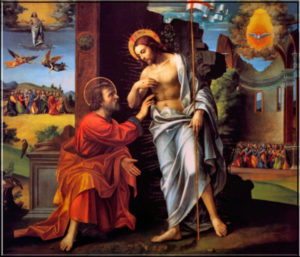
Catechismo di San Pio X - Della Pasqua di Risurrezione - Sodalitium
http://www.sodalitium.biz/della-pasqua-risurrezione/
S. Messe dalla domenica delle Palme alla domenica in Albis - Sodalitium
http://www.sodalitium.biz/messe-dall...omenica-albis/
http://liguesaintamedee.ch/
http://www.SaintAmedee.ch/
https://www.facebook.com/SaintAmedee/?fref=nf
«Intransigeants sur la doctrine ; charitables dans l'évangélisation [Non Una Cum]. »
8 avril : Saint Perpet ou Perpetuus, Évêque de Tours (? 494) :: Ligue Saint Amédée
“8 avril : Saint Perpet ou Perpetuus, Évêque de Tours († 494).”
http://liguesaintamedee.ch/applicati...int_perpet.jpg

https://www.facebook.com/romancatholicsnonunacum/
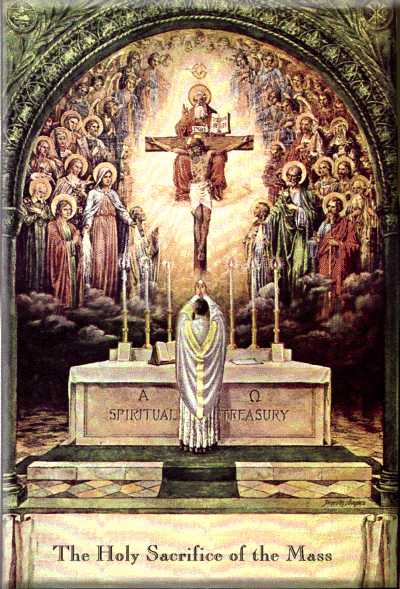
The Traditional Mass in Photos | Traditional Latin Mass Resources
http://www.fathercekada.com/wp-conte...ass20image.gif
https://www.sursumcorda.cloud/
https://www.facebook.com/CdpSursumCorda/?fref=nf
https://scontent-mxp1-1.xx.fbcdn.net...88&oe=5B69FB25

Radio Spada | Radio Spada ? Tagliente ma puntuale
http://radiospada.org/
https://www.facebook.com/radiospadasocial/?fref=nf
“8 aprile 2018: DOMENICA "QUASIMODO" O OTTAVA DI PASQUA.”

"Quasi Modo" - Introit - Dominica in Albis
https://www.youtube.com/watch?v=xxvadoK0sDs
Guéranger, L'anno liturgico - Domenica "Quasimodo" o Ottava di Pasqua
http://www.unavoce-ve.it/pg-pasqua-ottava.htm
“DOMENICA "QUASIMODO" O OTTAVA DI PASQUA.
Ogni domenica è una Pasqua.
Abbiamo visto, ieri, i neofiti chiudere la loro Ottava della Risurrezione. Erano stati immessi prima di noi alla partecipazione del mirabile mistero di Dio Risorto e, prima di noi, dovevano giungere al termine delle loro solennità. Questo giorno è dunque l'ottavo per noi che abbiamo celebrato di Domenica la Pasqua, senza anticiparla al Sabato sera. Ci si ricorda la gioia e la grandiosità dell'unica e solenne Domenica che ha associato tutto il mondo cristiano in un medesimo sentimento di trionfo. È il giorno della nuova luce che cancella l'antico Sabato: d'ora in avanti, sarà sacro il primo dì della settimana. È sufficiente che per ben due volte il Figlio di Dio l'abbia marcato col suggello della sua potenza. La Pasqua è, dunque, per sempre fissata di Domenica; e, come è stato già spiegato più sopra, nella "mistica del Tempo Pasquale", ogni Domenica è, d'ora in poi, una Pasqua.
Il nostro Divin Risorto ha voluto che la sua Chiesa così ne comprendesse il mistero, poiché, avendo intenzione di mostrarsi una seconda volta ai suoi discepoli, riuniti tutti assieme, ha aspettato, per farlo, il ritorno della Domenica. Durante tutti i giorni precedenti ha lasciato Tommaso in preda ai suoi dubbi; solamente oggi è voluto venire in suo soccorso, manifestandosi a questo Apostolo in presenza degli altri e obbligandolo a deporre la sua incredulità di fronte alla più palpabile evidenza. Oggi, dunque, la Pasqua riceve da Cristo il suo ultimo titolo di gloria, aspettando che lo Spirito Santo discenda dal cielo per venire a portare la luce del suo fuoco e fare, di questo giorno, già così privilegiato, l'era della fondazione della Chiesa Cristiana.
L'apparizione a san Tommaso.
L'apparizione del Salvatore al piccolo gruppo degli undici, e la vittoria che riporta sull'incredulità di uno dei suoi Discepoli è oggi l'oggetto speciale del culto della Santa Chiesa. Quest'apparizione, legata alla precedente, è la settima. Per suo mezzo Gesù entra nel possesso completo della fede dei suoi discepoli. La sua dignità, la sua pazienza, la sua carità in questa circostanza, sono veramente quelle di un Dio. Ancora una volta i nostri pensieri, troppo umani, restano sconvolti alla vista di questa dilazione di tempo che Gesù accorda all'incredulo, di cui, invece, sembrerebbe dover rischiarare senza indugio lo sfortunato acciecamento, o punire la temeraria insolenza.
Ma Gesù è la suprema Sapienza e la suprema Bontà. Nella sua saggezza prepara, per mezzo di questa lenta constatazione dell'avvenuta sua Risurrezione, un nuovo argomento in favore della realtà del fatto; nella sua bontà conduce il cuore del discepolo incredulo a ritrattare, da se medesimo, il suo dubbio con una sublime protesta di dolore, di umiltà e d'amore.
Noi non descriveremo qui quella scena così mirabilmente raccontata nel Vangelo, che la Santa Chiesa metterà tra poco sotto i nostri occhi; ci applicheremo solo, nell'odierno insegnamento, a far comprendere al lettore la lezione che Gesù oggi dà a tutti, nella persona di san Tommaso. È il grande ammaestramento della Domenica dell'Ottava di Pasqua. È importante ch'esso non venga trascurato, poiché, più di ogni altro, ci rivela il senso vero del Cristianesimo; ci illumina sulla causa delle nostre impotenze e sul rimedio per i nostri languori.
La lezione del Signore.
Gesù disse: "Poiché hai veduto, Tommaso, hai creduto; beati coloro che non han visto e han creduto!". Parole piene di una divina autorità, consiglio salutare dato, non solamente a Tommaso, ma a tutti gli uomini che vogliono, entrare in rapporto con Dio e salvare le anime loro! Che voleva dunque Gesù dal suo Discepolo? Non aveva confessato, un momento fa, quella fede di cui ormai era convinto? Tommaso, del resto, era poi tanto colpevole per aver desiderato un'esperienza personale, prima di dare la sua adesione al più sorprendente dei prodigi? Era tenuto a rimettersi a Pietro ed agli altri, al punto di temere di mancare verso il suo Maestro, non fidandosi della loro testimonianza? Non dava prova di prudenza, lasciando in sospeso la sua convinzione, finché altri argomenti non gli avessero rivelato direttamente la realtà del fatto? Sì, Tommaso era un uomo saggio, un uomo prudente che non si fidava oltre misura; era degno di servire di modello a molti cristiani che giudicano e ragionano come lui nelle cose della fede.
E nondimeno quanto è grave, nella sua penetrante dolcezza, il rimprovero di Gesù! Con una condiscendenza inesplicabile, si è degnato di prestarsi alla constatazione che Tommaso aveva osato chiedere; adesso che il Discepolo si trova di fronte al Maestro risorto, e che esclama, con la più sincera emozione: "Mio Signore e mio Dio!", Gesù non gli fa grazia della lezione che aveva meritata. Ci vuole un castigo per quell'ardire, per quella incredulità; e la punizione consiste nel sentirsi dire: "Perché hai veduto, Tommaso, hai creduto".
L'umiltà e la fede.
Ma Tommaso era dunque obbligato a credere prima di aver veduto? E chi può dubitarlo? Non soltanto Tommaso, ma tutti gli Apostoli erano tenuti a credere alla Risurrezione del Maestro, anche prima che fosse loro apparso. Non avevano vissuto tre anni insieme con lui? Non l'avevano visto confermare con numerosi prodigi la sua qualità di Messia e di Figlio di Dio? Non aveva annunziato la sua Risurrezione nel terzo giorno dopo la sua morte? E in quanto alle umiliazioni e ai dolori della Passione, non aveva, poco tempo prima, sulla strada di Gerusalemme, predetto che sarebbe stato preso dai Giudei, che l'avrebbero dato nelle mani dei Gentili, che sarebbe stato flagellato, coperto di sputi e messo a morte? (Lc 18,32-33).
Dei cuori retti e disposti alla fede non avrebbero avuto nessuna difficoltà a convincersene, appena saputo della sparizione del suo corpo. Giovanni non fece che entrare nel sepolcro, vedere i lenzuoli, e subito comprese tutto e credette fin da allora.
Ma l'uomo raramente è così sincero, e si ferma sul suo sentiero, quasi volendo obbligare Dio a prevenirlo. Gesù si degnò di farlo. Si mostrò alla Maddalena e alle sue compagne, che non erano incredule, ma soltanto distratte dall'esaltazione di un amore troppo naturale. Nel giudizio degli Apostoli, la loro testimonianza non era che il linguaggio di donne dall'immaginazione esaltata. Bisognò che Gesù venisse in persona a mostrarsi a quegli uomini ribelli, ai quali l'orgoglio faceva perdere la memoria di tutto il passato, che sarebbe bastato da solo ad illuminarli per il presente. Diciamo il loro orgoglio perché la fede non ha altro ostacolo che questo vizio. Se l'uomo fosse umile, si eleverebbe fino alla fede che trasporta le montagne.
Ora Tommaso ha ascoltato Maddalena ed ha sprezzato la sua testimonianza; ha ascoltato Pietro, e ha declinato la sua autorità; ha ascoltato gli altri fratelli suoi ed i Discepoli di Emmaus, e niente di tutto questo lo ha distolto dal poggiarsi solo sul suo giudizio personale. La parola altrui che, quando è grave e disinteressata, produce la certezza in uno spirito assennato, non ha più l'efficacia presso molte persone, appena si tratta di attestazione su cose soprannaturali. E questa è una grande piaga della nostra natura, lesa dal peccato. Troppo spesso, come Tommaso, noi vorremmo esperienze personali; e basta questo per privarci della pienezza della luce. Noi ci consoliamo come lui, perché siamo sempre nel numero dei Discepoli: - quest'Apostolo non aveva abbandonato i suoi fratelli: solamente non prendeva parte alla loro felicità. Quella felicità di cui era testimonio non risvegliava in lui che l'idea della debolezza: e provava un certo gusto a non condividerla.
La fede tiepida.
Tale è anche ai nostri giorni il cristiano imbevuto di razionalismo. Egli crede, ma perché la sua ragione gli dà come una necessità di credere: crede con la mente, non col cuore. La sua fede è una conclusione scientifica, non una aspirazione verso Dio e verso una vita soprannaturale. Perciò, quanto è fredda e impotente questa fede! Come è ristretta e incomoda! come teme sempre di progredire, credendo troppo! Vedendola contentarsi così facilmente di verità "diminuite" (Sal 11), pesate sulla bilancia della ragione invece di volare ad ali spiegate, come la fede dei santi, si direbbe che ha vergogna di se stessa. Parla sottovoce, ha paura di compromettersi; quando si mostra all'esterno è sotto la livrea delle idee umane, che le servono di passaporto. Non è lei che si esporrà ad un affronto per dei miracoli che giudica inutili e che non avrebbe mai consigliato a Dio di operare. Tanto per il passato che per il presente, ciò che le sembra meraviglioso, la spaventa: non ha avuto già sforzi sufficienti da fare, per ammettere ciò che è strettamente necessario di accettare?
La vita dei santi, le loro virtù eroiche, i loro sublimi sacrifici, tutto questo la agita. L'azione del cristianesimo nella società, nella legislazione, le sembra ledere i diritti di quelli che non credono; e intende rispettare la libertà dell'errore e la libertà del male; e non si accorge neppure più che il cammino del mondo ha trovato il suo ostacolo, da quando Gesù Cristo non è più Re sulla terra.
Vita di fede.
È per coloro la cui fede è così debole e così vicina al razionalismo, che Gesù, alle parole di rimprovero indirizzate a Tommaso, aggiunge quella insistenza che non lo riguarda esclusivamente, ma che mira a tutti gli uomini, di tutti i secoli: "Beati quelli che non hanno veduto e hanno creduto!" Tommaso peccò per non essere stato disposto a credere. Noi ci esponiamo a peccare come lui se non coltiviamo nella nostra fede quella espansione che di tutto la fa partecipe e la porta a quel progresso che Dio ricompensa, con un flusso di luce e di gioia nel cuore.
Una volta entrati nella Chiesa, il nostro dovere è di considerare tutto, d'ora in avanti, dal punto di vista soprannaturale; e non temiamo che questo punto di vista, regolato dagli insegnamenti della sacra autorità, ci trascini troppo lontano. "Il giusto vive di fede" (Rm 1,17); è il suo continuo nutrimento. In lui, se resta fedele al Battesimo, la vita naturale è trasformata per sempre. Crediamo, dunque, che la Chiesa avrebbe avuto tante cure, nell'istruzione dei neofiti, che li avrebbe iniziati attraverso tanti riti, i quali non respirano che idee e sentimenti di vita soprannaturale, per abbandonarli, poi, fin dall'indomani, senza rimorso, all'azione di quel pericoloso sistema che pone la fede in un cantuccio dell'intelligenza, del cuore e della condotta, per lasciare agire più liberamente l'uomo secondo la sua natura? No, non è cosi.
Riconosciamo dunque insieme con Tommaso il nostro errore; confessiamo insieme con lui che fino ad ora non abbiamo ancora creduto con una fede abbastanza perfetta. Come lui diciamo a Gesù: "Voi siete il mio Signore ed il mio Dio; e spesso ho pensato ed agito come se voi non foste stato, in tutto, il mio Signore ed il mio Dio. D'ora in avanti crederò senza avere veduto: poiché voglio essere del numero di quelli che voi avete chiamato beati".
Questa Domenica, detta ordinariamente "Quasimodo", nella Liturgia porta il nome di "Domenica in Albis" e, più esplicitamente, "in albis depositis", perché oggi i neofiti ricomparivano in Chiesa con gli abiti usuali. Nel Medio Evo la chiamavano "Pasqua Chiusa", per esprimere, senza dubbio, che l'Ottava di Pasqua finiva in questo giorno. La solennità di questa domenica è così grande nella Chiesa che, non soltanto appartiene al rito del "doppio maggiore", ma non cede mai il suo posto a nessun'altra festa, di qualsiasi grado essa sia.
A Roma la Stazione si tiene nella Basilica di S. Pancrazio, sulla via Aurelia. I nostri predecessori non ci hanno insegnato nulla circa i motivi che hanno fatto scegliere questa Chiesa per la riunione dei fedeli nella giornata odierna. Forse ebbe la preferenza per la giovane età di quel martire di quattordici anni, a cui è dedicata, in rapporto a un certo confronto con la gioventù dei neofiti, che oggi formano ancora l'oggetto della materna preoccupazione della Chiesa.
MESSA
EPISTOLA (1Gv 5,4-10). - Carissimi: tutto ciò che è nato da Dio trionfa nel mondo, e la vittoria che trionfa nel mondo è la nostra fede. E chi è che vince il mondo, se non colui il quale crede che Gesù è Figliuolo di Dio? Questi è appunto quel Gesù Cristo che è venuto con l'acqua e col sangue, non con l'acqua soltanto, ma con l'acqua e col sangue. E lo Spirito è quello che attesta che Cristo è verità. Sono infatti tre che rendono testimonianza in cielo: il Padre, il Verbo e lo Spirito Santo ; e questi tre sono uno solo. E son tre che rendono testimonianza in terra: lo spirito, l'acqua e il sangue; e questi tre sono una sola cosa. Se accettiamo la testimonianza degli uomini, ha più valore la testimonianza di Dio. Or questa testimonianza, che è la maggiore, Dio l'ha resa in favore del suo Figliuolo. Chi crede nel Figlio di Dio ha in sé la testimonianza di Dio.
Merito della fede.
L'Apostolo san Giovanni, in questo brano, esalta il merito ed i vantaggi della fede; ce la presenta come una trionfatrice che mette il mondo sotto i nostri piedi: il mondo che ci circonda e quello che è dentro di noi. La ragione che ha condotto la Chiesa a scegliere per oggi questo testo di san Giovanni s'indovina facilmente quando si vede lo stesso Cristo raccomandare la fede, nel Vangelo di questa Domenica. "Credere in Gesù Cristo - ci dice l'Apostolo - è vincere il mondo"; chi dunque sottopone la sua fede al giogo del mondo non possiede la vera fede.
Crediamo con cuore sincero, felici di sentirci bambini in presenza della verità divina, sempre disposti ad accogliere premurosamente la testimonianza di Dio. Questa divina testimonianza si ripercuoterà in noi, se ci sentiremo desiderosi di ascoltarlo sempre di più. Giovanni, alla vista dei lenzuoli che avevano avvolto il corpo del Signore, si raccolse in se stesso e credette; Tommaso, che aveva, in più dell'altro, la testimonianza degli Apostoli che avevano veduto Gesù Risorto, non credette. Non aveva sottoposto il mondo alla sua ragione, perché la fede non era in lui.
VANGELO (Gv 20,19-31). - In quel tempo: giunta la sera di quel giorno, il primo dopo il sabato, ed essendo, per paura dei Giudei, chiuse le porte di quel luogo dove i discepoli erano adunati, Gesù venne e stette in mezzo a loro e disse: Pace a voi. E ciò detto mostrò loro le mani ed il costato; e i Discepoli gioirono a vedere il Signore. Disse loro di nuovo Gesù: Pace a voi. Come il Padre ha mandato me, anch'io mando voi. E detto questo alitò sopra di loro e disse: Ricevete lo Spirito Santo. Saran rimessi i peccati a chi li rimetterete e ritenuti a chi li riterrete.
Ma Tommaso, uno dei dodici, soprannominato Didimo, non era con loro quando venne Gesù. Gli dissero adunque gli altri discepoli: - Abbiamo veduto il Signore. Ma Egli disse loro: - Se non vedo nelle sue mani i fori dei chiodi e se non metto il mio dito nel posto dei chiodi, e non metto la mia mano nel suo costato, non credo.
Otto giorni dopo, i discepoli si trovavano di nuovo in casa e Tommaso era con essi. Venne Gesù a porte chiuse e stette in mezzo e disse: - Pace a voi. Poi disse a Tommaso: - Metti qua il tuo dito e guarda le mie mani. Appressa la tua mano e mettila nel mio costato, e non essere incredulo, ma fedele. Gli rispose Tommaso esclamando: - Mio Signore e mio Dio! Gli disse Gesù: - Perché hai veduto, Tommaso, hai creduto; beati quelli che non han visto e han creduto. Gesù fece in presenza dei suoi Discepoli anche molti altri prodigi che non sono registrati in questo libro. Questi poi sono stati notati affinché crediate che Gesù è il Cristo, Figlio di Dio, e affinché credendo abbiate la vita nel nome suo.
La testimonianza di san Tommaso.
Abbiamo sufficientemente insistito sull'incredulità di san Tommaso: ora è giunto il momento di rendere invece onore alla fede di questo Apostolo. La sua infedeltà ci ha aiutati a sondare la pochezza della nostra fede: che il suo ritorno ci illumini su ciò che dobbiamo fare per divenire dei veri credenti. Tommaso ha costretto il Salvatore, che contava su di lui per farlo divenire una delle colonne della sua Chiesa, ad essere condiscendente fino alla familiarità; ma, appena si trova in sua presenza, ne rimane soggiogato. Il bisogno di riparare con un atto solenne di fede l'imprudenza che ha commesso, credendosi saggio e accorto, si fa sentire in lui. Egli getta un grido; e questo grido rappresenta la protesta della fede più ardente che un uomo possa far udire: "Mio Signore e mio Dio!". Rimarcate che egli qui non dice soltanto che Gesù è il suo Signore, il suo Maestro, che è proprio lo stesso del quale è stato Discepolo: tutto ciò non sarebbe ancora fede! Poiché non è più fede quando si può toccar con mano. Tommaso avrebbe avuto fede nella Risurrezione se avesse creduto alla testimonianza dei suoi fratelli; ma, adesso, non crede più semplicemente: egli vede, ne fa l'esperienza. Qual è dunque la testimonianza della sua fede? È che in questo momento egli attesta che il suo Maestro è Dio. Vede solo l'umanità di Gesù e proclama la divinità del Signore. Con un unico balzo la sua anima leale e contrita si è slanciata fino alla comprensione della dignità di Gesù: - Mio Dio - egli dice.
Preghiera.
O Tommaso, dapprima incredulo, la Santa Chiesa onora la tua fede e la propone per modello ai suoi figli, nel giorno della tua festa. La confessione, che oggi hai fatto, viene a porsi da sé vicino a quella che fece Pietro quando disse a Gesù: "Tu sei il Cristo, Figlio di Dio vivente!" Per mezzo di questa professione di fede che ne la carne ne il sangue avevano ispirato, Pietro meritò di essere scelto per essere il fondamento della Chiesa; la tua ha fatto più che ripararne la colpa; essa ti rese, per un momento, superiore ai tuoi fratelli, che la gioia di rivedere il loro Maestro trasportava, ma sui quali la gloria visibile della sua umanità aveva fatto fino ad allora maggiore impressione che il carattere invisibile della sua divinità.
PREGHIAMO
Concedici, Dio onnipotente, di conservare nella vita e nelle opere il frutto delle feste pasquali da noi celebrate.
da: dom Prosper Guéranger, L'anno liturgico. - II. Tempo Pasquale e dopo la Pentecoste, trad. it. L. Roberti, P. Graziani e P. Suffia, Alba, 1959, p. 105-112."
Santa domenica in Albis a tutti i fedeli cattolici!
Luca, Sursum Corda!ADDIO GIUSEPPE, amico mio, sono LUCA e nel mio CUORE sarai sempre PRESENTE!
«Réquiem aetérnam dona ei, Dómine, et lux perpétua lúceat ei. Requiéscat in pace. Amen.»
SURSUM CORDA - HABEMUS AD DOMINUM!!! A.M.D.G.!!!
-
19-04-20, 03:10 #57Forumista senior
- Data Registrazione
- 31 Mar 2009
- Località
- IPERURANIO INTERIORE
- Messaggi
- 4,328
-
- 63
-
- 331
- Mentioned
- 47 Post(s)
- Tagged
- 2 Thread(s)
Re: Pasqua di Resurrezione
12 APRILE 2020: SANTA PASQUA DI RESURREZIONE DI NOSTRO SIGNORE GESÙ CRISTO!!!
«IL SANTO GIORNO DELLA PASQUA. MESSA»
Guéranger, L'anno liturgico - Il santo giorno della Pasqua. Messa
http://www.unavoce-ve.it/pg-pasqua-messa.htm
Guéranger, L'anno liturgico - Il santo giorno della Pasqua
«PROPRIO DEL TEMPO
IL SANTO GIORNO DELLA PASQUA»
Guéranger, L'anno liturgico - Cenno storico sul Tempo Pasquale
http://www.unavoce-ve.it/pg-pasqua-st.htm
«TEMPO PASQUALE Capitolo I CENNO STORICO SUL TEMPO PASQUALE»
Guéranger, L'anno liturgico - Mistica del Tempo Pasquale
http://www.unavoce-ve.it/pg-pasqua-mist.htm
«Capitolo II MISTICA DEL TEMPO PASQUALE»
Guéranger, L'anno liturgico - Pratica del Tempo Pasquale
http://www.unavoce-ve.it/pg-pasqua-pr.htm
«Capitolo III PRATICA DEL TEMPO PASQUALE»
«Don Floriano Abrahamowicz - Domus Marcel Lefebvre
http://www.domusmarcellefebvre.it
https://www.youtube.com/user/florianoabrahamowicz/
Santa Pasqua (Santa Messa) Domenica 12/04/2020
https://www.youtube.com/watch?v=ug5E-DBVElM
Santa Pasqua (Omelia) Domenica 12/04/2020
https://www.youtube.com/watch?v=QgzbI7wNyLA
Sabato Santo
https://www.youtube.com/watch?v=nn829BgiKDs
Sabato Santo (Omelia)
https://www.youtube.com/watch?v=cnYJb1cvgYc
Per seguire le profezie in lingua italiana Sabato Santo
https://www.divinumofficium.com/cgi-bin/missa/missa.pl
L'uffizio delle Tenebre (Sabato Santo)
https://www.youtube.com/watch?v=-7nKueVRD98
Funzione liturgica (Venerdì Santo)
https://www.youtube.com/watch?v=KHgdzUzM7ok
L'uffizio delle Tenebre (Venerdì Santo)
https://www.youtube.com/watch?v=I7InMCJAERE
In Coena Domini (Santa Messa)
https://www.youtube.com/watch?v=AEu68_DtU30
L'Ufficio delle Tenebre (Giovedì Santo - Sacro Triduo)
https://www.youtube.com/watch?v=p3FC_t9tLww
SANTA MESSA - domusmarcellefebvre110815
La Santa Messa tutte le domeniche alle ore 10.30 a Paese, Treviso».
Messa IMBC in streaming - Sodalitium
http://www.sodalitium.biz/messa-imbc-streaming/
«Domenica 12/04/2020, Santa Festa di Pasqua: S. Messa bassa alle ore 10.30 in diretta dalla chiesa dei ss. Pietro e Paolo di Verrua Savoia (TO)
S. Messa presso l'istituto Mater Boni Consilii, Festa di Pasqua.
https://www.youtube.com/watch?v=cSQmxYdWWhc
Santa Messa non "una cum"»
Catechismo di San Pio X - Della Pasqua di Risurrezione - Sodalitium
«Catechismo Maggiore di San Pio X – Della Pasqua di Risurrezione»
http://www.sodalitium.biz/wp-content...asqua-2014.jpg

«Domenica 12 aprile 2020, Domenica di Resurrezione.
Santa Messa trasmessa da Verrua Savoia alle ore 10,30: https://youtu.be/cSQmxYdWWhc
Messa IMBC in streaming - Sodalitium
“In questo giorno, che ha fatto il Signore, Solennità delle Solennità, e nostra Pasqua: Resurrezione del nostro Salvatore Gesù Cristo secondo la carne”.
O risorto mio Gesù, adoro e bacio devotamente le piaghe gloriose del vostro santissimo corpo, e per questo vi prego con tutto il mio cuore di farmi sorgere da una vita di tiepidezza ad una vita di fervore per poi passare dalla miseria di questa terra alla gloria eterna del Paradiso»
http://www.sodalitium.biz/wp-content...ion-Louvre.jpg

Meditazione e Comunione spirituale per la Santa Pasqua - Sodalitium
«Meditazione e Comunione spirituale per la Santa Pasqua
PREGHIERA PER LA COMUNIONE SPIRITUALE DI PASQUA
Le ragazzine della Crociata Eucaristica vi augurano una buona Pasqua, e vi propongono una meditazione speciale per questo giorno e delle preghiere per la Comunione spirituale, affinché possiate unirvi di più a Gesù risorto.
Pasqua di resurrezione
MEDITAZIONE
I. — Il terzo giorno Gesù Cristo resuscitò da morte, come Egli aveva detto: Resurrexit sicut dixit! Egli risorge per sua propria virtù, non per un tocco miracoloso, né per un nuovo alito di vita, come già altri risorti per opera sua o per opera dei suoi santi. E sorge dalla tomba trionfante; il suo corpo, trafitto da tante ferite, è rivestito di splendore come nel giorno della sua trasfigurazione sul Tabor, le sue piaghe, di cui vorrà serbare le tracce in eterno, risplendono come stigmate del suo trionfo e del suo amore! Acquistate le doti dei corpi gloriosi, egli lascia il sepolcro senza romperne i sigilli, senza muovere la pietra, come più tardi entrerà nel Cenacolo a porte chiuse.
Vuole consolare la Madre, vuole rivedere i discepoli immersi nella tristezza, vuole dire una parola di conforto all’amante Maddalena. Risorge, e intanto la terra trema, e un angelo disceso dal cielo, toglie la pietra del monumento e vi siede sopra: il suo volto splende come la folgore, le sue vesti son bianche come la neve. E le guardie fuggono spaventate! Ammira i prodigi di questo giorno, terribili per i cattivi e consolanti per i buoni, come appunto saranno quelli dell’ultimo giorno: tremendi per i dannati, gloriosi per gli eletti! Soprattutto ferma lo sguardo del tuo cuore sul tuo Gesù risuscitato! Non è più il prigioniero, che viene trascinato di tribunale in tribunale dagli empi della sinagoga e del pretorio; non è più il derelitto, che con tanto tenerezza prega il Padre di allontanare l’amaro calice della sua passione; non è più il condannato a cui si lanciano insulti; non più il lebbroso coperto di piaghe, l’aspetto del quale fa fremere d’orrore; non più il freddo cadavere che una madre desolata vede togliere di croce e porre nel sepolcro! Egli è adesso libero, pieno di giubilo e di trionfo, raggiante di vivida luce ed immortale! Esulta a tale vista e canta con David: “Signore tu hai spezzato i miei lacci, io ti offrirò un sacrificio di eterna lode!” — “Tu non hai dimenticato il tuo giusto nella tomba, non hai voluto che conoscesse la corruzione” — dì coll’Apostolo : “O morte, dov’è dunque la tua vittoria ?” — “Il Cristo risuscitato non muore più, la morte su Lui non ha più nessun impero, perché quello che vive, vive a Dio!”
Unisciti agli angeli, che certo intorno a Gesù risorto avranno ripetuto il canto di Bethleem: “Gloria a Dio nel più alto dei cieli, e pace sulla terra agli uomini di buona volontà”. Ringrazia l’Eterno di aver oggi glorificato il Figlio suo, e ripeti col Profeta, più volte: “Ecco il giorno che ha fatto il Signore: rallegriamoci e abbiamo il cuore pieno di letizia!”
II. – Considera che il mistero della Resurrezione contiene un altissimo insegnamento: la gloria e la gioia immensa di essa sono state acquistate a prezzo delle più grandi sofferenze, come più tardi dirà lo stesso Gesù ai discepoli di Emmaus, e in essi a tutti coloro che si miravigliano della sua passione: “E non era necessario che il Cristo patisse e così entrasse nella sua gloria?” Ed ecco perché risorgendo, Egli conserva le cicatrici gloriose delle sue piaghe sacrosante nelle mani e nei piedi; ecco perchè il suo costato è ancora aperto, e manda dalla ferita un effluvio di luce: sono questi i segni della sua vittoria, e per essi Egli vuole insegnare agli uomini la necessità delle sofferenze e delle prove per giungere alla gloria del cielo! Egli ha salito il Calvario, e tutti dobbiamo percorrere la sua via, se vogliamo giungere allo stesso termine: i soldati devono battere il sentiero del loro condottiero, ed un’anima cristiana non può sperare di giungere alla gloria incorruttibile e all’eterna felicità promessa dal Signore, per la strada, ahimé troppo battuta, delle gioie e dei piaceri mondani. Gesù non ha percorso questa via, dicono le stigmate della sua passione! Ed infatti, la via che conduce alla gloria dell’eternità è l’aspro cammino ancora seminato delle sue orme sanguinose; e solo la croce che Egli ha portato, la croce, su cui è morto, apre le porte del cielo, inesorabilmente chiuse alle anime vili e molli, che rifiutano ogni combattimento!
Guarda le piaghe del tuo Gesù risorto, adorale riverente, e promettiGli di imprimerle “sul tuo cuore e sulle tue carni” quale distintivo della tua fedeltà di discepolo e di figlio amante; ricordando sempre che la divisa di ogni anima cristiana dev’essere questa: “rassegnarsi a soffrire con amore, per vivere eternamente!”. Ascolta poi con riverenza la voce eloquente che da queste piaghe, ora gloriose, proviene e vuole giungere al tuo cuore: esse ti dicono di non dimenticare mai a quale prezzo di sangue venne redenta la tua anima, esse si offrono a te, quale mezzo per ottenere pace, perdono e misericordia presso l’Eterno Padre offeso dalle tue colpe; esse ti chiedono un ricambio di amore e ti invitano a cercare in loro un rifugio, quando infuria la tempesta, quando l’inferno ti fa guerra, quando le passioni ti agitano: in esse troverai un asilo sicuro, in esse imparerai a conoscere l’amore di Gesù per te, in esse il tuo cuore sarà trasformato nel suo! Le mani trafitte e gloriose del Redentore ti daranno forza per combattere per la sua gloria, come Egli combatté per la tua salvezza; i suoi piedi feriti tracceranno per te la via sanguinosa ma sicura che conduce al premio eterno; il suo costato aperto ti darà tutto l’amore del suo cuore, affinché tu sappia riamarlo! E finalmente volgi un pensiero al tabernacolo: Gesù trionfante è in cielo e a te non è dato contemplarlo risorto; ma con fede viva adorarlo sull’altare e rallegrati, poiché Egli viene a te nel Sacramento, e dalle piaghe si diffondono in te altrettante sorgenti di grazia, di luce, di spirituale dolcezza.
III. – Considera che la Resurrezione di Gesù è pure principio ed immagine della nostra giustificazione. Resurrexit propter justificationem nostram! Noi pure dobbiamo spiritualmente risorgere: il peccato è la morte: il peccato è il sepolcro dove la nostra anima prigioniera dorme di un sonno funesto. Il nemico della salute tenta ogni mezzo perché essa non risorga più, ma la voce di Dio penetra fin nella tomba e ci grida: “Lèvati, Lèvati, tu che dormi, togliti fuori dai morti e Cristo ti illuminerà!” Ed alla prima chiamata di questa voce, bisogna subito rispondere, uscendo dal peccato, poiché essa potrebbe tacere per sempre ed allora il nostro sonno sarebbe un’eterna morte! Ma come uscire, come rompere le bende che ci avvolgono? Come sollevare la pietra che ci copre, cioè le vecchie abitudini, la viltà vergognosa della nostra volontà indebolita dal consenso prestato alla colpa?
Abbiamo in nostro aiuto un modello, a nostro conforto una dolce, solenne promessa. La nuova vita di Gesù è l’esemplare sul quale dobbiamo conformare la vita nostra, se vogliamo tenerci lontani dalla colpa e vincere i nostri nemici!
Gesù viene cercato nella tomba dov’era stato deposto: non c’è più. Non est hic: surrexit.
E così l’anima, risorta alla nuova vita spirituale, non deve più trovarsi nelle antiche occasioni di peccato, ma lontana da esse, in luoghi più tranquilli, più salutari, più sicuri dove ella possa camminare con passo fermo verso la mèta.
Il corpo di Gesù risorto non è più soggetto né alla morte né al dolore; penetra ovunque senza resistenza, con la forza misteriosa; percorre ogni distanza colla velocità del pensiero; è focolare di luce eterna che eclissa il sole e fa impallidire gli astri del firmamento. E così l’anima risorta a vita nuova deve divenire immortale, impassabile, sottile, agile, luminosa: guidata infatti dalla prudenza cristiana, sempre cauta, essa fugge ogni pericolo, prevenendo così quelle terribili colpe che spengono la vita della grazia e generano la morte spirituale; sa resistere alle attrattive mondane, che poco prima l’avevano vinta; attraversa coraggiosa quegli ostacoli, che una volta spaventavano la sua vita; capisce di avere sprecato il suo tempo dietro alle creature, e vuol recuperarlo; quindi si volge tutta premurosa verso Dio, e per giungere con maggiore velocità e sicurezza alla mèta, tutta si abbandona all’ispirazione dello Spirito Santo . E non la si riconosce più, tanto è cambiata: orgoglio, egoismo, collera, leggerezza, dissipazione, freddezza spirituale, tutte queste miserie sono diventate umiltà, carità, dolcezza, gravità, mortificazione, fervore; la sua vita, prima sterile, è ora feconda di opere sante, procede sicura, circondata di fulgida luce: surrexit vere: essa è veramente risolta, con Gesù Cristo “il quale non muore più e vive a Dio!”
Fa che sia tale la tua resurrezione, e ti conforti nel sacrificio e nella lotta la divina promessa, che non può fallire; Gesù Cristo è risorto per te; la divina virtù della sua umanità glorificata radunerà un giorno le tue ceneri disperse, e farà rivivere di un’eterna incorruttibilità la tua carne, prima disciolta dalla morte! Ma adesso questa stessa divina virtù vuole agire sulla tua anima, farla passare dal peccato alla giustizia, e darle la forza di camminare a gran passi “in una santa novità di vita!” – Abbandonati fra le braccia del tuo divino Maestro, oggi glorioso, e per i meriti della sua Resurrezione chiediGli di rinnovare la tua anima, affinché, penetrata della sua luce, vinta la carne ribelle, agile al bene, e interamente immersa all’opera della sua perfezione, essa non viva più che per Lui, come Egli più non vive che per il Padre suo!
PREGHIERA PER LA COMUNIONE SPIRITUALE DI PASQUA
Mi affretto, o mio dolce Gesù, a rispondere al tuo invito; vorrei correre alla tua mensa divina a cibarmi del tuo pane immortale per conseguire l’eterna vita! Dal santo tabernacolo Tu ci chiami con voce d’amore: Venite ad me omnes, qui laboratis et onerati estis, et ego reficiam vos (Matteo XI, 28). Ed il tuo dolce invito conforta il misero peccatore! Io pure, commosso dinanzi alla tua immensa carità, e riconoscendomi indegno di partecipare al convito degli angeli rispondo questa mattina alla tua voce e vengo a te! Ti contemplo e Ti adoro nella tua gloriosa Resurrezione, e Ti benedico per aver rotto le catene della mia dura schiavitù. Ti vedo risorto, immortale, raggiante di luce divina, ma non temo perché so che il tuo cuore non è cambiato, conosco la forza e la fedeltà del tuo amore!
So che sei infinitamente Buono, che consoli i peccatori contriti, come mi ricorda il perdono degli apostoli che ti abbandonarono, e di Pietro che ti rinnegò tre volte! Vengo dunque a Te, o mio Gesù, con fiducia e con gioia: mi unisco alle pie donne, mi unisco alla Maddalena che tanto sapesti ricompensare del suo amore, e supplico quelle anime ferventi a supplire alla mia freddezza, col fuoco del loro santo amore! E Tu, o mio Gesù, abbi misericordia di me, concedi la grazia di purificare il mio cuore da ogni mia colpa, perché io possa celebrare la tua Pasqua, e risorgere ad una nuova vita, veramente virtuosa e santa! Vieni in me con la tua Grazia poiché ora non posso cibarmi dell’Agnello Pasquale, anche se lo desidererei tanto!
Accresci nel mio cuore la fede, la speranza, la carità, l’umiltà, la pazienza, l’obbedienza, la devozione e la riverenza verso l’augustissimo Sacramento dell’altare. Fai che io risorga con Te, e più non brami né cerchi alcuna cosa terrena, ma solo sospiri i beni celesti ed eterni. Nella speranza della futura resurrezione, fammi trovare la forza di combattere e di vincere le tue battaglie, mentre sempre terrò fisso lo sguardo su quella croce dove spirasti per amor mio! Sia per me questa santa Pasqua la vera resurrezione dalla colpa alla virtù, perché mi sia dato un giorno di lodarti in eterno con tutti i risorti nella celeste Gerusalemme!
RINGRAZIAMENTO:
Ti lodo, Ti benedico e Ti ringrazio glorioso mio Redentore, e con profonda umiltà Ti adoro, qui presente, nel mio povero cuore. Ad ogni palpito, ad ogni respiro, vorrei oggi ripetere cogli angeli: alleluia, alleluia!
Tu sei grande, o mio Signore, e degno di ogni lode: sei buono infinitamente ed infinitamente amabile, ed io oggi Ti contemplo confuso, in tutta la tua luce, in tutta la tua bellezza, in tutta la tua gloria! Sul tuo capo non vedo più spine, ma una corona di fulgido candore; dalla sacra piaga del tuo costato, là dove la lancia crudele recò l’orribile colpo, esce un fiume più vivo del sole; e le ferite delle tue mani e dei tuoi piedi risplendono più che fulgidissime stelle. Tuttavia la tua sacra persona sfavilla di candore e di chiarezza; ed io prostrato dinanzi a Te ti adoro, o diletto dell’anima mia e non so trovare parole per ringraziarti di esserti fatto mio cibo! Tu, o Vergine Maria che per prima godesti le glorie della resurrezione, loda, ringrazia, benedici per me il tuo Gesù!
E Tu, mio buon Gesù, sole vivo, che riscaldi e ravvivi ogni cosa creata: Tu che sorgendo da morte e vincendo le tenebre del peccato facesti risplendere alle nostre anime la speranza della vita eterna, fa che, risorto da morte, vinti gli inganni dei miei nemici, possa cominciare una nuova vita nella tua carità! O mio Gesù, Tu volesti morire per amor nostro su una croce; e il terzo giorno gloriosamente risorgesti, perché anche noi, nelle lacrime amare del nostro esilio, trovassimo un conforto nella speranza delle nostre croci!
Tu fosti tradito, percosso, flagellato, crocifisso per la nostra salute e poi risorgesti perché anche noi un giorno potessimo risorgere con Te; deh! Fa che io viva, secondo i tuoi insegnamenti, affinché nell’ultimo giorno, quando a tutti sarà manifesta la tua gloria, io ne possa parteciparne cogli eletti in eterno!
Preghiera a Gesù Risorto
Tu non vuoi più che io pianga, o mio Gesù; e la tua umanità glorificata si leva a me dinanzi come il sole di un nuovo mondo, ed invita anche me a partecipare alla gioia del cielo e della terra: “Quegli che io amo era morto, ed ora è risuscitato. Rallegriamoci: Alleluia!”
Mio divin Salvatore! Quanto mi rallegro nel vederti così bello e trionfante dopo i giorni dolorosi della tua passione! Come il valoroso soldato che ritorna dal combattimento, coperto di gloriose ferite, Tu conservi le cicatrici delle tue piaghe, ma esse rendono ancora più splendida la tua sovrumana bellezza, e se così ti mostrerai al divino tuo Padre, rapirai il suo cuore, ed otterrai per Te tutte le glorie, per noi tutte le grazie.
Quanto mi rallegra la gioia dei tuoi angeli, quella della Madre tua, e dei tuoi discepoli, quella delle anime prigioniere, alle quali la tua Resurrezione annuncia oggi l’eterno riscatto: e anch’io canto insieme col cielo e colla terra l’inno dell’amore e della riconoscenza: Alleluia!
Quanto mi sento felice della vittoria da Te riportata su tutti i tuoi nemici! Essi credevano di avere annientato la tua dottrina, la tua legge, le tue opere, la tua missione condannandoti ad una morte infame, chiudendo, quasi a sfida insolente, l’ingresso del tuo sepolcro con una grossa pietra. E invece Tu da loro crocifisso, risorgi e tutto rivive con Te: la verità della fede risplende nella tua carne gloriosa e diventa immutabile come l’eternità; vincitore della morte,
Tu ti mostri veramente il Figlio di Dio, venuto in terra per la nostra salute!
Quanto mi consolano, o mio Gesù, le sante promesse da Te fatte alla mia anima peccatrice!
Tu mi offri la vita colla virtù della tua resurrezione, e vuoi darmi l’immortalità: e io a Te chiedo la grazia della perseveranza nel bene, affinché possa fuggire il peccato e confermarmi nel santo amore di Dio, mia vita nel tempo, mentre aspetto l’eternità del cielo! E mi confortano pure le speranze che la tua Resurrezione lascia alla mia carne inferma: essa muore tutti giorni, ma la morte perde per essa il suo terrore, perché io so che Tu sei risorto “Come primizia di quelli che dormono nella polvere della tomba” e so pure che un giorno la chiamerai a parte della tua gloria.
Grazie, o mio Gesù, grazie delle gioie e delle consolazioni che mi offri nel mistero di questo giorno. Vorrei attestarti la mia riconoscenza amandoti sempre di più, ma deboli sono le mie forze; accresci Tu il mio amore, come oggi si è fortificata la mia fede e confermata la mia speranza! Da mihi fidei, spei et charitas augmentum.
Cinque Pater, Ave, Gloria».
http://www.sodalitium.biz/wp-content.../Per-sit-2.jpg
http://www.sodalitium.biz/wp-content...ble-verses.jpg


"Verrua Savoia (Torino), Italia ©Stranges.
I preti preparano la diretta streaming della tradizionale messa di Pasqua, chiusa ai fedeli a causa del Lockdown Covid-19.
Istituto Mater Boni Consilii, Messa Solenne Pasqua 2020".


https://www.sursumcorda.cloud/
https://www.facebook.com/CdpSursumCorda
«Carlo Di Pietro - Sursum Corda
Auguri di una Santa Pasqua di Risurrezione. Risurrezione nelle nostre vite è il più vivo desiderio, la più risoluta intenzione di professare integralmente la fede e la morale cattolica. Che Dio ci aiuti in questa lotta contro il mondo, contro il peccato, contro la morte dell'anima.
Ore 10.30 Santa Messa presso l'Istituto Mater Boni Consilii. Festa di Pasqua: https://youtu.be/cSQmxYdWWhc. Auguri.
Sursum Corda Numero 202 del 12 aprile 2020 --->»
https://www.sursumcorda.cloud/tags/numero-202.html
https://www.sursumcorda.cloud/images...rsumcorda2.jpg
https://www.sursumcorda.cloud/settim...rile-2020.html
"Che significa «Buona Pasqua»? --->"
https://www.sursumcorda.cloud/comuni...na-pasqua.html
"La storicità della Risurrezione di Nostro Signore Gesù Cristo"
"L’importanza della Risurrezione di Nostro Signore Gesù Cristo"
https://www.sursumcorda.cloud/tags/risurrezione.html
https://www.sursumcorda.cloud/tags/pasqua.html
https://www.sursumcorda.cloud/tags/tempo-di-pasqua.html
https://www.sursumcorda.cloud/tags/regina-coeli.html
https://www.sursumcorda.cloud/artico...o-biblico.html
https://www.sursumcorda.cloud/artico...on-bibbia.html
https://www.sursumcorda.cloud/artico...dommatica.html
https://www.sursumcorda.cloud/artico...ia-morale.html
https://www.sursumcorda.cloud/preghiere.html
https://www.sursumcorda.cloud/images...rsumcorda2.jpg
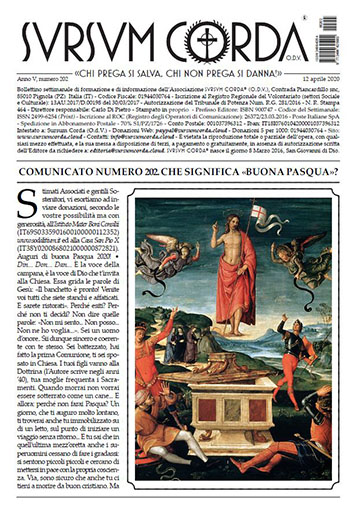


http://www.centrostudifederici.org/s...re-alleluia-2/
«Surrexit Dominus vere, alleluia!
Centro studi Giuseppe Federici – Per una nuova insorgenza
Comunicato n. 35/20 dell’11 aprile 2020, Sabato Santo
Surrexit Dominus vere, alleluia!
Auguri a tutti per la festa della Resurrezione di Nostro Signore Gesù Cristo.
Pasqua 1958, Messaggio Urbi et Orbi di Sua Santità Pio XII».
https://www.agerecontra.it/2020/04/triduo-sacro-2020/
https://www.agerecontra.it/category/sursum-corda/
https://www.agerecontra.it/category/...-rex-traditio/
https://www.facebook.com/catholictradition2016/
«MARTIROLOGIO ROMANO, 1955. Sancti et Sanctae Dei, orate pro nobis»
https://tradidiaccepi.blogspot.com/
https://sardiniatridentina.blogspot....asqua.html?m=1
«Domenica di Pasqua
Hac die quam fecit Dóminus, Solémnitas solemnitátum et Pascha nostrum: Resurréctio Salvatóris nostri Jesu Christi secúndum carnem
PROPRIUM MISSAE
Statio ad sanctam Mariam Majorem
INTROITUS
Ps. 1.38; 1:18; 1.5-6.- Resurréxi, et adhuc tecum sum, allelúja: posuísti super me manum tuam, allelúja: mirábilis facta est sciéntia tua, allelúja, allelúja. ~~ Ps 1:1-2.- Dómine, probásti me et cognovísti me: tu cognovísti sessiónem meam et resurrectiónem meam. ~~ Glória ~~ Resurréxi, et adhuc tecum sum, allelúja: posuísti super me manum tuam, allelúja: mirábilis facta est sciéntia tua, allelúja, allelúja.
Ps. 1.38; 1:18; 1.5-6.- Son risorto e sono ancora con te, alleluia: ponesti la tua mano su di me, alleluia: mirabile si è dimostrata la tua scienza, alleluia, alleluia. . ~~ Ps 1:1-2.- O Signore, tu mi provi e mi conosci: conosci il mio riposo e il mio sorgere ~~ Gloria ~~ Son risorto e sono ancora con te, alleluia: ponesti la tua mano su di me, alleluia: mirabile si è dimostrata la tua scienza, alleluia, alleluia.
Gloria
ORATIO
Orémus.
Deus, qui hodiérna die per Unigénitum tuum æternitátis nobis áditum, devícta morte, reserásti: vota nostra, quæ præveniéndo aspíras, étiam adjuvándo proséquere. Per eundem Dominum nostrum Jesum Christum filium tuum, qui tecum vivit et regnat in unitate Spiritus Sancti, Deus, per omnia saecula saeculorum. Amen.
Preghiamo.
O Dio, che in questo giorno, per mezzo del tuo Figlio Unigenito, vinta la morte, riapristi a noi le porte dell’eternità, accompagna i nostri voti aiutandoci, Tu che li ispiri prevenendoli. Per il medesimo nostro Signore Gesù Cristo, tuo Figlio, che è Dio, e vive e regna con te, in unità con lo Spirito Santo, per tutti i secoli dei secoli. Amen.
LECTIO
Léctio Epístolæ beáti Pauli Apóstoli ad Corinthios.
1 Cor 5:7-8
Fratres: Expurgáte vetus ferméntum, ut sitis nova conspérsio, sicut estis ázymi. Etenim Pascha nostrum immolátus est Christus. Itaque epulémur: non in ferménto véteri, neque in ferménto malítiae et nequitiæ: sed in ázymis sinceritátis et veritátis.
Fratelli: Purificatevi dal vecchio lievito per essere nuova pasta, come già siete degli azzimi. Infatti, Cristo, nostra Pasqua, è stato immolato. Banchettiamo dunque: non col vecchio lievito, né col lievito della malizia e della perversità, ma cogli azzimi della purezza e della verità.
ALLELUIA
Allelúja, allelúja.
Ps. 117:24; 117:1
Hæc dies, quam fecit Dóminus: exsultémus et lætémur in ea.
V. Confitémini Dómino, quóniam bonus: quóniam in saeculum misericórdia ejus. Allelúja, allelúja.
1: Cor 5:7
Pascha nostrum immolátus est Christus.
Alleluia, alleluia
Questo è il giorno che fece il Signore: esultiamo e rallegriamoci in esso.
V. Lodate il Signore, poiché è buono: eterna è la sua misericordia. Alleluia, alleluia.
V. Il Cristo, Pasqua nostra, è stato immolato.
SEQUENTIA
Víctimæ pascháli laudes ímmolent Christiáni.
Agnus rédemit oves: Christus ínnocens Patri reconciliávit peccatóres.
Mors et vita duéllo conflixére mirándo: dux vitæ mórtuus regnat vivus.
Dic nobis, María, quid vidísti in via?
Sepúlcrum Christi vivéntis et glóriam vidi resurgéntis.
Angélicos testes, sudárium et vestes.
Surréxit Christus, spes mea: præcédet vos in Galilaeam.
Scimus Christum surrexísse a mórtuis vere: tu nobis, victor Rex, miserére. Amen. Allelúja.
Alla Vittima pasquale, lodi offrano i Cristiani.
L’Agnello ha redento le pecore: Cristo innocente, al Padre ha riconciliato i peccatori.
La morte e la vita si scontrarono in mirabile duello: il Duce della vita, già morto, regna vivo.
Dicci, o Maria, che vedesti per via?
Vidi il sepolcro del Cristo vivente: e la gloria del Risorgente.
I testimoni angelici, il sudario e i lini.
È risorto il Cristo, mia speranza: vi precede in Galilea.
Noi sappiamo che il Cristo è veramente risorto da morte: o Tu, Re vittorioso, abbi pietà di noi. Amen. Alleluia.
EVANGELIUM
Sequéntia ✠ sancti Evangélii secúndum Marcum.
Marc 16:1-7.
In illo témpore: María Magdaléne et María Jacóbi et Salóme emérunt arómata, ut veniéntes úngerent Jesum. Et valde mane una sabbatórum, veniunt ad monuméntum, orto jam sole. Et dicébant ad ínvicem: Quis revólvet nobis lápidem ab óstio monuménti? Et respiciéntes vidérunt revolútum lápidem. Erat quippe magnus valde. Et introëúntes in monuméntum vidérunt júvenem sedéntem in dextris, coopértum stola cándida, et obstupuérunt. Qui dicit illis: Nolíte expavéscere: Jesum quǽritis Nazarénum, crucifíxum: surréxit, non est hic, ecce locus, ubi posuérunt eum. Sed ite, dícite discípulis ejus et Petro, quia præcédit vos in Galilǽam: ibi eum vidébitis, sicut dixit vobis.
In quel tempo: Maria Maddalena, Maria di Giacomo, e Salome, comperarono degli aromi per andare ad ungere Gesù. E di buon mattino, il primo giorno dopo il sabato, arrivarono al sepolcro, che il sole era già sorto. Ora, dicevano tra loro: Chi mai ci sposterà la pietra dall'ingresso del sepolcro? E guardando, videro che la pietra era stata spostata: ed era molto grande. Entrate nel sepolcro, videro un giovane seduto sul lato destro, rivestito di candida veste, e sbalordirono. Egli disse loro: Non vi spaventate, voi cercate Gesù Nazareno, il crocifisso: è risorto, non è qui: ecco il luogo dove lo avevano posto. Ma andate, e dite ai suoi discepoli, e a Pietro, che egli vi precede in Galilea: là lo vedrete, come vi disse.
Credo
OFFERTORIUM
Ps. 75:9-10.
Terra trémuit, et quiévit, dum resúrgeret in judício Deus, allelúja.
La terra tremò e ristette, quando sorse Dio a fare giustizia, alleluia.
SECRETA
Súscipe, quaesumus, Dómine, preces pópuli tui cum oblatiónibus hostiárum: ut, Paschálibus initiáta mystériis, ad æternitátis nobis medélam, te operánte, profíciant. Per Dominum nostrum Jesum Christum, Filium tuum: qui tecum vivit et regnat in unitate Spiritus Sancti Deus, per omnia saecula saeculorum. Amen.
O Signore, Ti supplichiamo, accogli le preghiere del popolo tuo, in uno con l’offerta di questi doni, affinché i medesimi, consacrati dai misteri pasquali, ci servano, per opera tua, di rimedio per l’eternità. Per il nostro Signore Gesù Cristo, tuo Figlio, che è Dio, e vive e regna con te, in unità con lo Spirito Santo, per tutti i secoli dei secoli. Amen.
PRÆFATIO PASCHALIS
Vere dignum et justum est, æquum et salutáre: Te quidem, Dómine, omni témpore, sed in hac potíssimum die gloriósius prædicáre, cum Pascha nostrum immolátus est Christus. Ipse enim verus est Agnus, qui ábstulit peccáta mundi. Qui mortem nostram moriéndo destrúxit et vitam resurgéndo reparávit. Et ídeo cum Angelis et Archángelis, cum Thronis et Dominatiónibus cumque omni milítia coeléstis exércitus hymnum glóriæ tuæ cánimus, sine fine dicéntes
È veramente degno e giusto, conveniente e salutare: Che Te, o Signore, esaltiamo in ogni tempo, ma ancor più gloriosamente in questo giorno in cui, nostro Agnello pasquale, si è immolato il Cristo. Egli infatti è il vero Agnello, che tolse i peccati del mondo. Che morendo distrusse la nostra morte, e risorgendo ristabilì la vita. E perciò con gli Angeli e gli Arcangeli, con i Troni e le Dominazioni, e con tutta la milizia dell’esercito celeste, cantiamo l’inno della tua gloria, dicendo senza fine
INFRA ACTIONEM
Communicántes, et diem sacratíssimum celebrántes Resurrectiónis Dómini nostri Jesu Christi secúndum carnem: sed et memóriam venerántes, in primis gloriósæ semper Vírginis Maríæ, Genetrícis eiúsdem Dei et Dómini nostri Jesu Christi: sed et beati Joseph, eiusdem Virginis Sponsi, et beatórum Apostolórum ac Mártyrum tuórum, Petri et Pauli, Andréæ, Jacóbi, Joánnis, Thomæ, Jacóbi, Philíppi, Bartholomaei, Matthaei, Simónis et Thaddaei: Lini, Cleti, Cleméntis, Xysti, Cornélii, Cypriáni, Lauréntii, Chrysógoni, Joánnis et Pauli, Cosmæ et Damiáni: et ómnium Sanctórum tuórum; quorum méritis precibúsque concédas, ut in ómnibus protectiónis tuæ muniámur auxílio. Per eúndem Christum, Dóminum nostrum. Amen.
Uniti in comunione celebriamo il giorno santissimo ella resurrezione secondo la carne di nostro Signore Gesù Cristo: di più veneriamo la memoria, anzitutto della gloriosa sempre Vergine Maria, Madre del medesimo Dio e Signore nostro Gesù Cristo: e poi del beato Giuseppe Sposo della stessa Vergine, e di quella dei tuoi beati Apostoli e Martiri: Pietro e Paolo, Andrea, Giacomo, Giovanni, Tommaso, Giacomo, Filippo, Bartolomeo, Matteo, Simone e Taddeo, Lino, Cleto, Clemente, Sisto, Cornelio, Cipriano, Lorenzo, Crisogono, Giovanni e Paolo, Cosma e Damiano, e di tutti i tuoi Santi; per i meriti e per le preghiere dei quali concedi che in ogni cosa siamo assistiti dall'aiuto della tua protezione. Per il medesimo Cristo nostro Signore. Amen.
Hanc igitur oblatiónem servitutis nostræ, sed et cunctae famíliæ tuæ, quam tibi offérimus pro his quoque, quos regeneráre dignatus es ex aqua et Spíritu Sancto, tríbuens eis remissionem omnium peccatórum, quaesumus, Dómine, ut placátus accípias: diésque nostros in tua pace dispónas, atque ab ætérna damnatióne nos éripi, et in electórum tuórum iúbeas grege numerári. Per Christum, Dóminum nostrum. Amen.
Ti preghiamo, dunque, o Signore, di accettare placato questa offerta di noi tuoi servi e di tutta la tua famiglia che a Te rivolgiamo per coloro che Ti sei degnato di rigenerare con l’acqua e con lo Spirito Santo, concedendo loro la remissione di tutti i peccati;fa che i nostri giorni scorrano nella tua pace e che noi veniamo liberati dall’eterna dannazione e annoverati nel gregge dei tuoi eletti. Per Cristo nostro Signore. Amen.
COMMUNIO
1 Cor 5:7-8
Pascha nostrum immolátus est Christus, allelúja: itaque epulémur in ázymis sinceritátis et veritátis, allelúja, allelúja, allelúja.
Cristo, nostra Pasqua, è stato immolato, alleluia: banchettiamo dunque con gli azzimi della purezza e della verità, alleluia, alleluia, alleluia.
POSTCOMMUNIO
Orémus.
Spíritum nobis, Dómine, tuæ caritátis infúnde: ut, quos sacraméntis paschálibus satiásti, tua fácias pietáte concordes. Per Dominum nostrum Jesum Christum, Filium tuum: qui tecum vivit et regnat in unitate eiusdem Spiritus Sancti Deus, per omnia saecula saeculorum. Amen.
Preghiamo.
Infondi in noi, o Signore, lo Spirito della tua carità: affinché coloro che saziasti coi sacramenti pasquali, li renda unanimi con la tua pietà. Per il nostro Signore Gesù Cristo, tuo Figlio, che è Dio, e vive e regna con te, in unità con il medesimo Spirito Santo, per tutti i secoli dei secoli. Amen».
« Alleluia, alleluia
Questo è il giorno che fece il Signore: esultiamo e rallegriamoci in esso.
V. Lodate il Signore, poiché è buono: eterna è la sua misericordia. Alleluia, alleluia.
V. Il Cristo, Pasqua nostra, è stato immolato».
http://www.radiospada.org
http://www.edizioniradiospada.com/
https://www.facebook.com/radiospadasocial/
https://www.radiospada.org/tag/pasqua/
“Resurréxit, sicut dixit, allelúia. Santa Pasqua di Risurrezione a tutti, da RadioSpada.org”
“12 APRILE 2020: PASQUA DI RESURREZIONE”

“È veramente risorto!
Auguri di una Santa Pasqua a tutti gli amici di Radio Spada (e anche ai nemici)!
{Resurrezione, A. Mantegna, 1457-1459}”
"Le Sue Piaghe gloriose. Santa Pasqua!"
"Le Piaghe che erano dolorose nella via della morte il Venerdì Santo sono gloriose nell'uscita del sepolcro a Pasqua. Il Figlio Risorto le mostra nella Gloria e quelle Piaghe, ora splendenti, salveranno il mondo.
(Raffaello, La disputa del Sacramento - Il Figlio mostra le Piaghe al Padre, Stanza della Segnatura, Palazzi Vaticani, Roma)
1) goo.gl/JzqAcz
2) goo.gl/dWdYb7
3) goo.gl/yA7Yh2
4) goo.gl/CPMR5t "
https://www.radiospada.org/tag/inri/
https://www.radiospada.org/tag/jhwh/
https://www.radiospada.org/tag/sacre-scritture/
https://www.radiospada.org/tag/sacra-sindone
https://www.radiospada.org/tag/reliquie-della-passione/
https://www.radiospada.org/tag/triduo-pasquale/
"REGINA CAELI LAETARE
https://www.youtube.com/watch?v=yzMa0qzwagA
Regina caeli laetare, Alleluia,
Quia quem meruisti portare, Alleluia,
Resurrexit sicut dixit, Alleluia.
Ora pro nobis Deum. Alleluia."
https://forum.termometropolitico.it/...ta-pasqua.html
https://forum.termometropolitico.it/...-pasqua-2.html
Sede Vacante -
http://www.catholique-sedevacantiste.fr/
https://sedevacantisme.wordpress.com...t-commentaire/
Ligue Saint Amédée
http://liguesaintamedee.ch/
https://www.facebook.com/SaintAmedee/?fref=nf
«Intransigeants sur la doctrine ; charitables dans l'évangélisation [Non Una Cum]»
«Mieux vaut une petite œuvre dans la Vérité, qu’une grande dans l’erreur»
"Dimanche de Pâques.
Résurrection de Notre Seigneur Jésus-Christ!
Gaude et laetare! Quia surrexit Dominus vere, Alleluia!
Resurrexit sicut dixit, Alleluia!
La Résurrection de Notre-Seigneur, notre Pâque


RESURREXIT SICUT DIXIT, ALLELUJA!!!
CHRISTUS VINCIT, CHRISTUS REGNAT, CHRISTUS IMPERAT!!!
Luca, SURSUM CORDA – HABEMUS AD DOMINUM!!!ADDIO GIUSEPPE, amico mio, sono LUCA e nel mio CUORE sarai sempre PRESENTE!
«Réquiem aetérnam dona ei, Dómine, et lux perpétua lúceat ei. Requiéscat in pace. Amen.»
SURSUM CORDA - HABEMUS AD DOMINUM!!! A.M.D.G.!!!

 Rispondi Citando
Discussioni Simili
-
Pasqua di Resurrezione
Di Celtic nel forum Centrodestra ItalianoRisposte: 5Ultimo Messaggio: 19-04-20, 02:56 -
Pasqua di Resurrezione
Di Celtic nel forum Destra RadicaleRisposte: 54Ultimo Messaggio: 13-04-09, 10:43 -
Pasqua di Resurrezione
Di Celtic nel forum Destra RadicaleRisposte: 7Ultimo Messaggio: 12-04-09, 19:27 -
Pasqua di Resurrezione
Di Colombo da Priverno nel forum CattoliciRisposte: 6Ultimo Messaggio: 26-03-08, 14:50 -
Pasqua senza resurrezione ....
Di Niccolò nel forum FondoscalaRisposte: 0Ultimo Messaggio: 16-04-06, 11:52
 Permessi di Scrittura
Powered by vBulletin® Version 4.2.5
Copyright © 2026 vBulletin Solutions Inc. All rights reserved.
Change privacy settings
Copyright © 2026 vBulletin Solutions Inc. All rights reserved.
Change privacy settings
Tutti gli orari sono GMT +2. Adesso sono le 00:31.
