


Obama, Modi Move Closer With Breakthrough on Nuclear Liability
President Barack Obama and Indian Prime Minister Narendra Modi said Sunday that they had achieved a breakthrough on long-stalled cooperation on civilian nuclear projects, reflecting warming ties between the nations.
Though Obama said the two countries had taken an “important step,” neither man provided details on how an earlier 2005 U.S. decision to provide India nuclear fuel and reactor components would finally be implemented.
Stumbling blocks have long included Indian legislation allowing nuclear suppliers to be sued over accidents and U.S. insistence that any nuclear fuel sold to India be tracked to prevent weapons proliferation.
“We think we came to an understanding of the liability” issue, said U.S. Ambassador Richard Verma, adding the deal “now opens the door for U.S. and other companies to come forward and help India develop its nuclear, non-carbon-based energy production.”
Power-starved India plans a $182 billion expansion of its nuclear industry to produce electricity for the almost one-quarter of the country’s 1.2 billion people who routinely go without it. U.S. companies such as General Electric Co. (GE) and Westinghouse Electric Co. that have stayed away from India must decide whether the arrangement is adequate, Verma said.
India plans to establish a 7.5 billion ($122 million) insurance pool to shield affected operators and suppliers, according to Amandeep Singh Gill, joint secretary of disarmament in the foreign ministry. The government would provide more at a later date “on a tapering basis,” he added.
Questions Remain
It remains unclear what would happen if unlimited claims come in the wake of a disaster, according to Debasish Mishra, Mumbai-based partner at Deloitte Touche Tohmatsu.
“This is a government-to-government agreement and ultimately the final deals will be signed between companies,” he said. “There’s a feeling that not everything has been resolved.”
India is one of the few nations that do not exempt nuclear suppliers from accident liability. The reason can be found in the central Indian city of Bhopal, where more than 10,000 people were killed or injured in a 1984 chemical leak from a Union Carbide Corp. pesticide plant. The episode remains the world’s worst industrial accident.
Public support for the liability legislation only hardened after the 2011 Fukushima meltdown in Japan, which forced 160,000 people from their homes and will cost an estimated $196 billion to clean up.
Nuclear Tracking
Yet nuclear power is essential to Modi’s promise to provide electricity to all Indians by 2019. With 60 percent of the country’s power coming from coal, Modi has promised to expand the use of non-polluting sources such as solar and nuclear. India’s 3 gigawatts of installed solar power is slated to rise to 100 gigawatts by 2022.
As part of the deal, the U.S. dropped its earlier insistence that it be able to track the nuclear material provided to India, a requirement that went beyond standard International Atomic Energy Agency safeguards, according to Indian press reports.
“Tracking was never going to fly as Indian public opinion would see it as intrusive,” said K.C. Singh, a former diplomat.
It appears the U.S. “caved” on a legal requirement for extensive monitoring to ensure that no U.S. technology is diverted for Indian military purposes, according to Daryl Kimball, executive director of the Washington-based Arms Control Association, an advocacy group.
Leaders Embrace
Obama arrived Sunday morning in Delhi for the start of a three-day visit. Modi departed from protocol to greet him at the airport. The two shared a hug at the bottom of Air Force One’s stairs.
In a joint press appearance, Obama and Modi lavished praise upon one another and expressed determination to deepen an already good bilateral relationship. Modi said they had renewed an expiring pact governing defense cooperation and agreed “in principle” to work together on advanced defense systems such as small unmanned vehicles and unspecified aircraft carrier technology.
The two also issued a “joint strategic vision for the Asia-Pacific and Indian Ocean,” which included an endorsement of freedom of navigation in the South China Sea. That’s sure to get the attention ofChina, which has been at odds with several of its neighbors over disputed reefs and islands there.
Calling the U.S. and India “natural partners,” Obama said they would work together on renewable energy and trade ties. Modi said the two countries would hold more regular summits and establish a “hotline” between his office and the White House.
Live Coverage
The day’s diplomatic choreography -- televised live for hours in India -- showcased the two countries’ relationship in a way rarely seen here. Just eight months in office, Modi has been more willing than his predecessors to be seen publicly as close to the U.S.
“He’s treating the U.S. as a very, very significant part of India going up to the next level as an economy and as a power,” said Baijayant Panda, an opposition member of parliament.
After a working lunch and private talks, Obama and Modi, walking alone on the lawn of New Delhi’s Hyderabad House, held a sometimes animated conversation.
On climate change, the Obama administration has been pushing India to do more. In November, Obama capped a trip to Beijing by securing Chinese agreement to announce a deadline for beginning to reduce its greenhouse gas emissions.
Climate Deal
John Podesta, counselor to the president, said they have a “full commitment” of the prime minister to move forward on phasing down hydroflurocarbons according to the Montreal Protocol.
Air pollution is a worsening problem in India. U.S. officials in the weeks before the summit played down the chance of reaching a similar deal. India, the world’s third-largest carbon emitter, has resisted calls to reduce its emissions, citing its need to lift hundreds of millions out of poverty.
Each Indian is responsible for about 2 tons of carbon emissions annually, one-quarter of what each Chinese produces and just one-tenth of the carbon output of the typical American, according to the World Resources Institute.
Both sides were keen to paint the relationship as already good and getting better.
“It was a different tone that has been set by Prime Minister Modi,” said Ben Rhodes, the president’s deputy national security advisor. “We’ve opened up the door to do a lot more with India in the years to come.”
To contact the reporters on this story: David J. Lynch in Washington at dlynch27@bloomberg.net; Angela Greiling Keane in Washington at agreilingkea@bloomberg.net
To contact the editors responsible for this story: Daniel Ten Kate at dtenkate@bloomberg.net Joe Sobczyk
Obama, Modi Move Closer With Breakthrough on Nuclear Liability - Bloomberg
Risultati da 1 a 10 di 11
Discussione: Summit USA-India
-
25-01-15, 19:14 #1Viva la piadina!!!


- Data Registrazione
- 20 Nov 2009
- Località
- Miami, FL, USA
- Messaggi
- 96,627
-

- 1,937
-

- 8,531
- Mentioned
- 723 Post(s)
- Tagged
- 4 Thread(s)
 Summit USA-India
Globalizzazione..... si grazie.
Summit USA-India
Globalizzazione..... si grazie.
-
25-01-15, 20:49 #2email non funzionante

- Data Registrazione
- 30 Nov 2009
- Località
- new york
- Messaggi
- 164,930
-
- 17
-
- 12,232
- Mentioned
- 1838 Post(s)
- Tagged
- 13 Thread(s)
Re: Summit USA-India
Adesso viene Metabo che ti dice che l'India ha gia fatto gli "accordi strategici con la Russia e che comprera 2000 Sukhoi...e che stanno gia preparando un accordo per sbarazzarsi del dollaro, comprare l'oro.....cambiare l'Onu, fondare una nuova banca mondiale....."

Ultima modifica di paulhowe; 25-01-15 alle 20:49
-
25-01-15, 20:55 #3cancellato
- Data Registrazione
- 10 Jan 2015
- Messaggi
- 10,203
-
- 600
-
- 2,199
- Mentioned
- 24 Post(s)
- Tagged
- 3 Thread(s)
Re: Summit USA-India
E poi ti dirà che il sistema USA di alleanze in Asia sta crollando come un castello di carta e che il Giappone farà un'alleanza militare con la Russia, scalzando gli USA Originariamente Scritto da paulhowe

-
28-01-15, 23:19 #4email non funzionante
- Data Registrazione
- 30 Nov 2009
- Località
- new york
- Messaggi
- 164,930
-
- 17
-
- 12,232
- Mentioned
- 1838 Post(s)
- Tagged
- 13 Thread(s)
Re: Summit USA-India
Accordi per fornire la tecnologia per il lancio di aerei dalle portaerei...una mossa chiaramente anti cinese.
Obama Helps Modi Close in on U.S. Navy Carrier Technology - Bloomberg Business
-
28-01-15, 23:35 #5Moderatore

- Data Registrazione
- 21 Mar 2013
- Località
- sette laghi
- Messaggi
- 16,315
-
- 6,924
-
- 10,608
- Mentioned
- 131 Post(s)
- Tagged
- 2 Thread(s)
Re: Summit USA-India
La storia del conflitto indo-cinese non mi convince minimamente .
Nonostante la vicinanza sono due entità separate in fatto di interessi geostrategici praticamente da sempre , il problema dei confini non è certo qualcosa di vitale .
Molto più importante è la crescente partnership commerciale che vale decine di miliardi di dollari .Ultima modifica di kodiak; 28-01-15 alle 23:35
-
28-01-15, 23:45 #6email non funzionante
- Data Registrazione
- 30 Nov 2009
- Località
- new york
- Messaggi
- 164,930
-
- 17
-
- 12,232
- Mentioned
- 1838 Post(s)
- Tagged
- 13 Thread(s)
Re: Summit USA-India
Veramente i confini sono ancora piuttosto caldi ma l'India ha un importante dimensione navale....inoltre i rapporti tra Cina e Pakistan sono un po troppo indigesti.
Richard Fontaine: New Delhi and Washington?s China Convergence - WSJ
While Indian worries about a Chinese “string of pearls” stretching from the Middle East to China are premature, New Delhi is right to seek an Indo-Pacific region that is not dominated by any one Asian power. This requires ensuring that Asia’s democratic countries are also strong. Mr. Modi has smartly moved to enhance security ties with Australia, Japan and the members of the Association of Southeast Asian Nations.
Cooperation with Washington, Indian officials believe, is another signal to China that India is a serious player on the global stage. Here lie the opportunities for U.S.-Indian progress, in areas such as defense co-production, joint military exercises and training, harmonizing approaches to the South China Sea, strengthening trilateral cooperation between the U.S., India and Japan, and reviving the quadrilateral security dialogue between those three countries and Australia.
-
28-01-15, 23:52 #7email non funzionante
- Data Registrazione
- 02 May 2012
- Messaggi
- 49,685
-
- 1,679
-
- 9,040
- Mentioned
- 309 Post(s)
- Tagged
- 6 Thread(s)
Re: Summit USA-India
il controvalore delle transazioni sarà calcolato con conchiglie dell'isola di pasqua.
chi è che vuole il dollaro in questi momenti?
quali sono le fluttuazioni rublo/conchiglie ultimamente? qualcuno mi sa ragguagliare?
-
29-01-15, 00:13 #8Moderatore
- Data Registrazione
- 21 Mar 2013
- Località
- sette laghi
- Messaggi
- 16,315
-
- 6,924
-
- 10,608
- Mentioned
- 131 Post(s)
- Tagged
- 2 Thread(s)
Re: Summit USA-India
Credo che tutte le potenze del globo facciano il doppio filo con India e Pakistan . Originariamente Scritto da paulhowe
I confini sono sempre un argomento di moda nella sino-zona , ma lo vedo come un elemento congelato .
Per quanto riguarda la dimensione marittima ne riparlerei tra 20 anni , perchè se i cinesi sono indietro con la capacità militare ( navale ) gli indiani lo sono ancor di più , sono quindi discorsi prematuri .
In ogni caso credo poco ad un futuro radioso per l'India , Pechino avrà avversari molto più consistenti .
-
29-01-15, 02:22 #9email non funzionante
- Data Registrazione
- 30 Nov 2009
- Località
- new york
- Messaggi
- 164,930
-
- 17
-
- 12,232
- Mentioned
- 1838 Post(s)
- Tagged
- 13 Thread(s)
Re: Summit USA-India
gli indiani lo sono ancor di più , sono quindi discorsi prematuri .
Ecco perche interviene lui
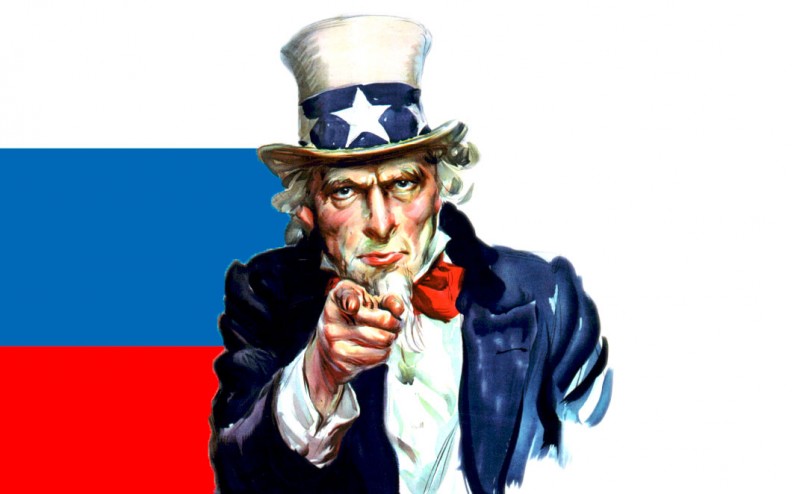
Infatti i Pakistani
Pakistan opposes new India-US nuclear deal
Poi magari andiamo a parlare pure con loro......
Questo e' il vantaggio degli USA. Essendo estranei all'area euroasiatica, possono "giocare su piu tavoli" e "sparigliare le carte".
Gli altri spesso devono barare, ma alla fine il banco vince sempre!
-
29-01-15, 12:25 #10Forumista esperto

- Data Registrazione
- 15 Jul 2009
- Messaggi
- 21,699
-
- 9,317
-
- 10,303
- Mentioned
- 20 Post(s)
- Tagged
- 0 Thread(s)
Re: Summit USA-India
Vedere l'India in chiave anti cinese è un sogno simile a quello dei sauditi che pagavano Putin per lasciar bombardare la Siria. Originariamente Scritto da kodiak
"Non abbiamo l'unione sociale ma solo quella economica e finanziaria. Finchè non capiamo questo, non capiremo perché i populisti hanno tanto successo!". Gabriele Zimmer
Gratteri: "L'Ue è una prateria per le mafie"

 Rispondi Citando
Discussioni Simili
-
India: udienza dei Marò rinviata il 18. Letta:Accusa inaccettabile. India: Letta chi?
Di Cipollo nel forum Politica EsteraRisposte: 0Ultimo Messaggio: 10-02-14, 17:25 -
Summit MMT in Italia
Di Fenris nel forum Politica NazionaleRisposte: 0Ultimo Messaggio: 27-01-12, 15:20 -
XV NAM SUMMIT EGITTO
Di msdfli nel forum EurasiatistiRisposte: 2Ultimo Messaggio: 17-07-09, 19:42 -
domande sull'India e link utili per l'India
Di stuart mill nel forum Filosofie e Religioni d'OrienteRisposte: 23Ultimo Messaggio: 25-10-06, 21:09 -
Sempre news dall'India: Air India
Di skyrobbie nel forum Aviazione CivileRisposte: 0Ultimo Messaggio: 22-02-05, 22:44
Tag per Questa Discussione

 Permessi di Scrittura
Powered by vBulletin® Version 4.2.5
Copyright © 2026 vBulletin Solutions Inc. All rights reserved.
Change privacy settings
Copyright © 2026 vBulletin Solutions Inc. All rights reserved.
Change privacy settings
Tutti gli orari sono GMT +2. Adesso sono le 12:14.
