


I sovietici non andavano a fare sesso in albergo, non raccontare altre balle.Originariamente Scritto da nordista

Non c’erano così tante “guardiane” negli alberghi.
Ho lavorato in un grande albergo. So cosa succedeva lì dentro.
Nordista mente, i casi singolari li spaccia per la normalità.
Risultati da 81 a 90 di 147
Discussione: Cosa fareste se aveste 20 anni?
-
08-02-24, 07:45 #81Sognatrice


- Data Registrazione
- 07 May 2010
- Località
- Italia
- Messaggi
- 120,553
-

- 8,259
-

- 19,795
- Mentioned
- 3006 Post(s)
- Tagged
- 15 Thread(s)
- Inserzioni Blog
- 3
 Re: Cosa fareste se aveste 20 anni?
“Non prenderti a cuore guadagno e perdita”
Re: Cosa fareste se aveste 20 anni?
“Non prenderti a cuore guadagno e perdita”
-
08-02-24, 07:46 #82Sognatrice
- Data Registrazione
- 07 May 2010
- Località
- Italia
- Messaggi
- 120,553
-
- 8,259
-
- 19,795
- Mentioned
- 3006 Post(s)
- Tagged
- 15 Thread(s)
- Inserzioni Blog
- 3
Re: Cosa fareste se aveste 20 anni?
Avevate la droga e armi. E pure alcool. Originariamente Scritto da nordista
“Non prenderti a cuore guadagno e perdita”
-
08-02-24, 07:50 #83Forumista senior
- Data Registrazione
- 19 Jun 2023
- Messaggi
- 4,232
-
- 356
-
- 504
- Mentioned
- 262 Post(s)
- Tagged
- 0 Thread(s)
Re: Cosa fareste se aveste 20 anni?
Sono mesi che non mi sballo. @Kaouthia grazie per avermelo ricordato Originariamente Scritto da Kaouthia
-
08-02-24, 07:52 #84Forumista senior
- Data Registrazione
- 19 Jun 2023
- Messaggi
- 4,232
-
- 356
-
- 504
- Mentioned
- 262 Post(s)
- Tagged
- 0 Thread(s)
Re: Cosa fareste se aveste 20 anni?
Le babushke erano su ogni piano d’albergo non per dissuadere le sessualità ma per intercettare i bisogni degli uomini
-
08-02-24, 08:20 #85Sognatrice
- Data Registrazione
- 07 May 2010
- Località
- Italia
- Messaggi
- 120,553
-
- 8,259
-
- 19,795
- Mentioned
- 3006 Post(s)
- Tagged
- 15 Thread(s)
- Inserzioni Blog
- 3
Re: Cosa fareste se aveste 20 anni?
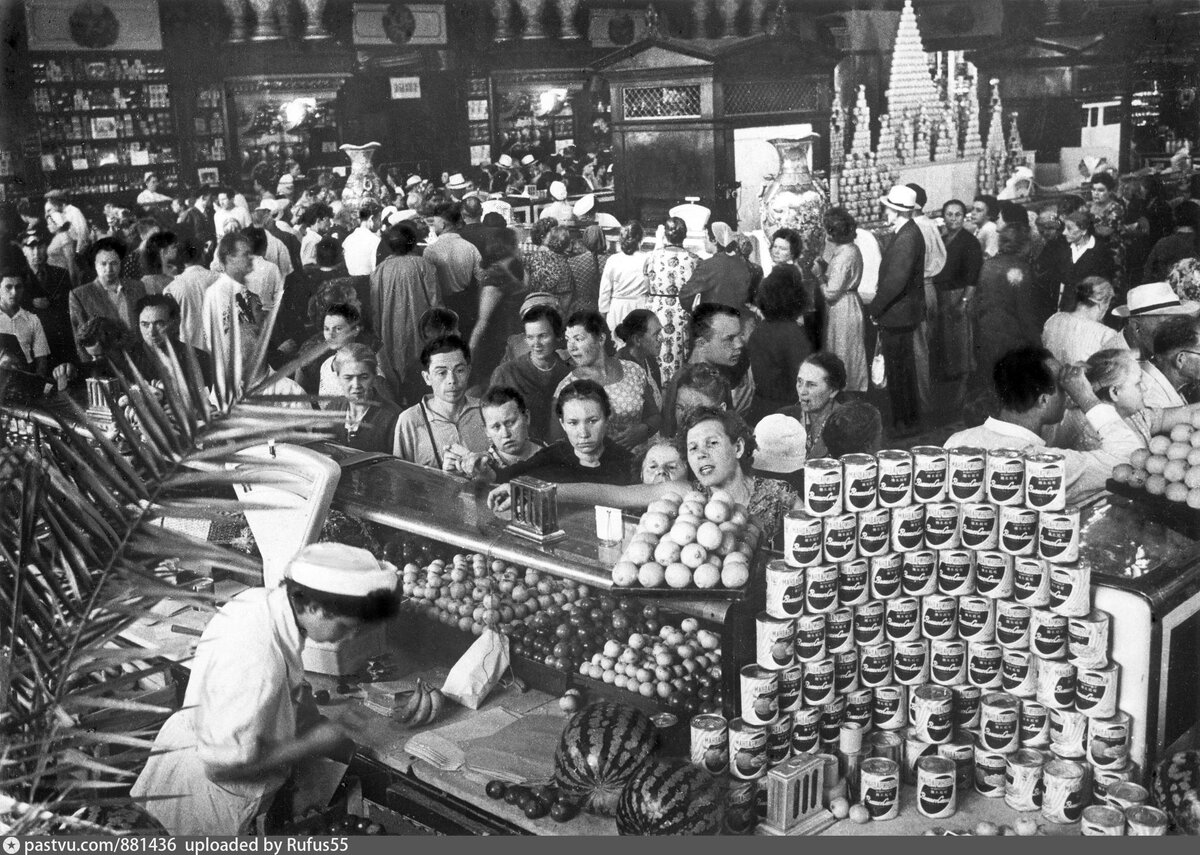
Aggiungo ancora una foto degli anni ‘70.
Questo luogo bellissimo ( era bellissimo) hai 131 anni.

Tutta quella gente che vedere sulla foto era arrivata lì per comprare, ovvero per consumare.
Ora posto la foto recente.

Guardate la differenza.“Non prenderti a cuore guadagno e perdita”
-
08-02-24, 08:25 #86Sognatrice
- Data Registrazione
- 07 May 2010
- Località
- Italia
- Messaggi
- 120,553
-
- 8,259
-
- 19,795
- Mentioned
- 3006 Post(s)
- Tagged
- 15 Thread(s)
- Inserzioni Blog
- 3
Re: Cosa fareste se aveste 20 anni?
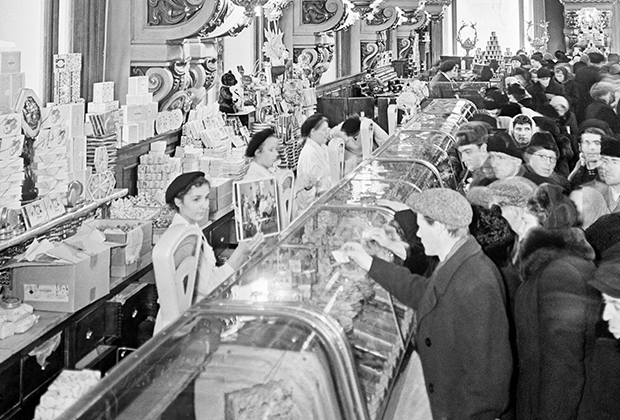
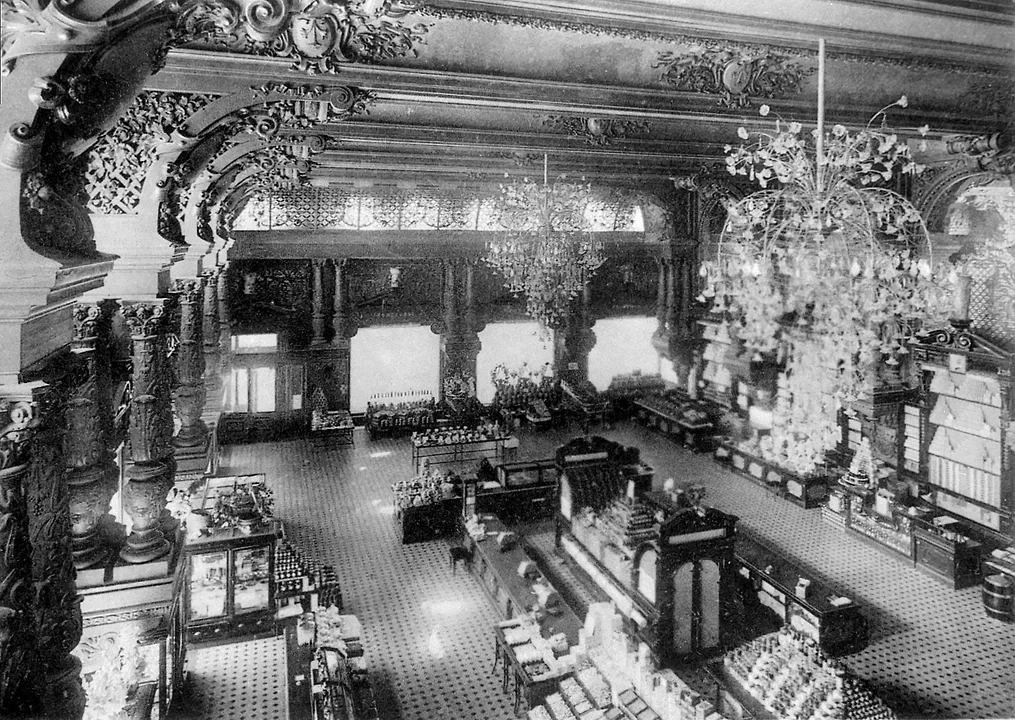
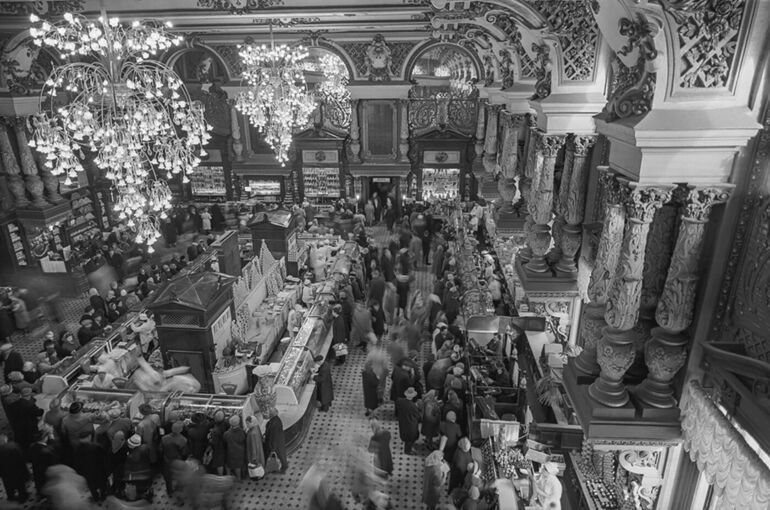
Il più famoso supermercato di Mosca qualche decennio fa.
È stato aperto nel 1901. Lusso puro.
L’hanno chiuso tre anni fa.
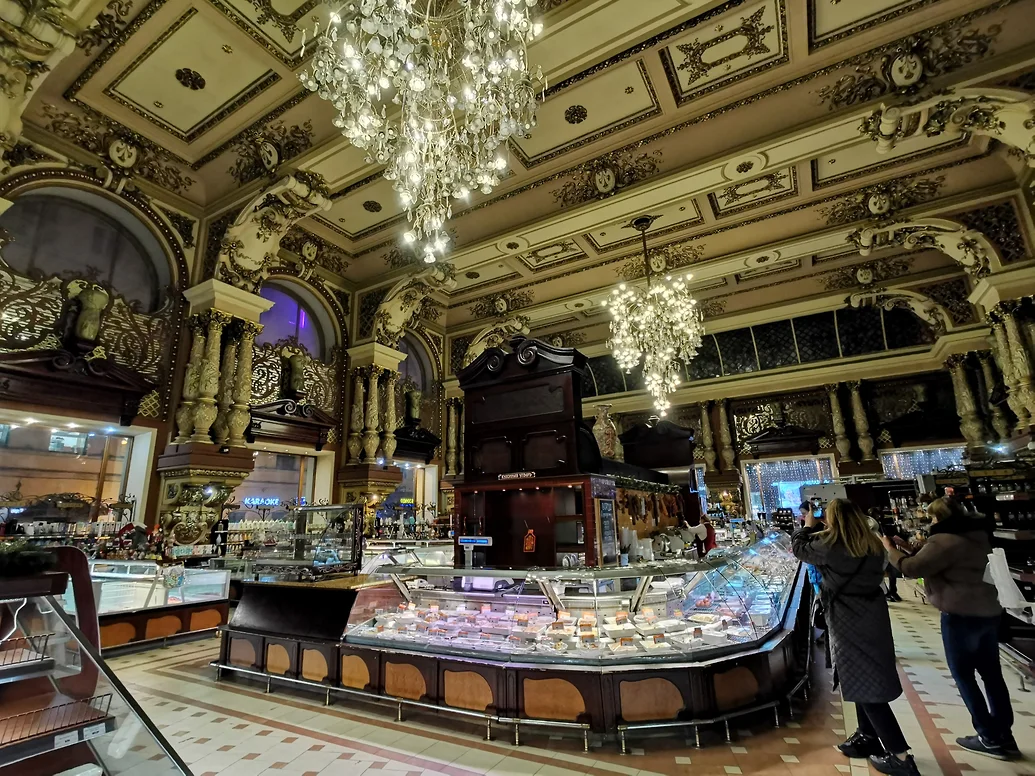
Due foto recenti.
Altre foto: https://riamo.ru/article/485848/moi-...liseevskogo-xl
Allora, Nordista, tu che sei esperto di tutto, di non consumismo sovietico in particolare, sei mai stato in questo gastronom?
Se sì, l’avevi trovato vuoto di merci e di clienti?
Se non ci sei stato, non ho parole.“Non prenderti a cuore guadagno e perdita”
-
08-02-24, 08:32 #87Forumista senior
- Data Registrazione
- 19 Jun 2023
- Messaggi
- 4,232
-
- 356
-
- 504
- Mentioned
- 262 Post(s)
- Tagged
- 0 Thread(s)
Re: Cosa fareste se aveste 20 anni?
Avessi vent’anni andrei da una babushka nel cuore della Siberia a fare educazione sessuale siberiana
-
08-02-24, 09:11 #88philanthropist
- Data Registrazione
- 09 Jun 2009
- Messaggi
- 59,720
-
- 4,847
-
- 11,405
- Mentioned
- 1728 Post(s)
- Tagged
- 9 Thread(s)
- Inserzioni Blog
- 4
Re: Cosa fareste se aveste 20 anni?
Per chi vuole leggere la VERA storia di questo supermercato di lusso. L'unico per oltre 200 milioni di persone.
Per qualche periodo solo gli ufficiali (perestroika) potevano entrare nel negozio. Nota le condizioni di generale mancanza
di merce. La merce si trovava solo in certe occasioni o festivita'. I regolari frequentatori erano artisti, scultori, etc.
Nel 1982 il manager Sokolov fu arrestato (gli furono trovati poche miglia di dollari). E GIUSTIZIATO nel 1984.
Una tipica storia sovietica, di chi ha tentato di imitare i supermercati occidentali (avendo un 5% din merce) in un bellissimo
palazzo inaugurato ai tempi dello Zar, certamente meno scarsi. Una storia di merda. E la si da' come esempio.
ELISEEVSKY AT THE PERIOD OF COMMUNISM
A new life for the store began in 1921. The shop got a new name “Gastronom No. 1”, but Muscovites, out of habit, continued to call it “Eliseevsky”. To revive the economy destroyed by the civil war, the Soviet authorities temporarily allowed private property and the use of market mechanisms. So trade began to boil again in Moscow and other cities.
By the end of the 1920s, private trade was illegal. But Eliseevsky became a kind of showcase of abundance, where one could buy, for example, fresh pineapples or caviar.
In 1942 the store turned into a closed distributor for Moscow officials. In 1944, a commercial section was opened in the store, where it was possible to purchase scarce goods for cash. But it did not last long — in the 1950s its manager was convicted under the article on so-called “unearned income”.
The heyday of “Gastronome No. 1” came in the 1970s, when Yuri Sokolov became the director of the store. In conditions of a general shortage of Brezhnev’s stagnation, constant queues and a shortage of quality products, Sokolov managed to create a real food paradise where you could buy any delicacy.
However, good food was available to ordinary citizens only in the framework of food orders, which were issued only on holidays several times a year. Also, personal acquaintance with Yuri Sokolov gave access to delicacies on a daily basis. “Gastronome No. 1” was the supply center of the Soviet bohemia, everyone came there for a deficit. People’s artists, writers, sculptors, painters came there.
In Moscow, there has always been a problem with the supply of good products. So everyone went there for good sausage, for balyk, for fresh fish. Representatives of the Soviet elite were very proud of their acquaintance with Yuri Sokolov. Because of the fact that he had a whole pile of business cards on his table, he was their king and god.
Yuri Sokolov’s career was developing brilliantly. In the early 1980s, everything indicated that after 20 years of work in the main food store of the capital, a decent pension awaits him, surrounded by friends from the Soviet bohemia.
However, in the fall of 1982, Sokolov was arrested by KGB officers. At his home, the police found bonds worth tens of thousands of rubles. In addition, one of the store’s employees admitted to the investigation that she had participated in Sokolov’s corruption schemes, thanks to which the store was always full with scarce goods.
As a result, Sokolov was sentenced to an unprecedentedly harsh sentence: the death penalty. Many of the circumstances of this case are still unknown to the general public, but there is a version that Sokolov was ruined by the very connections at the top, which he valued so much and which was now too dangerous to disclose. At the trial, the former director presented a notebook, which listed all of his shadow trading schemes and all their participants, but Sokolov was not allowed to read them.
In addition, the power in the country at that time was changing — the deceased Leonid Brezhnev was replaced by the ex-head of the KGB, Yuri Andropov, who began to pursue a tough anti-corruption policy. At that time, there were many high-profile officials in the dock, employees of the Moscow Glavtorg, directors of shops and fruit and vegetable bases, but the case of Sokolov became one of the most notorious.
Sokolov was shot in 1984, and also stripped of all awards, including those received during the war. With his death, another era in the history of Eliseevsky ended, and perestroika gradually began in the country.
inally, after the collapse of the USSR, the store returned to its historical name. In 1991, the members of the store’s labor collective got the company’s shares. At the same time, the historical building itself belonged to the city. So the management did not change, and the store worked by inertia.
In 2002, Yakov Yakubov, co-owner of several Moscow casinos, became the new owner of Eliseevsky. While the general director of the grocery store was on vacation, representatives of Yakubov came to the store and offered the employees to sell the shares. As a result, in just a few days, Yakubov’s structures received 90% of the shares for 650 thousand dollars.
In the early 2000s, there were fears that the new owner could completely rebuild the store or even open a casino there. However, the Moscow authorities took a clear and altough position on this matter and did not give permission for this. In 2003, the grocery store was closed for a large-scale reconstruction, and the interior of the times of Grigory Eliseev was restored there.
The Alye Parusa retailer (which went bankrupt in the year of the pandemic) became the operator of the store in 2005.
However, today a sign “Closed” hangs on the doors of the legendary store, and it is not known when it will be removed.
-
08-02-24, 09:27 #89philanthropist
- Data Registrazione
- 09 Jun 2009
- Messaggi
- 59,720
-
- 4,847
-
- 11,405
- Mentioned
- 1728 Post(s)
- Tagged
- 9 Thread(s)
- Inserzioni Blog
- 4
Re: Cosa fareste se aveste 20 anni?
Originariamente Scritto da Vinnie Tobacco
Guarda che in Siberia, tra i milioni di gente dal look asiatico ci sono le discendenti bionde dei mandati nel Gulag.
http://www.alamy.com/stock-photo/rus...ortBy=relevant
-
08-02-24, 09:47 #90Sognatrice
- Data Registrazione
- 07 May 2010
- Località
- Italia
- Messaggi
- 120,553
-
- 8,259
-
- 19,795
- Mentioned
- 3006 Post(s)
- Tagged
- 15 Thread(s)
- Inserzioni Blog
- 3
Re: Cosa fareste se aveste 20 anni?
L’hai scoperta solo poco fa, presumo. Originariamente Scritto da nordista
La storia c’entra fino a un certo punto.
Sei male informato, c’era uno anche al Leningrado. Vedi le che mancanze vengono sempre fuori. Originariamente Scritto da nordista
C’erano anche altri negozi di lusso, ma meno famosi, Smolenskij, ad esempio.
Ma cosa stai dicendo? Originariamente Scritto da nordista
Una mia amica è stata in quel negozio nel 1986 se non ricordo male, è entrata tranquillamente.
Hai visto le foto? Riporta almeno una dove si vendono gli scaffali vuoti. Ci riesci? Originariamente Scritto da nordista
Noe è vero. Originariamente Scritto da nordista
Originariamente Scritto da nordista
Ti pare che questi fossero tutti attori e scultori?
Ma guardali bene. Si vede benissimo che si tratta di gente comune: operai, commesse, maestre, impiegati, studenti, ingegneri, insegnanti, casalinghe.
Mi pare ovvio che la merce rara o esotica era destinata alla gente famosa e corrotta, tu ne sai qualcosa, dato che per la tua stessa ammissione entravi nei negozi non dalla porta principale.
Non ho capito cosa c’entri la storia di Eliseevskij?
Parlavamo di consumismo?
Ogni volta è la stressa cosa. Non riesci a dimostrare cio affermi e inizi la tua lunga arrampicata sugli specchi.“Non prenderti a cuore guadagno e perdita”

 Rispondi Citando

Discussioni Simili
-
Domada seria per compredendere cosa avreste fatto voi.
Di Gigi Landi nel forum Politica NazionaleRisposte: 80Ultimo Messaggio: 18-01-21, 21:35 -
Se foste stati su quel pulman voi cosa avreste fatto?
Di Cuordy nel forum FondoscalaRisposte: 8Ultimo Messaggio: 18-01-15, 19:47 -
Armin Meiwes-cosa avreste fatto?
Di Folco nel forum FondoscalaRisposte: 19Ultimo Messaggio: 19-06-13, 13:35 -
8 Settembre: cosa avreste fatto il giorno dopo?
Di Totila nel forum EtnonazionalismoRisposte: 0Ultimo Messaggio: 08-09-03, 23:56 -
Voi cosa avreste fatto?
Di FLenzi nel forum Politica NazionaleRisposte: 69Ultimo Messaggio: 28-07-03, 12:13
Tag per Questa Discussione

 Permessi di Scrittura
Powered by vBulletin® Version 4.2.5
Copyright © 2026 vBulletin Solutions Inc. All rights reserved.
Change privacy settings
Copyright © 2026 vBulletin Solutions Inc. All rights reserved.
Change privacy settings
Tutti gli orari sono GMT +2. Adesso sono le 18:50.
