


capisco che per gli USA l'avventura gas/oil di scisto e' fondamentale su diversi fronti, e che investa soldi, uomini e altro per enfatizzare la cosa.Originariamente Scritto da Amati75

Ripeto non rimane che aspettare due anni......chi ci sara' vedra'!
Risultati da 811 a 820 di 2175
Discussione: Il suicidio del fracking
-
23-09-14, 22:34 #811email non funzionante


- Data Registrazione
- 06 Apr 2009
- Località
- Helvetia
- Messaggi
- 66,216
-

- 19,080
-

- 24,975
- Mentioned
- 960 Post(s)
- Tagged
- 0 Thread(s)
- Inserzioni Blog
- 6
 Re: Il suicidio del fracking
Possiamo concludere che tutto il peggio che succede in Italia e' dovuto alle elites PD ed al vaticano?
Re: Il suicidio del fracking
Possiamo concludere che tutto il peggio che succede in Italia e' dovuto alle elites PD ed al vaticano?
Stupri, attentati, invasione, fallimenti, disoccupazione, emergenza sociale, denatalita',violenza verbale , suicidi, omicidi....
-
23-09-14, 22:34 #812Viva la piadina!!!

- Data Registrazione
- 20 Nov 2009
- Località
- Miami, FL, USA
- Messaggi
- 96,627
-
- 1,937
-
- 8,531
- Mentioned
- 723 Post(s)
- Tagged
- 4 Thread(s)
Re: Il suicidio del fracking
Ha gli studi, più volte linkati sia della EIA che della IEA. Originariamente Scritto da animal
Sent from my iPad using TapatalkGlobalizzazione..... si grazie.
-
23-09-14, 22:39 #813Viva la piadina!!!
- Data Registrazione
- 20 Nov 2009
- Località
- Miami, FL, USA
- Messaggi
- 96,627
-
- 1,937
-
- 8,531
- Mentioned
- 723 Post(s)
- Tagged
- 4 Thread(s)
Re: Il suicidio del fracking
È' un ragionamento di costo opportunità. Originariamente Scritto da animal
Se i prezzi sono ad un certo livello, produrre Shale conviene.
Se scendono sotto un certo livello no, ma così facendo scenderebbe l offerta sul mercato, quindi mettendo pressione sui prezzi, che li farebbe riaumentare, rendendo nuovamente lo Shale vantaggioso da un punto di vista economico.
Fra due anni non cambierà nulla, non nel senso come lo intende lei.
A meno che si scenda sotto i 65/70 al barile lo Shale ha vita, se scende a quei livelli conviene importare (per gli USA)., nel mentre assisteremo ad una selezione fra i partecipanti allo Shale, quindi una consolidazione degli operatori.
Sent from my iPad using TapatalkGlobalizzazione..... si grazie.
-
27-09-14, 16:45 #814email non funzionante

- Data Registrazione
- 30 Nov 2009
- Località
- new york
- Messaggi
- 164,930
-
- 17
-
- 12,232
- Mentioned
- 1838 Post(s)
- Tagged
- 13 Thread(s)
- Inserzioni Blog
- 1
Re: Il suicidio del fracking
Un altra previsione "azzeccata" del duo Metabo-Animal........sono degli "esperti" non c'e che dire

Forecast: In 2015, Imported Oil Will Make Up Just 21% of US Consumption | CNS NewsUltima modifica di paulhowe; 27-09-14 alle 16:46
-
28-09-14, 05:48 #815email non funzionante
- Data Registrazione
- 06 Apr 2009
- Località
- Helvetia
- Messaggi
- 66,216
-
- 19,080
-
- 24,975
- Mentioned
- 960 Post(s)
- Tagged
- 0 Thread(s)
- Inserzioni Blog
- 6
Re: Il suicidio del fracking
Bel grafichino, non dice un gran che con una forbice estrema tra ipotesi minima e massima che prevede addirituta ZERO dipendenza dall'import nel 20140.
L'unica cosa degna di rilievo, a mio parere, e' che dal 2015 il mean case tende lentamente a salire, il che significa che anche i sapientoni dell'EIA ritengono che ci sara' una caduta di produzione da tale data, tale da obbligare ad un aumento dell'import.
E poi le previsioni in campo petrolifero sono fallaci come la neve al sole!
Non ne hanno mai azzeccata una.Possiamo concludere che tutto il peggio che succede in Italia e' dovuto alle elites PD ed al vaticano?
Stupri, attentati, invasione, fallimenti, disoccupazione, emergenza sociale, denatalita',violenza verbale , suicidi, omicidi....
-
15-10-14, 15:19 #816Viva la piadina!!!
- Data Registrazione
- 20 Nov 2009
- Località
- Miami, FL, USA
- Messaggi
- 96,627
-
- 1,937
-
- 8,531
- Mentioned
- 723 Post(s)
- Tagged
- 4 Thread(s)
Re: Il suicidio del fracking
OPEC Finding U.S. Shale Harder to Crack as Rout Deepens
OPEC is resisting pressure to cut oil production while demand slumps as it tests how low prices must go to make U.S. shale oil unprofitable. As producers become more efficient, that floor is sinking.
The Organization of Petroleum Exporting Countries boosted output by the most in 13 months in September, even as crude plunged into a bear market and demand growth weakens to a five-year low, according to the International Energy Agency. Saudi Arabia and Kuwait, the largest and third-largest members of OPEC, indicated the price slump doesn’t warrant immediate production cuts, the IEA said.
While OPEC acted as a “swing producer” over the past decade, responding to surpluses by cutting output, it’s now letting oil slide to see if North American production can withstand lower prices, said Antoine Halff, head of the IEA’s oil industry and markets division. So far drillers are showing no signs of cracking, with the U.S. government forecasting record shale output in November, helping boost the nation’s crude supply to the highest level since 1986.
“This is a new situation and will likely elicit a new response from OPEC,” Halff said by phone from Paris yesterday. “We’re more likely to see OPEC let market forces play out and let the higher-cost production be the first one to cut.”
Brent crude, a benchmark for more than half the world’s oil, slumped as much as 2 percent today to a four-year low of $83.37 a barrel on the ICE Futures Europe exchange in London. Brent has dropped more than 20 percent from its June peak, meeting a common definition of a bear market. West Texas Intermediate crude on the New York Mercantile Exchange sank 1.8 percent to $80.37, a two-year low.
Saudi Determination
Saudi Arabia has “appeared determined to defend its market share” in Asia, even at the expense of lower prices, the IEA said in a report yesterday. Kuwait’s oil minister said there may be “no room” to restore prices by trimming supply. Saudi Arabia, Iraq and Iran are offering the biggest discounts to crude buyers in Asia since at least 2009, amid speculation they are seeking to maintain market share.
“It makes perfect sense for Saudi Arabia to let the price drift down,” said Jamie Webster, an analyst in Washington at IHS Inc. “There’s a lot of discussion on what is the break-even price for shale, and whatever you believe, the reality is there’s no clear consensus. It gives the Saudis the opportunity to test” that level, he said.
Iran, OPEC’s fifth-biggest supplier, isn’t concerned about the drop in prices, which will pass, Roknoddin Javadi, deputy oil minister and managing director of National Iranian Oil Co., was quoted as saying by Mehr, the state-run news agency.
Break-Even Costs
About 2.6 million barrels of daily production, or 2.8 percent of global output, requires an oil price of $80 a barrel or more to be profitable, the IEA said. Only about 4 percent of U.S. shale output needs prices above that level, it said. Canadian synthetic oil projects are the most dependent on high prices, with about a quarter needing oil to remain above $80, the agency said.
Horizontal drilling and hydraulic fracturing in hydrocarbon-rich underground shale layers have helped U.S. oil production grow 65 percent in the past five years to the highest level since 1986. That’s reduced crude imports by more than 3.1 million barrels a day since peaking in 2005.
Production per well was projected to increase in fields in North Dakota, Texas and Colorado, the Energy Information Administration said yesterday. Companies are getting more oil per dollar spent drilling, driving costs down by as much as $30 a barrel since 2012, Morgan Stanley (MS) analyst Adam Longson said in a report Oct. 13.
Lower Prices
“Prices aren’t low enough to put these projects at risk,” Matthew Jurecky, head of oil and gas research for the London-based research company GlobalData Ltd., said by e-mail yesterday from New York. “The profit margin on most commercial unconventional oil plays will support prices as low as $50, many below that even.”
U.S. shale producers could keep pumping oil economically even if Brent dropped to $60 a barrel, Bjornar Tonhaugen, an analyst with Oslo-based Rystad Energy, said in an e-mailed report yesterday. Brent would need to remain at $50 a barrel for 12 months for North American shale output to drop by 500,000 barrels a day, he said. Morgan Stanley said break-even costs at the Eagle Ford shale formation in Texas range from $30 to $60 a barrel.
“We continue to be impressed by how much operators are improving their operations,” R.T. Dukes, an upstream analyst for Wood Mackenzie Ltd. in Houston, said yesterday by phone. “There’s enough out there that significant development would continue even at $75 or $80.”
Expensive Projects
Oil may have already fallen sufficiently to curb the most expensive shale projects, according to estimates from Goldman Sachs Group Inc. Drilling may slow down in North Dakota with WTI below $90 a barrel, Jeff Currie, the bank’s head of commodities research, said in an interview in Londonon Oct. 1. Producers in the area decreased activity when WTI plunged below this level in 2012, Currie said.
Jefferies LLC, which advises on mergers and acquisitions, estimates that a drop to $80 a barrel or lower in WTI would trigger a reduction in drilling operations, Ralph Eads, the bank’s vice chairman and global head of energy investment banking, said in an Oct. 1 interview.
Weaker Demand
Global oil consumption will expand by about 650,000 barrels a day this year to 92.7 million, the lowest growth since 2009 and about half the increase projected in June, the IEA said. OPEC boosted production in September, pumping 30.47 million barrels a day, the most since August 2013, the group said Oct. 10 in its latest monthly oil market report. Its next meeting is scheduled for Nov. 27 in Vienna.
Saudi Arabia, which pumped almost one-third of the group’s output last month, won’t alter its supplies much between now and the end of the year, a person familiar with its policy said on Oct. 3.
“They’ve not come out and said ‘we will do what it takes to balance the market’,” said Mike Wittner, head of oil market research at Societe Generale SA in New York. “Right now the economy is weak, and demand is weak in Europe and China. The market wants to see something fairly dramatic.”
To contact the reporters on this story: Grant Smith in London at gsmith52@bloomberg.net; Dan Murtaugh in Houston at dmurtaugh@bloomberg.net
To contact the editors responsible for this story: David Marino at dmarino4@bloomberg.net; Alaric Nightingale at anightingal1@bloomberg.net James Herron, Bruce Stanley
OPEC Finding U.S. Shale Harder to Crack as Rout Deepens - BloombergGlobalizzazione..... si grazie.
-
18-10-14, 17:08 #817Viva la piadina!!!
- Data Registrazione
- 20 Nov 2009
- Località
- Miami, FL, USA
- Messaggi
- 96,627
-
- 1,937
-
- 8,531
- Mentioned
- 723 Post(s)
- Tagged
- 4 Thread(s)
Re: Il suicidio del fracking
Oil Is Cheap. But Not So Cheap That Americans Won’t Profit From It
Oil profits are being tested. Crude prices have face-planted to their cheapest level since 2010, threatening the balance sheets of companies and the budgets of nations.
Take Canada’s controversial oil sands. With crude prices teasing $80 a barrel for the first time in years, about 25 percent of the synthetic crude produced from the sands is no longer profitable, according to the International Energy Agency.
Stocks of smaller oil companies, which tend to focus on supplies that are expensive to extract, aregetting crushed. Bond holders who have lent to oil prospectors are getting worried they won’t get paid back. But maybe the biggest question remaining is whether the bounty of U.S. fracking, which made America the world’s biggest oil and gas producer, will wither in the field.
The answer so far: not so much. Here’s a list of break-even points for some of America’s biggest shale-oil regions. Note that most regions continue to be profitable below $80, including the Bakken and Eagle Ford formations, two of the most important sources. Much of the Eagle Ford play would still be profitable with $50 oil.
 Source: Bloomberg New Energy Finance
For the past few years, investors representing $3 trillion of assets under management have been warning of the potential for “stranded assets” -- oil projects that turn unprofitable when a) demand drops because of more fuel-efficient technologies or b) demand drops from taxes imposed to prevent the blistering worst of climate change.
What we’re seeing today is not the environmental stranded-asset scenario. Demand for oil has actually been on the rise -- up four percent since the beginning of 2012, according to IEA data. Instead, the recent price bust is mostly the result of a new glut of oil supply. Massive discoveries in North Dakota and Texas have driven down prices, even amid tensions in the Middle East and Ukraine that in leaner oil days would have driven prices higher. Roughly 3 million more barrels a day are being produced now than in 2011.

Even though this price collapse is largely supply-driven, it’s still threatening to strand oil assets and may be giving investors a hint of stranded assets to come. Many countries that depend on oil revenue to balance their budgets are already operating in the red.
Saudi Arabia needs Brent oil prices to exceed $91 a barrel, according to IMF estimates. That’s interesting, because Saudi Arabia actually has the ability to drive the price higher but has so far declined to do so. The biggest OPEC producer, with almost $800 billion in cash reserves to lean on, is opting instead to maintain market share and to test the break-even points of U.S. shale oil.
It’s a tough test, and OPEC may not like the results. The break-even for American oil has been falling as fracking techniques are refined. The U.S. is producing unconventional oil with acceptable returns in the range of $70 a barrel for oil, less than most OPEC nations can sustain.
There’s little incentive for U.S. producers to slow down anytime soon. Even the drillers who do get squeezed will be loath to cut production. Investors tend to punish exploration and production companies that slow their pace.
If prices continue to fall, there will be losers outside the oil patch. The drive toward renewable energy technologies will be slowed. Median stock prices for solar energy companies have fallen almost 30 percent in a month, tracking the decline in oil prices. Sales of electric cars also move in step with the price of oil.
There will also be winners -- millions of them. For every $10 drop in the price of a barrel of oil, world economic output increases by almost half a percentage point. Prices at the gasoline pump have already dropped about 50 cents a gallon. That translates to about $500 a year in savings for the average gas-guzzling U.S. household.
And if the history of oil prices has taught us anything, it's that these low prices will continue -- until they don't.
More from Tom Randall:
- Who Needs Keystone With Oil Prices Like These?
- Why Musk Is Building Batteries in a Desert When No One Is Buying
- World's Biggest Market Crashes and You Didn't Even Know It
- A Comet. We're About to Harpoon a Comet.
Oil Is Cheap. But Not So Cheap That Americans Won?t Profit From It - BloombergGlobalizzazione..... si grazie.
-
21-10-14, 18:59 #818Viva la piadina!!!
- Data Registrazione
- 20 Nov 2009
- Località
- Miami, FL, USA
- Messaggi
- 96,627
-
- 1,937
-
- 8,531
- Mentioned
- 723 Post(s)
- Tagged
- 4 Thread(s)
Re: Il suicidio del fracking
Grafica con i vari Break-even points delle produzioni shale:
Globalizzazione..... si grazie.
-
14-11-14, 22:04 #819email non funzionante

- Data Registrazione
- 09 Jul 2012
- Messaggi
- 16,123
-
- 11,791
-
- 6,197
- Mentioned
- 125 Post(s)
- Tagged
- 3 Thread(s)
Re: Il suicidio del fracking
Shale gas, rischio bolla finanziaria. Crolla il petrolio, debito fuori controllo | Blitz quotidiano Shale gas, rischio bolla finanziaria. Crolla il petrolio, debito fuori controllo
Pubblicato il 14 novembre 2014 07:00 | Ultimo aggiornamento: 13 novembre 2014 19:00
ROMA - Shale gas, rischio bolla finanziaria. Crolla il petrolio, debito fuori controllo. L’allarme l’ha lanciato Bloomberg che in un’analisi sulle prime 60 società di shale gas e shale oil quotate in Borsa, ha tratto questo dato: a fine giugno i debiti ammontavano a 190,2 miliardi di $, in crescita di 50 miliardi dalla fine del 2011. Negli ultimi quattro anni il carico debitorio è quasi raddoppiato, mentre le entrate sono rimaste al palo del 5,6%.
Il problema è che queste società rappresentano una quota considerevole (15,,7%, 10 anni era il 4,3%) del mercato obbligazionario ad alto rendimento, in pratica quelle obbligazioni considerate “junk bond”, titoli spazzatura, per l’alto rischio di insolvibilità. Il problema è che estrarre con la tecnica del fracking è molto costoso e ancora poco remunerativo per cui le stesse società sono costrette a cercare sul mercato il capitale necessario per continuare a trivellare.
Secondo S&P’s due società di estrazione su tre fanno parte del club “junk”. Se ci si mette anche il crollo del prezzo del greggio al barile la situazione è ancora più pericolosa. Una bolla è messa in conto da esperti e analisti finanziari.
La vita produttiva di questi pozzi è tuttora brevissima, tanto che l’output crolla del 65-90% dopo il primo anno. Anche solo per mantere stabile la produzione bisogna quindi trivellare continuamente nuovi pozzi, spendendo ogni volta milioni di dollari. Il che molto spesso significa contrarre nuovi debiti: un meccanismo perverso, che ha spinto alcuni osservatori a paragonare lo shale a un gigantesco schema Ponzi. (Susi Bellomo, Il Sole 24 Ore)
-
14-11-14, 22:05 #820email non funzionante
- Data Registrazione
- 09 Jul 2012
- Messaggi
- 16,123
-
- 11,791
-
- 6,197
- Mentioned
- 125 Post(s)
- Tagged
- 3 Thread(s)
Re: Il suicidio del fracking
Crollo del petrolio e debito spazzatura, la bolla dello shale oil rischia di esplodere - Il Sole 24 ORE
Crollo del petrolio e debito spazzatura,
la bolla dello shale oil rischia di esplodere
di Sissi Bellomo12 novembre 2014Commenti (13)
In questo articolo
Argomenti: Ponzi | Moody's | Adrian Miller | Usa attive | Dealogic | Energy Aspects | Stati Uniti d'America
My24
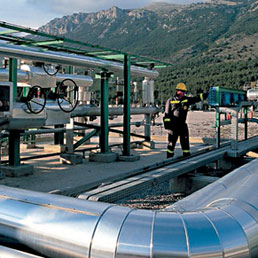
Non è nelle praterie del North Dakota, ma sul mercato del credito che si stanno manifestando i primi segnali di crisi dello shale oil americano. Il petrolio «made in Usa» continua infatti a scorrere sempre più abbondante, nonostante il crollo del barile a 80 dollari, il minimo da 4 anni. Ma lo stesso non si può dire dei flussi di denaro indispensabili per le dispendiose operazioni di fracking.
Finanziarsi sta diventando sempre più caro e più difficile per gli operatori dello shale oil: società quasi tutte di piccole o al massimo medie dimensioni, molto spesso costruite dal nulla e con fortissimi livelli di indebitamento, tanto che persino con il barile a 100 dollari faticavano in molti casi a pagare gli interessi. Un'analisi di Bloomberg sui bilanci di 60 di queste società quotate negli Usa ha evidenziato che a fine giugno i debiti ammontavano a 190,2 miliardi di $, in crescita di 50 miliardi dalla fine del 2011. Negli ultimi quattro anni il fardello è quasi raddoppiato, mentre le entrate sono aumentate di appena il 5,6%. Una dozzina di queste società, sempre secondo Bloomberg, mesi fa spendeva già almeno il 10% del fatturato solo per pagare gli interessi sul debito, che nella maggior parte dei casi è classificato dalle principali agenzie di rating a livello «junk», letteralmente spazzatura, per gli alti rischi di insolvenza. Standard & Poors' e Moody's fanno ricadere in questa categoria addirittura due terzi delle società Usa attive nell'esplorazione e produzione di petrolio e gas.
È proprio sul mercato delle obbligazioni ad alto rendimento – o «junk» per l'appunto – che sta suonando l'allarme per lo shale oil: per effetto di forti vendite, il rendimento di questi bond nel settore energia è salito al 6,9%, il massimo da oltre un anno. Il mese scorso il segmento aveva perso l'1,3%, la peggiore performance di tutto il mercato high-yield (che nel complesso ha guadagnato un magro 1,2%). Nonostante questo, un numero crescente di società sta tornando a bussare alle porte del mercato in cerca di ulteriori – benché inevitabilmente più cari – finanziamenti: solo in novembre Dealogic conta 17 miliardi di $ di nuove emissioni negli Usa.
«In termini assoluti gli oneri di finanziamento per molte società sono cresciuti solo in modo marginale – osserva Adrian Miller di Gmp Securities – Ma la chiave è l'impiego del denaro. Molte società non stanno più ricorrendo a prestiti per finanziare l'espansione. Lo fanno per ripagare i debiti o per rifinanziarli. E cercano di farlo il più in fretta possibile»
Il problema non ha dimensioni trascurabili. Il settore energia, proprio a causa dell'impetuoso sviluppo di shale oil e shale gas negli Usa, secondo Barclays rappresenta oggi il 15,7% del mercato dei junk bond, che a sua volta vale 1.300 miliardi di $. Dieci anni fa pesava solo per il 4,3%.
Qualche analista è già in allarme per la possibilità che l'intero mercato high yield – minacciato anche dalla risalita dei tassi di interesse Usa – possa finire travolto, se nel settore dello shale oil si scatenerà un'ondata di ristrutturazioni del debito. Una possibilità non certo peregrina, quest'ultima, considerato che il prezzo del petrolio minaccia di continuare a scendere, dopo aver già perso quasi un terzo rispetto a giugno, e che per sua stessa natura l'estrazione di shale oil necessita di un flusso incessante di investimenti: la vita produttiva di questi pozzi è tuttora brevissima, tanto che l'output crolla del 65-90% dopo il primo anno. Anche solo per mantere stabile la produzione bisogna quindi trivellare continuamente nuovi pozzi, spendendo ogni volta milioni di dollari. Il che molto spesso significa contrarre nuovi debiti: un meccanismo perverso, che ha spinto alcuni osservatori a paragonare lo shale a un gigantesco schema Ponzi.
Anche senza spingersi a tanto, alcuni tra gli analisti più accorti avevano evidenziato in tempi non sospetti il rischio di un'implosione del sistema. Tra questi c'è Amrita Sen, di Energy Aspects: «Lo shale oil è molto costoso – aveva detto un anno fa al Sole 24 Ore – Anche se le compagnie petrolifere si sono protette con l'hedging da eventuali ribassi del greggio, resta il fatto che molte per finanziare le trivellazioni si sono fortemente indebitate. Il che può anche andare bene, finché i tassi di interesse sono bassi e finché le prospettive di sviluppo sono buone». Entrambe le condizioni oggi non sono più per scontate.
Un ridimensionamento dello shale oil americano, con eventuale corollario di imprese in bancarotta, potrebbe comunque richiedere tempo. Il crollo del petrolio nell'immediato può anzi addirittura accelerare le estrazioni, se gli operatori – come sembra che stia accadendo – cercano di contrastare con maggiori volumi il calo delle entrate che minaccia di renderli insolventi.
twitter.com/SissiBellomo
© RIPRODUZIONE RISERVATA

 Rispondi Citando


Discussioni Simili
-
Fracking e terremoti
Di Regina di Coppe nel forum Energia, Ecologia e AmbienteRisposte: 49Ultimo Messaggio: 02-11-20, 21:48 -
Il Massachusetts vuole vietare il fracking dopo i terremoti
Di dedelind nel forum Politica EsteraRisposte: 31Ultimo Messaggio: 09-01-14, 14:36 -
Suicidio ragusa: Poli bortone (gs), equitalia risponda di istigazione al suicidio
Di La 25ªora nel forum Politica NazionaleRisposte: 2Ultimo Messaggio: 15-05-13, 15:13 -
Già fatto un test di fracking in Toscana. E’ la tecnica che può innescare terremoti
Di Napoli Capitale nel forum Politica NazionaleRisposte: 3Ultimo Messaggio: 07-06-12, 18:21 -
Emilia Romagna: il fracking secondo alcuni la causa scatenante del terremoto!
Di Gianky nel forum CronacaRisposte: 4Ultimo Messaggio: 30-05-12, 07:58
 Permessi di Scrittura
Powered by vBulletin® Version 4.2.5
Copyright © 2026 vBulletin Solutions Inc. All rights reserved.
Change privacy settings
Copyright © 2026 vBulletin Solutions Inc. All rights reserved.
Change privacy settings
Tutti gli orari sono GMT +2. Adesso sono le 09:22.
