


Articolo che sara' sicuramente ignorate da Metabo & company:
Is Marcellus Shale Gas Production Nearing a Peak?
Natural gas industry observers will attest that growth in gas production from Pennsylvania's Marcellus shale has surpassed even the most optimistic of projections. And, according to a new report by a prominent investment research firm, Marcellus production growth won't be peaking anytime soon. Let's take a closer look.
The rapid growth in Marcellus gas production
Last year, natural gas output from the Marcellus surged 61% year over year to average 10.4 billion cubic feet per day, according to the U.S. Energy Information Administration. This phenomenal growth is thanks largely to major efficiency improvements resulting from a shift toward multi-well pad drilling, which allows energy producers to drill more wells from existing pads. (come fatto notare in passato, le tecnologie di estrazione migliorano, rendendo il processo piu' efficente, cosa che, nei "ragionamenti" degli articoli che posta Metabo, viene ampiamente non considerata (per forza....)).
Not surprisingly, Marcellus-focused gas producers have delivered staggering year-over-year gains in production. For instance, Cabot Oil & Gas (NYSE: COG ) reported fourth-quarter net Marcellus production of 1,171 million cubic feet per day, up 67% from the previous year's fourth quarter, while Range Resources (NYSE: RRC ) grew its 2013 Marcellus production by 37% year over year, which helped fuel 25% growth in adjusted cash flow.
Similarly, Chesapeake Energy's (NYSE: CHK ) fourth-quarter production from the northern Marcellus grew 36% year over year and 7% sequentially to approximately 880 million cubic feet of gas equivalent per day, while CONSOL Energy (NYSE: CNX ) saw 56% year-over-year growth in fourth-quarter Marcellus production, as the company continues to make progress in its transition from coal to gas.
One of the main reasons these energy companies continue to drill in the Marcellus is because they can generate phenomenal returns even with relatively low gas prices. Cabot, for instance, can now generate pre-tax returns in excess of 100% at a wellhead gas price of only $3.00 per MMBtu, while Range and Chesapeake can earn triple-digit returns with $4.00 per MMBtu gas at the wellhead.
The future of the Marcellus
With these kinds of returns at such low gas prices, it's no wonder that these companies continue to drill heavily in the play. And if gas prices rise further, low-cost producers such as Cabot, Range, and Chesapeake will likely allocate additional capital toward the Marcellus.
As arguably the most economical gas play in the country, the Marcellus should see high levels of activity for a long, long time that should continue to drive robust production growth. According to a recent report by investment research firm Morningstar, Marcellus output will grow by a whopping 3 billion cubic feet per day this year and by another 2 billion cubic feet per day in 2015.
In addition to the play's attractive economics, some of the other principal factors expected to drive this growth include the play's high initial production rates, relatively shallow well decline rates, continued efficiency improvements from the application of new technologies, and energy producers' focus on the most productive zones of the play.
Based on an assessment of initial production rates, decline rates, and drilling and completion activity for almost 5,500 Marcellus wells in Pennsylvania and West Virginia, Morningstar concluded that Marcellus gross production will reach 14 to 20 billion cubic feet per day by the end of 2015. If achieved, that level of output would represent nearly a quarter of domestic gas production, up from about a fifth currently.
Is Marcellus Shale Gas Production Nearing a Peak?
Risultati da 461 a 470 di 2175
Discussione: Il suicidio del fracking
-
18-04-14, 19:27 #461Viva la piadina!!!


- Data Registrazione
- 20 Nov 2009
- Località
- Miami, FL, USA
- Messaggi
- 96,627
-

- 1,937
-

- 8,531
- Mentioned
- 723 Post(s)
- Tagged
- 4 Thread(s)
 Re: Il suicidio del fracking
Globalizzazione..... si grazie.
Re: Il suicidio del fracking
Globalizzazione..... si grazie.
-
18-04-14, 19:32 #462Viva la piadina!!!
- Data Registrazione
- 20 Nov 2009
- Località
- Miami, FL, USA
- Messaggi
- 96,627
-
- 1,937
-
- 8,531
- Mentioned
- 723 Post(s)
- Tagged
- 4 Thread(s)
Re: Il suicidio del fracking
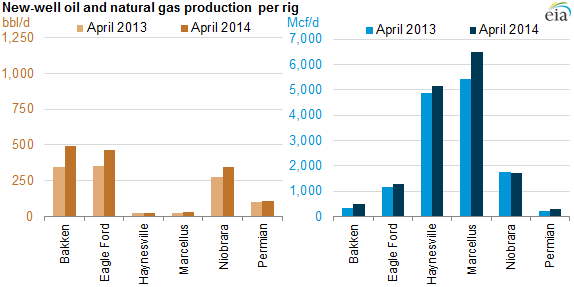
A sx la produzione di petrolio e a dx qeulla di gas dai giacimenti Shale.
The productivity of oil and natural gas wells is steadily increasing in many basins across the United States because of the increasing precision and efficiency of horizontal drilling and hydraulic fracturing in oil and natural gas extraction. Many resource-producing basins are experiencing an increasing yield over time in either oil (Bakken, Eagle Ford, Niobrara) or natural gas (Marcellus, Haynesville).
Growth in U.S. hydrocarbon production from shale resources driven by drilling efficiency - Today in Energy - U.S. Energy Information Administration (EIA)
Nuovamente, la maggiore efficenza nelle tecnihce di estrazione spinge la produzione.
Altra grafica "chiarificatrice":
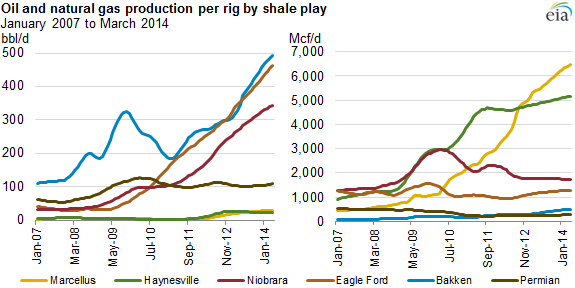
DPR data show that each drilling rig in the Eagle Ford Shale will contribute over 400 barrels of oil per day (bbl/d) more in April 2014 than it would have in the same formation in January 2007. At the same time, the DPR also shows that a Marcellus Shale well completed by a rig in April 2014 can be expected to yield over 6 million cubic feet of natural gas per day (Mcf/d) more than a well completed by that rig in that formation in 2007.
This trend of increasing rig productivity is one factor helping to increase the nation's oil and natural gas production. The latest Annual Energy Outlook forecasts that U.S. oil production will reach 9.6 million barrels per day in 2019, and natural gas production will increase by 56% through 2040.
Growth in U.S. hydrocarbon production from shale resources driven by drilling efficiency - Today in Energy - U.S. Energy Information Administration (EIA)Globalizzazione..... si grazie.
-
22-04-14, 02:22 #463Klassenkampf ist alles!
- Data Registrazione
- 31 May 2009
- Messaggi
- 75,277
-
- 231,484
-
- 29,124
- Mentioned
- 1920 Post(s)
- Tagged
- 37 Thread(s)
Re: Il suicidio del fracking
l'EIA ha 380 impiegati (nemmeno uno per giacimento), che lavorano tutti a Washington (insomma, non vanno MAI a controllare di persona i giacimenti) che sono costretti a prendere per buoni i dati di estrazione delle multinazionali di petrolio e gas, per evidente impossibilità pratica a verificarli direttamente. Se i dati sono farlocchi alla base, è chiaro che da quei dati verranno fuori proiezioni assolutamente fuori dalla realtà. Non solo, persino i metodi di calcolo usati da quei quattro gatti di impiegati pubblici sono datati (Shortcomings Exposed in Oil Data Collection - WSJ.com), per cui abbiamo pochissimi impiegati che usano dati farlocchi (non per colpa loro, se Big Oil mente, loro devono prendere per buoni quei dati) con metodologie di calcolo antidiluviane. Insomma, fuffa al cubo.
-
22-04-14, 12:23 #464Viva la piadina!!!
- Data Registrazione
- 20 Nov 2009
- Località
- Miami, FL, USA
- Messaggi
- 96,627
-
- 1,937
-
- 8,531
- Mentioned
- 723 Post(s)
- Tagged
- 4 Thread(s)
Re: Il suicidio del fracking
 Originariamente Scritto da amaryllide

Quello che hai citato e' un articolo del 2010.
Siamo nel 2014 e da allora la EIA ha messo in atto vari miglioramenti per il raccoglimento dati.
L'ultima la si e' resa nota a Gennaio di quest'anno, ovvero controllare i dati incrociandoli con le spedizioni via treno (esempio le spedizioni di petrolio dal Nortk Dakota), domanda di energia e cosi via (ovvero vi e' essere una correlazione e quindi devono essere coerenti fra di loro):
News - Argus Media
Cosi come sono state implementate regolamentazioni più severe (ed ovviamente pene al riguardo) per aziende che riportano dati consapevolmente errati.
Non a caso, nel 2010, quando la stessa EIA rilascio' una correzione sulla quantità' di barili di petrolio al NYMEX quel giorno i futures del petrolio ebbero una oscillazione del 2.2%, ovvero se il mercato avesse perso fiducia da allora nei dati (se nulla fosse stato fatto) questi rapporti avrebbero meno peso ed influenzerebbero meno sul mercato stesso.Ultima modifica di Amati75; 22-04-14 alle 12:25
Globalizzazione..... si grazie.
-
22-04-14, 12:29 #465email non funzionante

- Data Registrazione
- 09 Jul 2012
- Messaggi
- 16,123
-
- 11,791
-
- 6,197
- Mentioned
- 125 Post(s)
- Tagged
- 3 Thread(s)
Re: Il suicidio del fracking
Ma loro lo sanno bene, solo che devono alimentare la bolla. Originariamente Scritto da amaryllide
-
22-04-14, 12:39 #466Viva la piadina!!!
- Data Registrazione
- 20 Nov 2009
- Località
- Miami, FL, USA
- Messaggi
- 96,627
-
- 1,937
-
- 8,531
- Mentioned
- 723 Post(s)
- Tagged
- 4 Thread(s)
Re: Il suicidio del fracking
Originariamente Scritto da Metabo
Peccato che l'articolo e' del 2010 e da allora vi sono state modifiche, siamo nel 2014.
Ah per certo, siamo quasi a Maggio, sto crollo non e' ancora arrivato? Che fai, scriverai all' autore di quel articolo?
Farai un post indicando che hai postato un articolo errato?
ehhhh come no… fara finta di nulla eh….. come al solito… Globalizzazione..... si grazie.
-
26-04-14, 02:23 #467email non funzionante

- Data Registrazione
- 30 Nov 2009
- Località
- new york
- Messaggi
- 164,930
-
- 17
-
- 12,232
- Mentioned
- 1838 Post(s)
- Tagged
- 13 Thread(s)
Re: Il suicidio del fracking
Metabo "aveva visto giusto" !


US oil stocks at record high as shale supply surges
US oil stocks at record high as shale supply surges - FT.com
Petroleum Exports Rise as Shale Boom Lifts U.S. Output
Petroleum Exports Rise as Shale Boom Lifts U.S. Output | Fox Business
Texas oil production moving up in world ranking
http://www.houstonchronicle.com/business/energy/article/Eagle-Ford-could-be-second-to-Saudi-Arabia-in-oil-5422511.php
Se volete dei "consigli" in materia di "investimenti" Metabo ci "sa fare" !!!
-
26-04-14, 09:20 #468email non funzionante
- Data Registrazione
- 09 Jul 2012
- Messaggi
- 16,123
-
- 11,791
-
- 6,197
- Mentioned
- 125 Post(s)
- Tagged
- 3 Thread(s)
Re: Il suicidio del fracking
Le solite balle conclamate da troll disperato, il record significa solo che stanno trivellando di più per il resto, significa che la bolla scoppierà prima. Originariamente Scritto da paulhowe
Fracking lohnt sich nicht - Il fracking non conviene
Fracking lohnt sich nicht - Il fracking non conviene
 13.01.14 |
  Silvia Liebrich (Süddeutsche.de)
 L’euforia è scomparsa: il fracking finora non ha ripagato le aziende e gli investitori. I costi sono elevati, i guadagni bassi e per di più le riserve di gas di scisto sono minori di quanto supposto fin qui.
Il boom del gas di scisto negli Stati Uniti porta ottimismo per l’economia. Energia – abbondante e a buon mercato – è una garanzia per la crescita. Ma l’euforia degli ultimi due anni potrebbe trasformarsi presto in disillusione. I nuovi dati mostrano che l’entusiasmo tra gli investitori per il fracking è già notevolmente ridotto.
Complessivamente sono finiti solo 3,4 miliardi di $ in partecipazioni al gas di scisto e alla sua estrazione. Nell’anno precedente gli investitori avevano versato più del doppio. Questo si evidenzia dai dati che la società americana di consulenza IHS ha pubblicato. Rispetto al 2011 l’investimento nel 2013 si è ridotto addirittura ad un decimo. Per l’industria energetica americana è una battuta d’arresto.
Per le imprese del settore energetico e i loro finanziatori il boom finora non ha dato i suoi frutti, assicurano gli esperti dell’IHS. (…) Meno capitali vengono rivolti ai giacimenti gasiferi del Nord America, meno viene estratto e prodotto. E questo potrebbe mettere una brusca fine all’era dell’energia a basso costo.
“Se nel settore non è possibile guadagnare abbastanza, scoppia una bolla e l’energia diventerà presto più cara” avverte il fisico Werner Zittel, AD dell’indipendente Fondazione Ludwig Boelkow. “Non sarei sorpreso se questo avvenisse già quest’anno. Il sogno dell’energia a basso costo potrebbe svanire più rapidamente di quanto molti pensano”, dice Zittel.
L’industria è così diventata vittima del suo stesso successo. Utilizzando il fracking le aziende sono riuscite a estrarre sempre più gas dalle rocce del sottosuolo e questo ha spinto i prezzi 2012 al valore più basso di sempre. Ciò che rallegra i consumatori e gli acquirenti, ma rovina il business degli investitori.
Se i prezzi scendono, peggiorano i loro obiettivi di guadagno. Per questo motivo negli ultimi mesi si sono ritirati investitori, soprattutto europei e asiatici. Anche se i prezzi hanno avuto un leggero recupero nell’ultimo anno. Ma a Wall Street la disillusione sta crescendo. L’intero mercato è cambiato, lamentano gli analisti. Questo risulta evidente anche dal fatto che le partecipazioni e le acquisizioni si sono complessivamente dimezzate nel 2013. Shell ha dovuto ammortare due miliardi di dollari.
Il calo dei prezzi produce buchi nei bilanci delle società di produzione. Esperi critici come Zittel ritengono che una larga parte delle riserve di gas di scisto siano state sovrastimate. Inoltre il gigante dell’energia anglo-olandese Shell ha dovuto, solo pochi mesi fa, procedere all’ammortamento di due miliardi di dollari sulle sue partecipazioni a giacimenti nord-americani. Anche concorrenti come BP, Encana e l’inglese BG Group hanno dovuto rivedere e abbassare i valori delle proprie partecipazioni al business del gas di scisto. E questo è vero anche per produttori più piccoli.
Il professor Christian Growitsch dell’ Energiewirtschaftlichen Institut dell’ndtUniversità di Köln (EWI), tuttavia, non crede che, nonostante il crollo degli investimenti begli Stati Uniti, si debba fare i conti con un aumento dei prezzi. “Anche se i prezzi del gas non dovessero rimanere ai livelli molto bassi di oggi, non si dovrà necessariamente fare i conti con un drammatico aumento dei prezzi.” Anche se la produzione nel 2013 non è aumentata tanto come l’anno precedente, gli Stati Uniti nel complesso dispongono di considerevoli riserve di combustibili, gas e petrolio.
Nelle previsioni per il 2014 che la EIA (Amministrazione per le informazioni sull’energia, ndt) ha appena presentato, il calo degli investimenti non gioca un ruolo importante. L’EIA prevede che la produzione di shale gas continuerà a crescere fino al 2040.
Zittel ritiene questa previsione così come il calcolo delle riserve troppo ottimistica. Ha confrontato i valori della produzione di ogni singolo stato con i dati dell’EIA, trovando delle discrepanze.
“C’è qualcosa che non torna”.
L’agenzia federale ha assegnato un leggero aumento, quando alcuni stati come il Texas hanno dichiarato già dallo scorso anno un calo di produzione.
“Questo non può essere vero” sostiene Zittel. “IL picco del boom del gas di scisto potrebbe essere già stato raggiunto oggi, se l’industria non destina robusti investimenti nell’estrazione e non può scavare molti nuovi pozzi.”
Mentre gli Stati Uniti non vogliono rinunciare alle loro ottimistiche previsioni, la Commissione EU giovedì (2 gennaio 2014, ndt) ha corretto verso il basso le sue stime sulle riserve europee, passando da 15,8 miliardi di metri cubi di gas a soli 13,3 miliardi mi metri cubi. L’uso del gas di scisto in Europa è ancora lontano, ma l’economia e i partiti conservatori spingono per sfruttare queste riserve.
In Germania ci sono progetti di fracking in stanby, perché ci sono notevoli rischi ambientali e grande resistenza da parte della popolazione. Il nuovo governo dovrà decidere nei prossimi mesi come procedere. Su una cosa tuttavia gli esperti concordano: le condizioni in questo paese renderanno l’estrazione molto più costosa che negli Stati Uniti.
(articolo originale di Silvia Liebrich)Ultima modifica di Metabo; 26-04-14 alle 09:22
-
26-04-14, 16:28 #469email non funzionante
- Data Registrazione
- 30 Nov 2009
- Località
- new york
- Messaggi
- 164,930
-
- 17
-
- 12,232
- Mentioned
- 1838 Post(s)
- Tagged
- 13 Thread(s)
Re: Il suicidio del fracking
Le solite balle conclamate da troll disperato, il record significa solo che stanno trivellando di più per il resto, significa che la bolla scoppierà prima.
Si gli articoletti con tanti "potrebbe, forse, ma, pero, chissa" !!
I dati ufficiali stanno li per le persone sobrie e dotate di cervello.
Non e' il tuo caso.
Lascia perdere.
-
26-04-14, 21:05 #470email non funzionante
- Data Registrazione
- 09 Jul 2012
- Messaggi
- 16,123
-
- 11,791
-
- 6,197
- Mentioned
- 125 Post(s)
- Tagged
- 3 Thread(s)
Re: Il suicidio del fracking
Si gli articoletti...sei un povero troll è inutile che posti stupidaggini perché a me basta ripostare l'articolo che tu cerchi disperatamente di sepellire, in pagine di idiozie partorite dalla tua mente. Originariamente Scritto da paulhowe
Lo dico perché fai una fatica inutile, per esempio adesso prendo un articolo a caso scritto da persone competenti e con dati oggettivi che riposrta come il fracking è una balla, poi ovviamente tu cercherai di postare pagine di idiozie per fare il trollaggio quotidiano, poveretto...

 Rispondi Citando
Discussioni Simili
-
Fracking e terremoti
Di Regina di Coppe nel forum Energia, Ecologia e AmbienteRisposte: 49Ultimo Messaggio: 02-11-20, 21:48 -
Il Massachusetts vuole vietare il fracking dopo i terremoti
Di dedelind nel forum Politica EsteraRisposte: 31Ultimo Messaggio: 09-01-14, 14:36 -
Suicidio ragusa: Poli bortone (gs), equitalia risponda di istigazione al suicidio
Di La 25ªora nel forum Politica NazionaleRisposte: 2Ultimo Messaggio: 15-05-13, 15:13 -
Già fatto un test di fracking in Toscana. E’ la tecnica che può innescare terremoti
Di Napoli Capitale nel forum Politica NazionaleRisposte: 3Ultimo Messaggio: 07-06-12, 18:21 -
Emilia Romagna: il fracking secondo alcuni la causa scatenante del terremoto!
Di Gianky nel forum CronacaRisposte: 4Ultimo Messaggio: 30-05-12, 07:58
 Permessi di Scrittura
Powered by vBulletin® Version 4.2.5
Copyright © 2026 vBulletin Solutions Inc. All rights reserved.
Change privacy settings
Copyright © 2026 vBulletin Solutions Inc. All rights reserved.
Change privacy settings
Tutti gli orari sono GMT +2. Adesso sono le 19:31.
